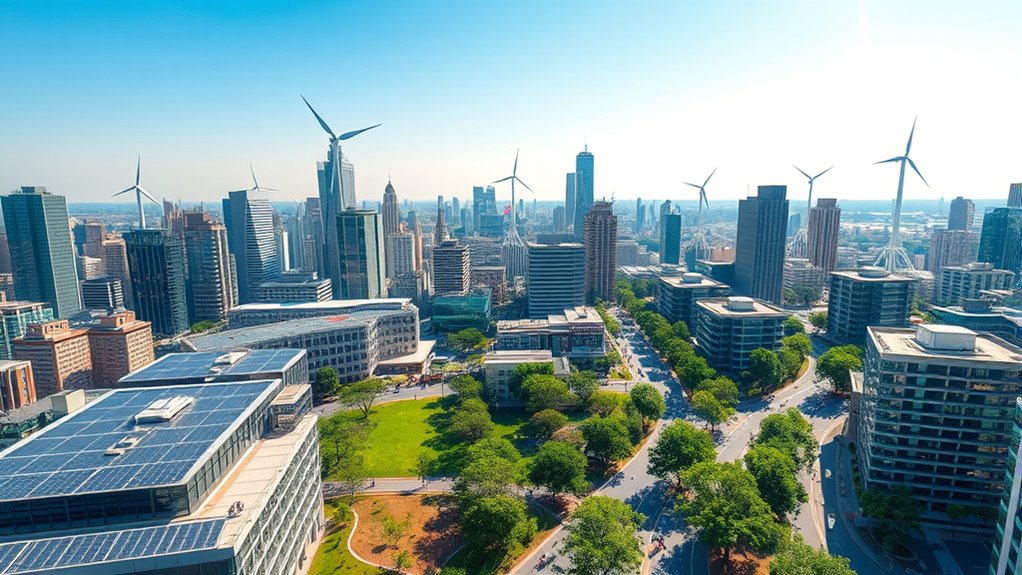

To incorporate renewable energy into your city plans, focus on adopting innovative strategies like solar incentives and wind infrastructure investments. Encourage local solar panel installations by offering incentives to reduce costs and boost adoption. Support wind projects on rooftops and open spaces to diversify energy sources. Engage the community to guarantee widespread support. This approach helps create resilient, sustainable urban environments, and if you explore further, you’ll discover more ways to make your city more environmentally friendly.

Get the little things that make your day delivered free with Prime
- Fast, free delivery on millions of items
- Prime Video, Amazon Music and more included
- Member-only deals all year
Key Takeaways
- Incorporate renewable energy targets into urban planning to align city development with sustainability goals.
- Offer incentives like solar rebates and wind support to encourage adoption among residents and businesses.
- Invest in local wind and solar infrastructure, integrating projects into existing urban spaces and utility grids.
- Collaborate with stakeholders, including engineers and community groups, for optimal renewable project planning and placement.
- Promote public awareness and engagement to build support and ensure successful integration of renewable energy initiatives.
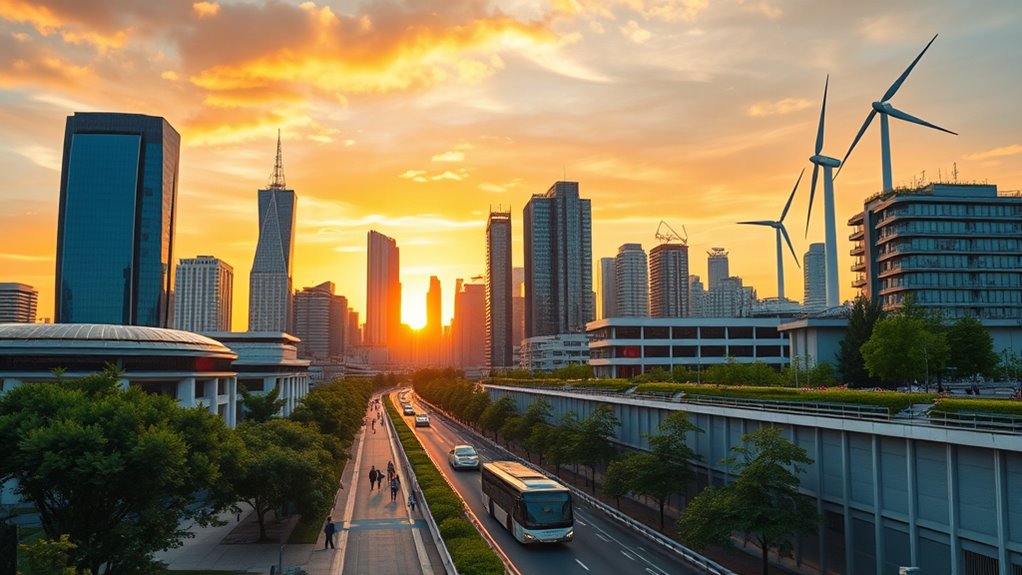
Have you ever wondered how cities are transforming to meet the demands of sustainable energy? It’s an exciting time for urban areas as they embrace innovative strategies to reduce reliance on fossil fuels. One of the key ways cities are doing this is by integrating renewable energy into their planning processes. You might notice that many municipalities now offer solar incentives to encourage residents and businesses to install solar panels. These incentives lower the upfront costs, making renewable energy more accessible and attractive. When cities promote such programs, they’re not only helping individuals save on energy bills but also boosting the local adoption of clean energy sources. This, in turn, accelerates the city’s overall shift towards sustainability.
Alongside solar incentives, developing wind infrastructure has become an essential part of urban renewable energy strategies. Cities are investing in local wind projects or supporting the integration of wind turbines into their energy grids. Wind infrastructure can be installed on rooftops, in open spaces, or along coastlines where wind speeds are higher. By expanding wind resources, cities diversify their energy mix, ensuring a more resilient and reliable power supply. This is especially important as urban areas aim to meet ambitious renewable energy targets. You might see new wind farms or turbines popping up as part of city plans, signaling a strong commitment to reducing greenhouse gas emissions.
Cities expanding wind infrastructure to diversify energy and meet renewable targets.
The process involves more than just installing equipment; it requires careful planning to optimize the placement and efficiency of renewable sources. City planners work with engineers and environmental experts to identify the best locations for wind turbines and solar arrays. They also consider the aesthetics and impact on communities, working toward solutions that balance environmental benefits with urban living. Funding plays a crucial role here, and that’s where solar incentives come into play, encouraging more stakeholders to participate. Additionally, policies and regulations are evolving to streamline permitting processes and support the integration of renewable energy into existing infrastructure. Incorporating AI-driven analysis can significantly enhance the planning and optimization of renewable energy projects, leading to smarter, more efficient outcomes.
As cities step up their efforts, public awareness and participation become even more critical. Your involvement—whether through advocating for solar incentives or supporting local wind projects—can make a difference. By embracing renewable energy, cities not only reduce their carbon footprint but also foster economic growth through new jobs and technologies. The shift might seem complex, but with strategic planning and community support, integrating renewable energy into city plans becomes a powerful way to build sustainable urban environments. Ultimately, it’s about creating cities that are cleaner, more resilient, and better prepared for the future.
solar panel incentives for homes
As an affiliate, we earn on qualifying purchases.
As an affiliate, we earn on qualifying purchases.
Frequently Asked Questions
How Can Cities Finance Renewable Energy Infrastructure Projects Effectively?
You can finance renewable energy infrastructure projects effectively by leveraging diverse financing strategies like public-private partnerships, green bonds, and grants. Make sure to tap into investment incentives such as tax credits and subsidies to reduce costs and attract investors. Additionally, engaging local stakeholders and promoting community financing options can boost support, ensuring steady funding and successful project implementation. This approach maximizes resources while fostering sustainable urban development.
What Are the Best Practices for Integrating Solar and Wind Into Urban Planning?
Think of urban planning like fitting puzzle pieces together. To effectively integrate solar and wind, you should update urban zoning codes to encourage rooftop installations and designate zones for wind turbines. For example, a city that streamlined zoning laws saw a 30% increase in rooftop solar projects within a year. Prioritize flexible zoning that incentivizes renewable energy, making sustainability a seamless part of your city’s growth.
How Do Renewable Energy Policies Impact Local Economies?
You’ll find that renewable energy policies boost local economies by promoting economic diversification and creating jobs. When you support solar and wind initiatives, you attract investments, which lead to new employment opportunities across construction, maintenance, and manufacturing sectors. These policies also help stabilize energy costs, making your city more resilient. As a result, your community benefits from a stronger economy, increased innovation, and a healthier environment.
What Challenges Exist in Retrofitting Existing City Infrastructure?
Retrofitting existing city infrastructure is tough, especially since about 75% of urban grids still rely on legacy systems. You face challenges like outdated equipment that can’t handle renewable energy inputs, high costs of upgrades, and disrupting daily city functions. Updating these systems requires careful planning, substantial investment, and innovative solutions to facilitate a smooth shift without compromising city services or safety.
How Can Public Participation Be Increased in Renewable Energy Planning?
You can boost public participation in renewable energy planning by fostering community engagement through town halls, workshops, and online platforms. Encourage residents to voice their concerns and ideas, making them feel involved. Support policy advocacy efforts that promote transparency and inclusivity. When you actively involve the community and advocate for policies that reflect their needs, you’ll build trust, increase support, and create more effective, sustainable renewable energy initiatives.
small wind turbines for urban use
As an affiliate, we earn on qualifying purchases.
As an affiliate, we earn on qualifying purchases.
Conclusion
As you weave renewable energy into your city’s fabric, imagine a rising sun symbolizing hope and a wind turbine spinning like a guardian of your future. Every solar panel and wind farm becomes a beacon of change, illuminating the path toward sustainability. By embracing these symbols, you help build a city that breathes easier, shines brighter, and stands resilient—proof that your commitment fuels a brighter, cleaner world for generations to come.
solar energy kits for residential installation
As an affiliate, we earn on qualifying purchases.
As an affiliate, we earn on qualifying purchases.
As an affiliate, we earn on qualifying purchases.
Halloween Picks
halloween
As an affiliate, we earn on qualifying purchases.