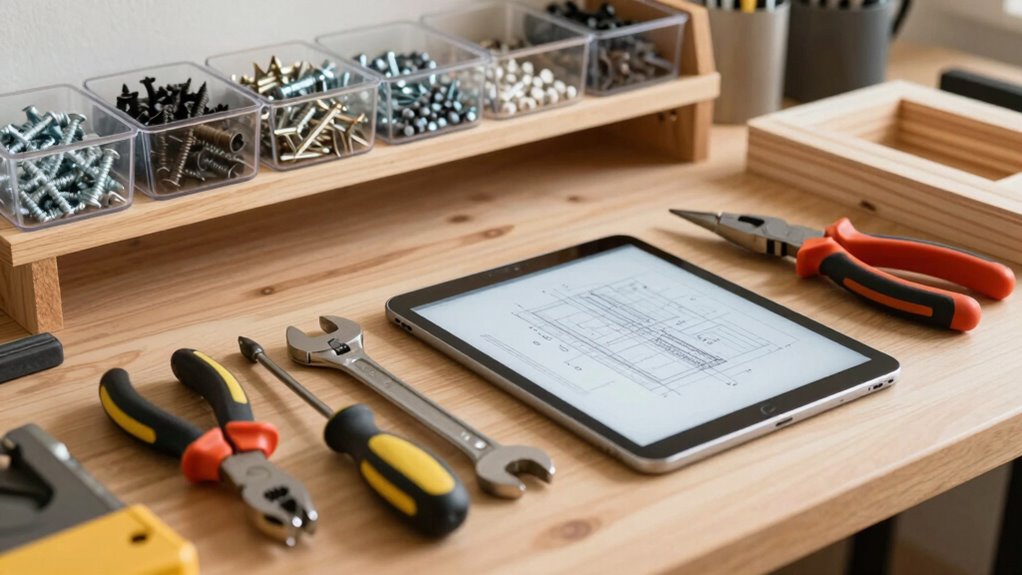

To build a better DIY tool strategy over time, stay organized with a consistent inventory system that tracks your tools’ condition, purchase dates, and maintenance needs. Choose storage solutions tailored to your workspace to keep tools protected and accessible. Prioritize investing in high-quality tools for frequently used tasks, and borrow or opt for cheaper options for infrequent items. Regularly review and reassess your tools and storage, continuously improving your approach as your skills grow and projects evolve—exploring further will reveal more tips to refine your system.

Get the little things that make your day delivered free — and shop member deals
- Fast, free delivery on millions of items
- Access to Prime Big Deal Days deals on October 6–7
- Prime Video, Amazon Music and more included
Key Takeaways
- Regularly review and update your inventory to identify gaps and prevent tool shortages during projects.
- Invest in high-quality, essential tools while borrowing or purchasing budget options for infrequent tasks.
- Organize tools with dedicated storage solutions to enhance accessibility and protect them from damage.
- Schedule routine maintenance and reassessment to keep tools in optimal condition and avoid project delays.
- Adapt your tool strategy as skills grow and project needs evolve for increased efficiency and effectiveness.

Inventory management is equally important. Keep an organized record of what tools you own, what’s in use, and what needs replacement. This prevents you from buying duplicates or wasting time searching for missing items. You can use simple spreadsheets or dedicated apps to track your tools’ status, purchase dates, and maintenance schedules. As your collection grows, so does the significance of knowing what you have at any moment. This way, you avoid unnecessary purchases and can plan your projects more efficiently. Regularly reviewing your inventory ensures you stay aware of your tools’ condition and availability, preventing potential setbacks during projects. Incorporating symbolic meanings into your understanding of your tools can also help you appreciate their significance and usage. Maintaining a consistent inventory tracking system is essential for long-term efficiency and organization. Developing storage solutions that are tailored to your workspace can further enhance your organization and help protect your tools from damage or loss.
Over time, pay attention to which tools you use most frequently. Investing in high-quality versions of these essentials can boost your productivity and reduce downtime. Conversely, for tools used only occasionally, cheaper or borrowed options might suffice, saving you money. As your skill level improves, you’ll also discover the need for specialized tools that can make tasks easier and more precise. Prioritize acquiring these tools gradually, rather than all at once, to manage your budget effectively.
Don’t forget that a good DIY tool strategy involves reassessment. Periodically review your inventory and tool maintenance routines. Are there tools that are no longer useful? Are some in need of repair? Are you missing any vital items for upcoming projects? Keeping this ongoing process helps you stay organized and prepared. It also encourages a mindset of continuous improvement, where you learn from each project and refine your approach.
Ultimately, evolving your DIY tool strategy takes discipline and attention. By maintaining your tools properly and managing your inventory carefully, you’ll work more efficiently, save money, and enjoy your projects more. This ongoing commitment transforms a simple collection of tools into a reliable system that adapts to your growing skills and changing needs. Over time, your strategy becomes more streamlined, making your DIY endeavors smoother and more rewarding. Incorporating proper storage solutions, such as cabinets or tool chests, can further protect your tools and keep your workspace tidy.
As an affiliate, we earn on qualifying purchases.
Frequently Asked Questions
How Often Should I Review and Update My DIY Tool Strategy?
You should review and update your DIY tool strategy at least every six months to guarantee ideal tool maintenance and supplier relationships. Regular reviews help you identify worn-out tools needing replacement and evaluate if your suppliers are still offering the best deals. Staying proactive ensures your tools stay in top shape, improves efficiency, and keeps your project costs in check. Don’t wait too long—frequent updates keep your strategy sharp and effective.
What Are the Best Methods to Track Tool Usage and Inventory?
Did you know that 30% of tool downtime is caused by poor tracking? To monitor tool usage and inventory effectively, implement regular tool maintenance logs and digital tracking systems. Use clear storage solutions like labeled bins and racks to organize tools, making it easy to see what’s in use or needs repair. Regularly updating these records helps prevent loss, extends your tools’ lifespan, and keeps your DIY projects running smoothly.
How Can I Prioritize Which Tools to Upgrade or Replace First?
You should prioritize tools that need urgent tool maintenance or show signs of wear, as upgrading or replacing these first boosts safety and efficiency. Focus on tools with ergonomic design to reduce fatigue and injury, making your work easier over time. Regularly assess your tools, and invest in upgrades that improve comfort and durability, ensuring your DIY strategy evolves effectively and keeps your workspace safe and productive.
What Safety Considerations Should I Keep in Mind With New Tools?
When bringing new tools into your arsenal, remember safety first—because accidents make for hilarious stories only after you’re uninjured. Always wear personal protective equipment and learn safe handling techniques. Keep blades sharp, cords untangled, and guards in place. Treat every power tool like a mischievous pet—respect its power, stay alert, and never bypass safety features. Your future self will thank you for prioritizing safety today.
How Do I Budget Effectively for Ongoing Tool Improvements?
To budget effectively for ongoing tool improvements, you should prioritize tool maintenance to extend their lifespan and reduce replacement costs. Allocate funds regularly for upgrades and repairs, setting aside a specific percentage of your budget each month or year. Track expenses carefully, and adjust your budget based on your evolving needs and the condition of your tools. This approach guarantees you stay prepared for necessary improvements without overspending.
heavy-duty tool storage organizer
As an affiliate, we earn on qualifying purchases.
As an affiliate, we earn on qualifying purchases.
Conclusion
Now, think of your DIY tool strategy as a garden that blooms brighter with each season. Nurture it with patience, learn from every misstep, and watch your skills grow like sturdy trees reaching for the sun. Keep experimenting, adapt to new challenges, and soon your toolbox will be a vibrant forest of solutions. With dedication, your strategy will flourish into a masterpiece that’s uniquely yours—an ever-evolving symphony of craftsmanship and creativity.
As an affiliate, we earn on qualifying purchases.
As an affiliate, we earn on qualifying purchases.
NFL season / tailgating Picks
team gear
As an affiliate, we earn on qualifying purchases.