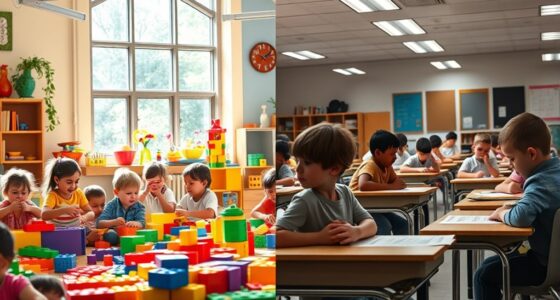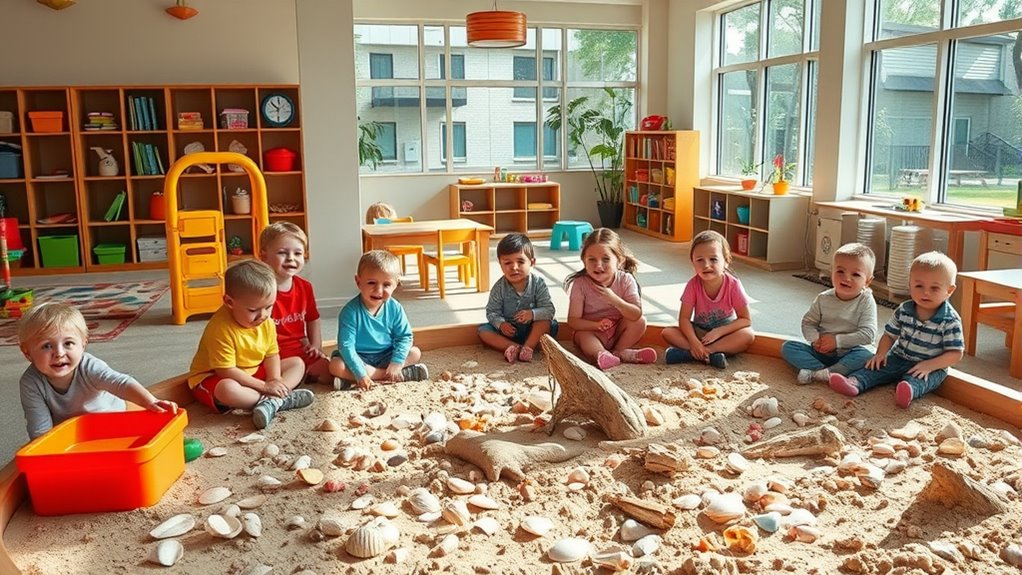

To balance structured and unstructured play in preschool, you should incorporate both into daily routines. Offer guided activities that build skills, while also allowing plenty of free, spontaneous play for exploration and social bonding. Outdoor play is especially valuable for sensory experiences and physical development. Striking the right mix helps children develop confidence, social skills, and a love for learning. Keep exploring ways to create a dynamic, enriching environment for young learners.

Get the little things that make your day delivered free — and shop member deals
- Fast, free delivery on millions of items
- Access to Prime Big Deal Days deals on October 6–7
- Prime Video, Amazon Music and more included
Key Takeaways
- Incorporate a daily mix of guided activities and free play to promote comprehensive development.
- Allocate outdoor and sensory-rich environments for unstructured exploration and physical growth.
- Use structured activities to target specific skills while ensuring children have ample spontaneous discovery time.
- Monitor and adjust the balance to prevent overemphasis on either play type, fostering confidence and social skills.
- Encourage children’s independence through self-directed play, complemented by guided learning experiences.
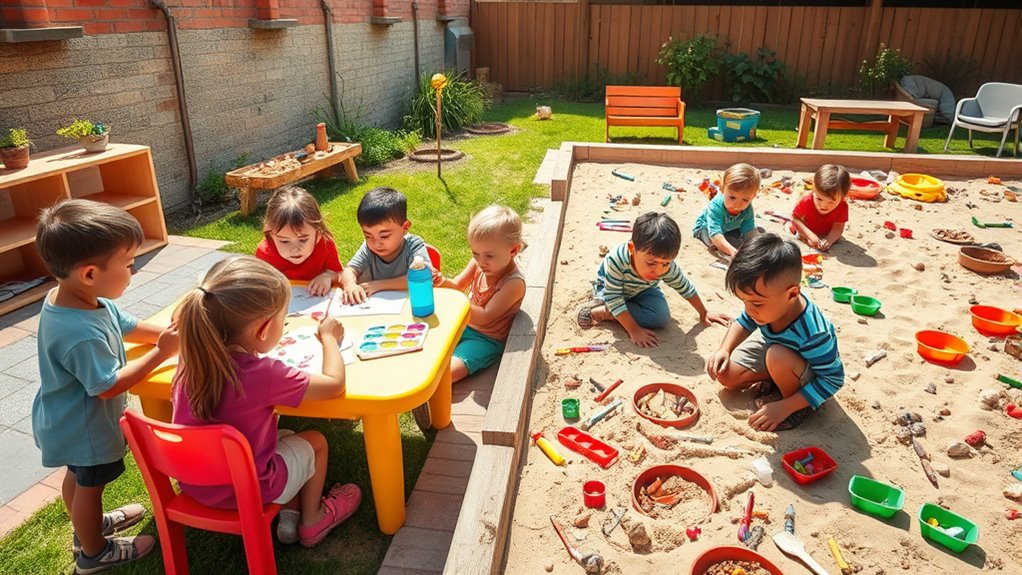
Balancing play in preschool is essential for fostering healthy development and ensuring children gain a variety of skills. When you strike the right mix between structured and unstructured activities, you give children opportunities to explore, learn, and connect in meaningful ways. During unstructured play, children often engage in sensory exploration, which is critical for their cognitive and emotional growth. They might touch different textures, experiment with water or sand, or explore new environments, helping their brains process sensory information and develop fine motor skills. This type of play encourages curiosity and allows children to learn at their own pace, fostering independence and confidence.
At the same time, social interaction plays a key role in their overall development. During unstructured play, kids naturally negotiate roles, share materials, and solve problems together, which strengthens their social skills. These interactions teach them about cooperation, empathy, and communication—skills that are essential for building healthy relationships later in life. When children are given the freedom to choose their activities and work with peers without strict instructions, they learn how to navigate social dynamics, express their ideas, and listen to others. This kind of play boosts their emotional intelligence and helps them understand diverse perspectives.
Structured play, on the other hand, provides a different set of benefits. It often involves guided activities led by teachers or caregivers, designed to target specific skills or concepts. For example, a storytime session or a counting game helps develop language, literacy, and numeracy skills. While structured play might seem less spontaneous, it creates a safe environment for children to practice new skills with guidance, guaranteeing they meet developmental milestones. It also introduces routines and expectations that prepare children for more formal learning settings.
Balancing these two types of play ensures children don’t miss out on important experiences. Too much structured activity can limit their creativity and reduce opportunities for sensory exploration and social interaction. Conversely, excessive unstructured play might mean missing out on targeted skill-building. As you manage their daily routines, aim for a mix where children have enough freedom for spontaneous discovery and social bonding, alongside guided activities that promote specific learning goals. Incorporating outdoor play can further enhance their development by providing diverse sensory experiences and opportunities for physical activity. This approach fosters well-rounded development, helping children build confidence, social skills, and a love for learning that lasts a lifetime.
Top picks for "balanc structur unstructur"
As an affiliate, we earn on qualifying purchases.
Frequently Asked Questions
How Can Parents Effectively Balance Structured and Unstructured Play at Home?
You can effectively balance structured and unstructured play at home by fostering creative independence and involving yourself in your child’s activities. Set aside specific times for guided, structured play that develop skills, then allow free, unstructured play where your child explores freely. Stay engaged through supportive parental involvement, encouraging their curiosity without taking over. This balance nurtures their growth, creativity, and confidence in a safe, stimulating environment.
What Are Signs of Too Much Structured or Unstructured Play in Preschoolers?
Did you know that 65% of preschoolers show signs of overstimulation with excessive structured activities? If your child exhibits playtime fatigue, irritability, or difficulty focusing, they might be overwhelmed by too much structured play. Conversely, signs of too much unstructured play include boredom, lack of developmental progress, or restlessness. Both extremes can hinder growth, so watch for these cues and balance play types to support healthy development.
How Does Play Balance Influence Preschoolers’ Emotional Development?
When play is balanced, you help preschoolers build emotional resilience and social confidence. Structured play teaches them rules and cooperation, fostering emotional stability, while unstructured play encourages creativity and independence. By mixing both, you support their emotional growth, helping them navigate feelings and develop strong social skills. This balance makes children more adaptable, confident, and better equipped to handle challenges, creating a healthy foundation for their future emotional well-being.
Are There Cultural Differences in Balancing Play Types in Preschools?
Cultural perceptions shape how preschools balance play types, like a painter choosing colors for a canvas. In some cultures, play practices favor structured activities to build discipline, while others emphasize unstructured play to foster creativity. These differences reflect values and beliefs about childhood development. You may notice that in diverse settings, the mix of play types varies, revealing how cultural perceptions influence educational approaches and children’s experiences.
How Can Teachers Assess the Optimal Play Balance for Individual Children?
You can assess the ideal play balance for each child by observing their engagement during both structured and unstructured activities. Use play assessments to note how they interact, explore, and develop skills, comparing these behaviors with developmental milestones. This approach helps you identify whether they thrive with more guided play or need more independence, enabling tailored support that promotes healthy growth and balanced development in your classroom.
Conclusion
By balancing structured and unstructured play, you create a rich environment where kids develop essential skills and creativity. Did you know that children who engage in a mix of both play types score higher on social and cognitive tests? When you encourage this balance, you’re helping your preschoolers build confidence, problem-solving abilities, and a love for learning. Keep mixing it up—your efforts lay a strong foundation for their future growth and happiness.
Fall Picks
fall essentials
As an affiliate, we earn on qualifying purchases.