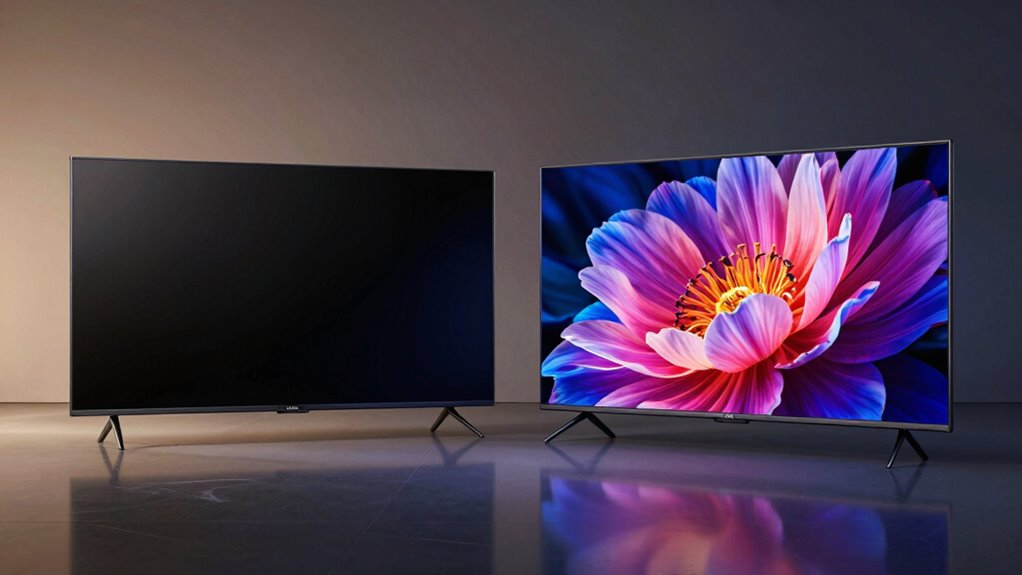

OLED and Mini LED technologies have shifted your TV buying options by offering better contrast, deeper blacks, and more vibrant colors. OLED provides stunning picture quality, but requires careful calibration and can burn in, while Mini LED offers brightness and energy efficiency with less maintenance. These advancements make it easier to find a TV that matches your viewing habits and priorities. Curious about how these innovations fit your needs? Keep exploring to learn more.

Get the little things that make your day delivered free — and shop member deals
- Fast, free delivery on millions of items
- Access to Prime Big Deal Days deals on October 6–7
- Prime Video, Amazon Music and more included
Key Takeaways
- OLED and Mini LED offer superior contrast and color accuracy, shifting focus from resolution to picture quality in TV choices.
- Their advanced technologies provide better black levels and brightness, influencing consumer preferences for cinematic and gaming experiences.
- Reduced calibration and maintenance needs with Mini LED make high-end displays more accessible and practical.
- Energy efficiency differences between OLED and Mini LED impact considerations for environmentally conscious buyers.
- Innovation in these displays has expanded options, allowing consumers to prioritize performance, longevity, and sustainability.
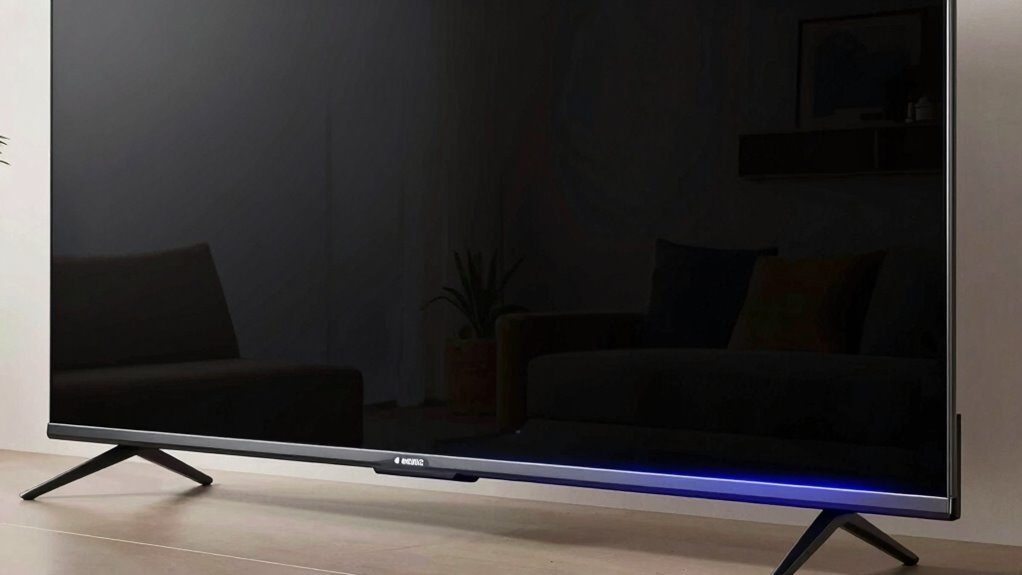
Are you considering upgrading your TV but feeling overwhelmed by the latest display technologies? The surge of OLED and Mini LED options has definitely shifted the way people approach TV shopping. These advancements promise stunning picture quality, but they also introduce new factors to consider—like screen calibration and energy efficiency. When you’re choosing between these two, understanding how they differ can help you make a smarter decision.
OLED TVs are renowned for their incredible contrast ratios and perfect blacks, thanks to each pixel emitting its own light. This results in vibrant images and deep shadows that truly bring movies and games to life. However, because OLED screens are highly sensitive to brightness levels, proper screen calibration becomes crucial. You want to fine-tune settings to get the best picture quality without risking burn-in or uneven wear over time. Luckily, many modern OLED sets include automatic calibration features or user-friendly controls, making it easier for you to optimize your display without expert help. Another key point is energy efficiency. Though OLEDs produce exceptional images, they generally consume more power when displaying bright scenes compared to other technologies. If you’re environmentally conscious or want to keep energy costs low, this is something to keep in mind when selecting an OLED model. Additionally, understanding display technology differences can help you appreciate the unique strengths of each option. Choosing the right display technology involves weighing these factors against your viewing environment and preferences. Interestingly, newer OLED models are incorporating power management features to help mitigate energy consumption without compromising picture quality. Moreover, advancements in screen longevity are helping OLED displays last longer, reducing concerns over burn-in and image retention.
Mini LED TVs, on the other hand, use thousands of tiny LEDs behind an LCD panel to improve brightness, contrast, and black levels. This technology offers a middle ground—delivering impressive picture quality without some of the drawbacks associated with OLEDs. Because they use backlighting, Mini LED screens tend to be more energy-efficient overall, especially during scenes with high brightness. This can be a significant advantage if you’re concerned about energy consumption or want to reduce your carbon footprint. Additionally, Mini LED displays often require less frequent screen calibration since their backlighting system helps maintain consistent picture quality across different viewing conditions. For you, that means less fuss over adjusting settings and more time enjoying your favorite content. Display calibration is less critical with Mini LED compared to OLED, making it a more maintenance-friendly option for many users.
Ultimately, these technologies have changed TV buying conversations because they challenge the traditional notions of what makes a good TV. OLED’s superior contrast and color accuracy appeal to those who prioritize picture quality, but its energy demands and calibration needs are considerations. Mini LED offers a compelling alternative with excellent contrast, energy efficiency, and less maintenance. As you weigh your options, think about how much you value calibration ease and energy savings alongside visual performance. Both technologies push the boundaries of display innovation, giving you more choices to match your viewing habits and priorities.
OLED 4K TV with automatic calibration
As an affiliate, we earn on qualifying purchases.
As an affiliate, we earn on qualifying purchases.
Frequently Asked Questions
How Do OLED and Mini LED TVS Compare in Price?
OLED TVs tend to be more expensive than Mini LED models, but the gap is narrowing. A price comparison shows Mini LED TVs are becoming more affordable, driven by affordability trends and increased competition. If you’re budget-conscious, Mini LED offers great picture quality at a lower price point. However, if you prioritize superior contrast and color accuracy, OLED might justify its higher cost. Ultimately, your choice depends on your budget and viewing preferences.
Are OLED and Mini LED TVS Suitable for Gaming?
Yes, OLED and Mini LED TVs are great for gaming. Picture OLED’s deep blacks and vibrant colors as your gaming canvas, while Mini LED’s brightness and contrast make every scene pop. They both offer low gaming latency, so you stay in sync with fast-paced action. With excellent color accuracy, your games feel more immersive. Whether you prefer OLED’s contrast or Mini LED’s brightness, both deliver a smooth, responsive gaming experience.
Which Lasts Longer: OLED or Mini LED TVS?
Mini LED TVs tend to last longer than OLEDs because they’re less prone to burn-in, which can affect OLEDs over time. OLEDs offer better color accuracy, but their power consumption is higher, especially with brighter images. If you prioritize longevity and lower power use, Mini LED is the better choice. However, for superior color detail, OLEDs excel, even if they might not last as long.
Do OLED and Mini LED TVS Require Special Maintenance?
You don’t need special maintenance for OLED and Mini LED TVs, but you should be mindful of screen burn-in and color accuracy. For OLEDs, avoid static images for long periods to prevent burn-in, and adjust brightness levels if needed. Mini LEDs generally don’t face burn-in issues, but keeping the screen clean and updating firmware helps maintain ideal color accuracy and overall picture quality. Regular gentle cleaning is recommended for both types.
How Do OLED and Mini LED TVS Perform in Bright Rooms?
In bright rooms, OLED and Mini LED TVs perform like a lighthouse shining through fog. They handle glare well, thanks to their high brightness levels, making colors pop vividly. You’ll notice excellent color accuracy and wide viewing angles, so the picture stays sharp from different spots in the room. While some reflections may still appear, these TVs generally excel in bright environments, providing clear, vibrant images even with ambient light.
Mini LED TV with high brightness
As an affiliate, we earn on qualifying purchases.
As an affiliate, we earn on qualifying purchases.
Conclusion
As you explore your options, you’ll find OLED and Mini LED TVs gently shifting the landscape, offering richer colors and deeper contrasts that elevate your viewing experience. Their subtle advancements transform your space into a cozy theater, making every movie night feel more immersive without overwhelming your senses. In this quiet revolution, your choice becomes less about specs and more about creating a warm, inviting haven where every moment feels just right.
As an affiliate, we earn on qualifying purchases.
As an affiliate, we earn on qualifying purchases.
Evergreen bestsellers Picks
bestsellers
As an affiliate, we earn on qualifying purchases.