When designing flexible learning spaces for young children, focus on creating adaptable environments that encourage curiosity and independence. Choose versatile furniture that’s lightweight, ergonomic, and easy to rearrange, and incorporate different zones for quiet, active, and collaborative play. Prioritize safety with stable structures and non-slip flooring, while promoting comfort through inviting textures and accessible storage. A well-designed space supports diverse activities and nurtures development—keep exploring to discover how to make your environment even more inspiring.

Get the little things that make your day delivered free with Prime
- Fast, free delivery on millions of items
- Prime Video, Amazon Music and more included
- Member-only deals all year
Key Takeaways
- Incorporate adaptable furniture and modular layouts to easily reconfigure spaces for diverse activities.
- Use durable, non-slip flooring and age-appropriate equipment to ensure safety across different learning zones.
- Design multi-functional areas that support exploration, collaboration, and quiet reflection within the same environment.
- Select ergonomic, adjustable furniture that promotes good posture and accommodates growing children’s needs.
- Integrate sensory elements and flexible furnishings to enhance engagement and cater to various learning styles.

Creating flexible learning spaces for young children is essential for fostering curiosity, independence, and engagement. When designing these environments, you want to prioritize safety and comfort, making certain that children feel secure and enthusiastic to explore. A key aspect of this is playground safety, even within indoor or outdoor play areas. You should select equipment and layout arrangements that minimize hazards, such as sharp edges or unstable structures. Durable, non-slip flooring can help prevent falls, and age-appropriate play structures encourage active, safe play. By integrating playground safety into your design, you create a space where children can learn through movement without risking injury, which boosts their confidence and physical development.
Prioritize playground safety with age-appropriate equipment and safe layouts to promote confident, injury-free active learning.
Equally important is furniture ergonomics. When choosing furniture, you need to verify it fits the size and needs of young children. Chairs and tables should be adjustable or appropriately scaled, allowing children to sit comfortably without straining their backs or necks. This not only supports good posture but also promotes independence, as children can easily manage their own materials and activities. Flexible seating options, like cushions or low stools, encourage children to move and choose different spots for work or play, fostering autonomy and focus. Proper ergonomics also mean desks and storage units are arranged in ways that prevent clutter and make materials accessible, reducing frustration and encouraging organization skills.
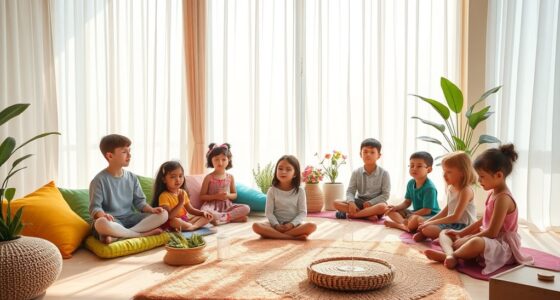
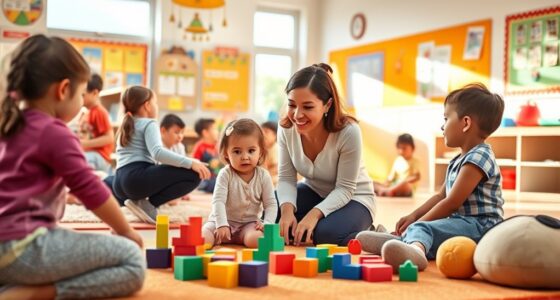
In designing a flexible learning space, you should think about how furniture can be easily rearranged to suit different activities. Lightweight tables and chairs make it simple to change the layout for group work, individual tasks, or creative projects. Modular furniture allows you to adapt the space quickly, creating zones for quiet reading, collaborative projects, or hands-on exploration. This versatility helps children develop a variety of skills and keeps the environment stimulating. Additionally, incorporating different textures, colors, and sensory elements can enhance engagement and comfort, making the space welcoming and conducive to curiosity. Considering furniture adaptability ensures the environment remains versatile and responsive to evolving learning needs.
Ultimately, creating a flexible learning environment is about balancing safety, comfort, and adaptability. You want children to feel secure and supported while having the freedom to explore and learn in multiple ways. By paying close attention to playground safety and furniture ergonomics, you lay a foundation for a space that promotes physical well-being, independence, and a love for learning. When children see a thoughtfully designed environment that respects their size and safety needs, they’re more likely to thrive, experiment, and develop essential skills that serve them well throughout their education.
Frequently Asked Questions
How Can Technology Be Integrated Into Flexible Learning Spaces?
You can integrate technology into flexible learning spaces by incorporating digital tools and interactive platforms that engage young children. Use tablets, smartboards, and educational apps to encourage exploration and collaboration. Guarantee the technology is adaptable to different learning styles and easily movable within the space. By doing so, you create a dynamic environment that fosters creativity and active participation, making learning both fun and effective for young children.
What Safety Measures Are Essential for Adaptable Classroom Designs?
You need to keep safety at the forefront, so don’t leave any stone unturned. Child proofing is essential—cover outlets, secure furniture, and lock cabinets. Establish clear emergency protocols and ensure all staff are trained. Regularly inspect equipment and spaces for hazards. By proactively addressing these measures, you create a safer environment where children can explore freely without unnecessary risks, turning potential hazards into a thing of the past.
How Do Flexible Spaces Support Diverse Learning Styles?
Flexible spaces support diverse learning styles by allowing you to tailor environments for multisensory activities and collaborative learning. You can easily rearrange furniture or create designated zones for quiet reflection or active engagement. This adaptability encourages children to choose setups that suit their individual preferences, fostering independence and confidence. As a result, each child benefits from a personalized learning experience that nurtures their unique strengths and promotes overall development.
What Budget Considerations Are Involved in Creating Flexible Environments?
Think of your budget as a garden that needs careful tending. To keep costs down, you choose cost-effective furniture and sustainable materials that last longer and reduce future expenses. Prioritize versatile pieces that adapt to different activities, saving money in the long run. Balance quality with affordability, and consider scalable solutions that grow with your space, ensuring your flexible learning environment remains functional without overspending.
How Can Teachers Be Trained to Utilize Flexible Learning Spaces Effectively?
You can train teachers effectively through targeted professional development sessions focused on flexible classroom management techniques. Provide hands-on workshops where they practice arranging space and using adaptable furniture. Encourage ongoing coaching and peer collaboration to share best practices. By emphasizing classroom management strategies in a flexible environment, teachers gain confidence and skills, ensuring they utilize the space creatively and effectively to enhance children’s learning experiences.
Conclusion
So there you have it—by creating flexible learning spaces, you’re fundamentally giving young children the freedom to explore, adapt, and perhaps even accidentally discover the meaning of life. Who knew that a movable bookshelf or a cozy corner could revolutionize education? Just remember, in the grand scheme, the real lesson might be that children thrive best when the classroom is as unpredictable as their imagination. After all, who needs structure when chaos is so enlightening?
NFL season / tailgating Picks
team gear
As an affiliate, we earn on qualifying purchases.