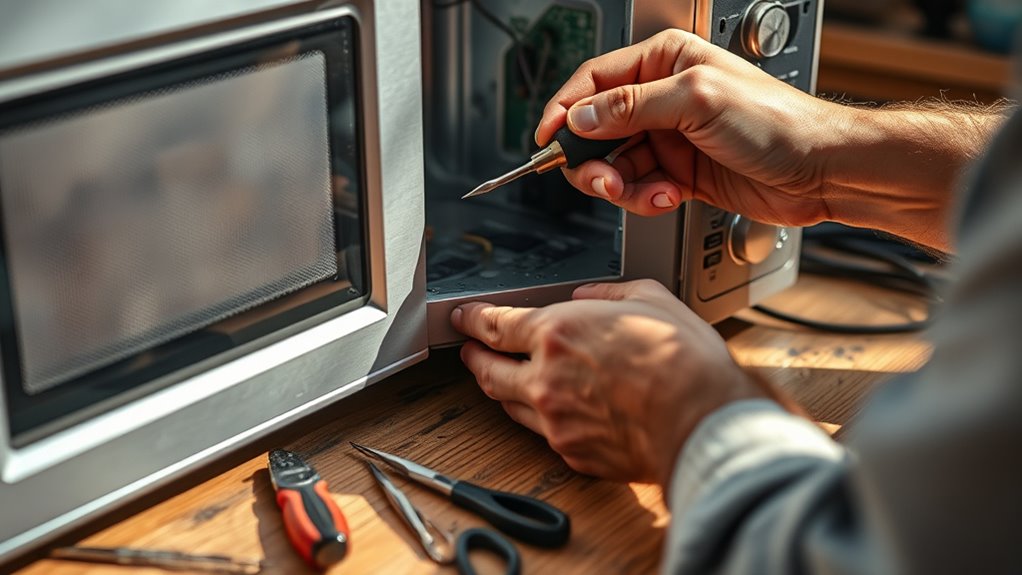

When fixing appliances and gadgets yourself, safety and the right tools are key. Always unplug devices, wear safety goggles, and handle power tools carefully to avoid accidents. Gather essential tools like screwdrivers and a multimeter, and follow step-by-step guides to troubleshoot common issues. Take your time and don’t rush; knowing basic components and safety tips helps prevent further damage. Keep learning as you go, and you’ll become more confident repairing your devices efficiently.

Get the little things that make your day delivered free — and shop member deals
- Fast, free delivery on millions of items
- Access to Prime Big Deal Days deals on October 6–7
- Prime Video, Amazon Music and more included
Key Takeaways
- Unplug devices and use a multimeter to check for electrical issues before starting repairs.
- Gather essential hand tools and familiarize yourself with their proper operation and safety guidelines.
- Follow step-by-step tutorials and repair guides specific to your appliance or gadget model.
- Prioritize safety by wearing goggles, keeping the workspace organized, and handling power tools carefully.
- Know your limits; seek professional help if the repair complexity exceeds your skill level.
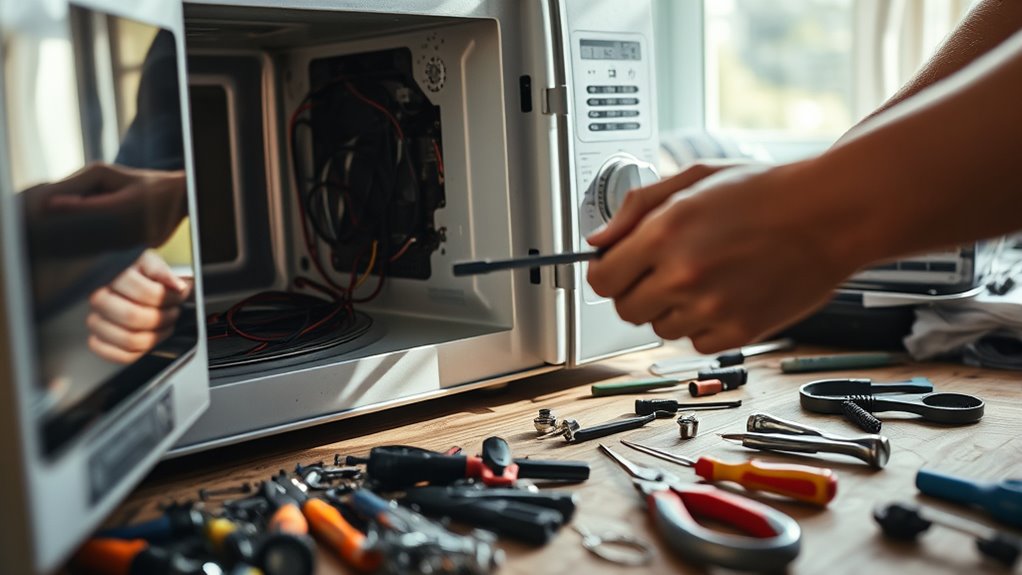
Have you ever wondered if you can handle home repairs yourself? Tackling appliance and gadget repairs might seem intimidating at first, but with the right tools and knowledge, you can often save time and money. One of the most useful resources you’ll need are power tools. These devices make many repair tasks more manageable, especially when disassembling or replacing parts. A drill, for example, can help you remove screws quickly, while a soldering iron might be necessary for electronic repairs. However, before reaching for any power tools, it’s essential to prioritize safety precautions. Always wear safety goggles to protect your eyes from debris or sparks, and use hearing protection if you’re working with loud equipment. Keep your workspace clean and free of clutter to avoid accidents, and make sure you’re familiar with each tool’s operation before starting. Reading the manufacturer’s instructions and safety guidelines helps prevent mishaps and extends the lifespan of your tools. Remember, using power tools improperly can lead to injuries or damage to your appliances, so don’t rush or force anything. Take your time to learn the correct handling techniques, and if something feels unsafe, stop and reassess. Proper understanding of projected performance can also guide your repair process and ensure successful results.
When repairing appliances or gadgets, it’s also essential to understand their basic components. Many issues stem from simple problems like loose wires, worn-out belts, or clogged filters. Before diving into repairs, unplug the device to eliminate the risk of electric shock. Use a multimeter to check for power issues, and have a set of screwdrivers, pliers, and other hand tools ready. If your appliance has screws or panels, carefully remove them and keep track of all parts. As you work, consult online tutorials or repair guides specific to your model—these resources can offer step-by-step instructions that make the process clearer. Patience is key; rushing through repairs can cause damage or frustration. If you encounter a problem you’re unsure how to fix, it’s smarter to stop and seek advice rather than risk further damage.
As an affiliate, we earn on qualifying purchases.
Frequently Asked Questions
How Do I Identify the Exact Model of My Appliance for Repairs?
To identify your appliance’s exact model, start by locating the model identification label, usually found on the back, inside the door, or near the control panel. Look for the serial number and model number on this label. Once you find these, write them down. This information helps you find the right parts and instructions for repairs, ensuring you get the correct components and avoid unnecessary delays.
What Safety Precautions Should I Take Before Starting DIY Repairs?
Think of yourself as a safety hero before starting repairs. You should always wear personal protective equipment like gloves and safety goggles, and guarantee electrical safety by unplugging the appliance and turning off circuit breakers. Keep your workspace dry and well-lit, and avoid loose clothing. These precautions help prevent shocks, cuts, and other accidents, letting you work confidently while protecting yourself, just like a responsible hero in your own repair story.
Are There Specific Tools Recommended for Different Types of Gadgets?
When repairing gadgets, you should use specialized screwdrivers for different screw types to prevent damage. An anti-static wristband is essential to protect sensitive electronic components from static electricity. These tools help you work safely and effectively, ensuring you don’t accidentally harm your device. Always choose the right screwdriver for the job, and wear an anti-static wristband when handling circuit boards or delicate electronics to minimize static discharge risks.
How Can I Troubleshoot Complex Electronic Malfunctions Effectively?
To troubleshoot complex electronic malfunctions effectively, start by performing circuit testing to identify where the issue lies. Use a multimeter to check for faulty components, and don’t hesitate to replace damaged parts. Keep detailed notes of your tests and replacements, and consult online schematics or manuals for guidance. Patience is key—you’ll improve with experience, and you’ll get better at pinpointing issues quickly over time.
When Should I Consider Professional Repair Instead of DIY?
You should consider professional repair when the issue involves complex electronics, safety risks, or if DIY efforts could cause further damage. Opting for a professional assessment helps guarantee proper fixes and reduces liability concerns if something goes wrong. If you’re unsure about your skills or the repair requires specialized tools, it’s safer and smarter to call in experts rather than risking injury or voiding warranties.
As an affiliate, we earn on qualifying purchases.
Conclusion
Now that you’ve learned the art of DIY repairs, you’re like a skilled craftsman wielding a magic wand, turning broken appliances into shining, new treasures. Each fix is a small victory, a brushstroke on your personal masterpiece of self-reliance. Remember, with patience and a little know-how, you can tame even the most stubborn gadgets. So go ahead—embrace the challenge, and let your confidence build like a sturdy foundation that lasts a lifetime.
electric screwdriver for gadgets
As an affiliate, we earn on qualifying purchases.
As an affiliate, we earn on qualifying purchases.
repair toolkit for home appliances
As an affiliate, we earn on qualifying purchases.
As an affiliate, we earn on qualifying purchases.
NFL season / tailgating Picks
team gear
As an affiliate, we earn on qualifying purchases.