

To develop problem-solving skills in young children, encourage active participation in playful activities like playground games and storytelling. Use strategies such as guiding them to identify safety practices and suggest solutions during play. Engaging children with creative stories also fosters critical thinking and perspective-taking. By making learning fun and interactive, you help strengthen their cognitive abilities naturally. Keep exploring for more effective ways to boost your child’s problem-solving skills and support their growth.

Get the little things that make your day delivered free with Prime
- Fast, free delivery on millions of items
- Prime Video, Amazon Music and more included
- Member-only deals all year
Key Takeaways
- Incorporate storytelling activities that encourage children to analyze conflicts and suggest solutions.
- Use playtime at the playground to teach safety and problem-solving during physical activities.
- Engage children in interactive scenarios that promote critical thinking and decision-making skills.
- Foster creativity and perspective-taking through daily storytelling routines that challenge their thinking.
- Apply research-based strategies that make learning enjoyable, strengthening cognitive development and problem-solving abilities.
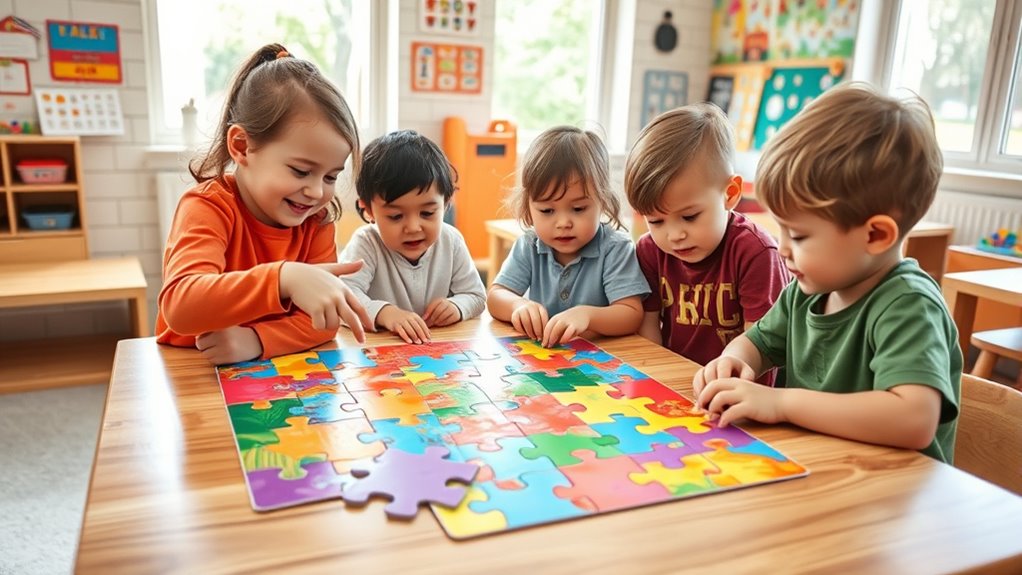
Developing problem-solving skills in young children is essential for their overall growth and future success. When you focus on nurturing these skills, you’re equipping your child to handle challenges confidently and think critically about their environment. One effective way to do this is through engaging activities that promote active participation. For example, playtime at the playground isn’t just about fun; it’s a prime opportunity to teach your child about playground safety while encouraging their problem-solving abilities. As they navigate climbing frames or slides, you can guide them to identify safe practices, such as checking for loose bolts or watching out for other children. These small lessons help them develop awareness and make decisions quickly, which are core components of problem-solving.
In addition, storytelling techniques serve as powerful tools for building your child’s thinking skills. When you tell stories together, you create a narrative that challenges them to anticipate what might happen next or solve conflicts within the story. For instance, you might tell a tale about a character facing a tricky situation, prompting your child to suggest solutions or predict outcomes. This interactive approach fosters their ability to analyze problems and think creatively. It also encourages them to consider different perspectives, which broadens their understanding of complex issues. Incorporating storytelling into daily routines makes learning engaging and memorable, helping your child internalize problem-solving strategies in a natural, enjoyable way. Moreover, integrating cognitive development concepts from educational research can further enhance their ability to think critically and solve problems effectively.
Popular right now

Sony WH-1000XM4C Wireless Noise-Cancelling Headphones, Black

Dyson V8 Cyclone Cordless Vacuum

eufy E25 Robot Vacuum and Mop Combo with HydroJet Roller Mop
As an affiliate, we earn on qualifying purchases.
Frequently Asked Questions
How Early Can Children Start Developing Problem-Solving Skills?
You can start helping children develop problem-solving skills as early as infancy. During this stage, early milestones in cognitive development emerge, like grasping objects or exploring their surroundings. These actions lay the foundation for later skills, encouraging curiosity and critical thinking. By providing safe, stimulating environments and engaging with them through play, you support their natural progression, making problem-solving a fun and integral part of their growth from a young age.
What Are Common Obstacles to Enhancing Problem-Solving in Young Children?
You might face obstacles like cultural barriers and language differences that hinder problem-solving development. These challenges can make it harder for children to express ideas or understand instructions, limiting their opportunities to practice problem-solving. To overcome this, you should create an inclusive environment, use visual aids, and encourage bilingual communication. By addressing these barriers, you help children build confidence and develop essential problem-solving skills more effectively.
How Can Parents Assess a Child’s Problem-Solving Progress?
You assess your child’s problem-solving progress by observing their responses during play and everyday challenges, noticing progress indicators like increased independence and creativity. Use assessment strategies such as asking open-ended questions and offering puzzles to gauge their thinking. While some skills develop gradually, consistent observation helps you recognize growth, identify areas needing support, and celebrate their problem-solving achievements, guiding your encouragement and tailored activities.
Are There Specific Activities That Best Promote Problem-Solving Skills?
You can promote problem-solving skills by engaging your child in interactive play and puzzle activities. Interactive play encourages them to think creatively and work through challenges with you, fostering critical thinking. Puzzle activities, on the other hand, help develop their cognitive skills by requiring planning and problem-solving strategies. Incorporate these activities regularly, and watch your child’s confidence and ability to solve problems grow naturally through fun and engaging experiences.
How Does Screen Time Impact Young Children’s Problem-Solving Development?
Screen time can hinder your child’s problem-solving development by increasing digital distraction and fostering screen dependency. When kids spend too much time on screens, they miss out on hands-on experiences that promote critical thinking and creativity. To support their growth, limit screen exposure and encourage activities that require active engagement. This helps your child develop essential problem-solving skills by fostering curiosity, exploration, and real-world problem-solving opportunities.
Conclusion
By nurturing your child’s problem-solving skills early on, you’re setting them up for success. Engaging them in activities that challenge their thinking can boost their confidence and creativity. Did you know that children who develop strong problem-solving skills by age five are 30% more likely to excel academically later? Keep encouraging curiosity and exploration—you’re helping build a foundation that will serve them lifelong. Your support truly makes a lasting difference in their growth.