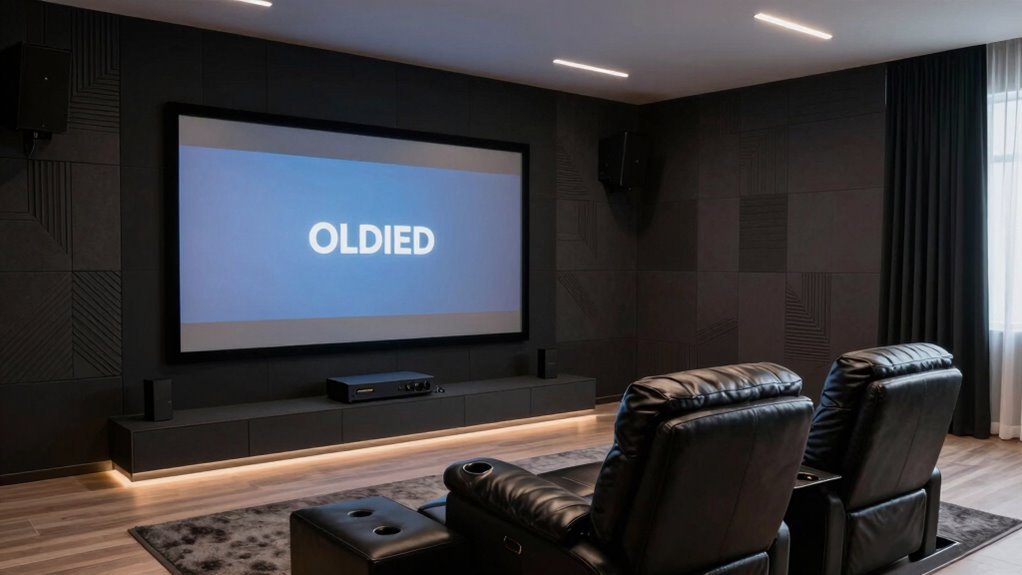

Before building a home theater, plan for sound calibration to guarantee clear audio and avoid muffled or overwhelming sound. Position seats at the right distance and face them directly to prevent neck strain. Focus on room acoustics by choosing materials like rugs and acoustic panels to reduce echoes. Select appropriate lighting to minimize glare and reflections, and organize wiring for safety and tidiness. Ventilation and environment setup are also key for comfort. Keep exploring to discover more tips for creating your perfect space.

Get the little things that make your day delivered free with Prime
- Fast, free delivery on millions of items
- Prime Video, Amazon Music and more included
- Member-only deals all year
Key Takeaways
- Plan room layout considering seating, screen placement, and acoustics for optimal viewing and sound quality.
- Choose appropriate lighting, blackout options, and display size to enhance image contrast and reduce glare.
- Prioritize sound calibration and room acoustics to achieve balanced, immersive audio.
- Organize wiring and ensure proper ventilation for safety, convenience, and equipment longevity.
- Allocate space for easy movement, cable management, and future upgrades during the planning process.
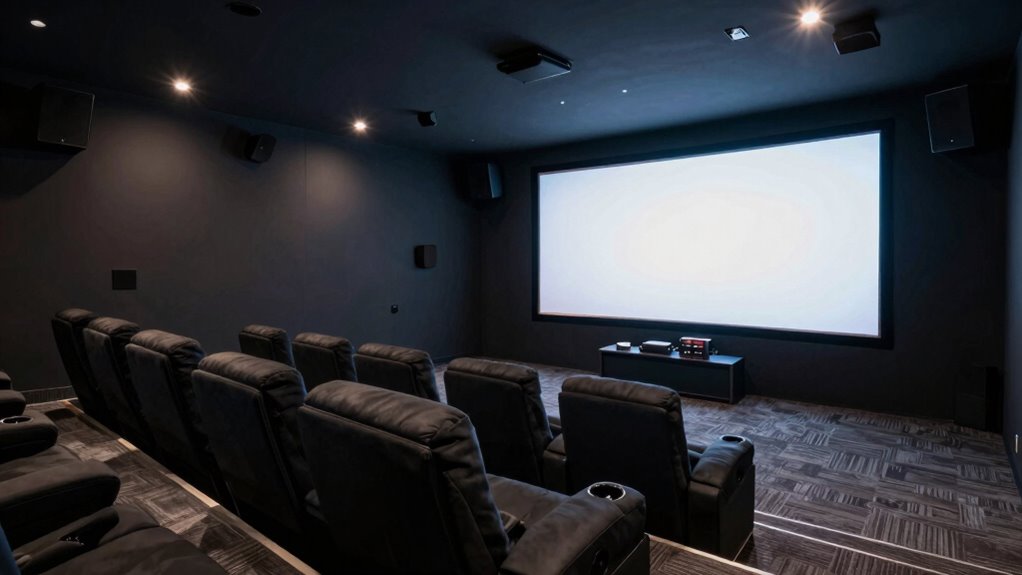
Setting up a home theater can transform your living space into a cinematic escape, but it requires careful planning to get it right. One of the first steps is understanding how to optimize your audio and seating to create a truly immersive experience. Audio calibration is essential because it guarantees that sound reaches every corner of the room evenly, providing clear dialogue, immersive effects, and balanced music. You’ll want to invest in a good quality sound system, then use calibration tools or software to fine-tune the speakers. This process involves adjusting volume levels, speaker distances, and equalization to match your room’s acoustics. Proper calibration prevents sound from being muffled or overwhelming, making your viewing sessions more enjoyable and realistic.
Optimizing audio calibration ensures even sound distribution, creating a clear, immersive, and realistic home theater experience.
Equally important is planning the seating arrangement. Your seats should be positioned to maximize comfort while guaranteeing ideal sound and picture quality. Ideally, the main seating should be placed so that viewers sit at a distance roughly 1.5 to 2.5 times the diagonal size of your display. This helps you avoid eye strain and keeps the image sharp. Also, consider the height and angle of the seats; they should face the screen directly without causing neck strain. If you’re designing a multi-row setup, stagger the seats to prevent heads from blocking the view and to maintain good sightlines for everyone. Leave enough space around each seat to allow easy movement and to prevent a cramped feeling. Additionally, understanding room acoustics can help you choose the right materials and layout to improve sound quality further. Incorporating soundproofing techniques can also significantly enhance the overall experience by minimizing external noise and preventing sound leakage. Proper room layout is crucial as it influences both sound and visual performance, so plan carefully before installation. Considering ventilation is also important to ensure the space remains comfortable during extended viewing sessions without overheating equipment or making the room stuffy. Moreover, selecting the right lighting setup can drastically improve your viewing experience by reducing glare and reflections.
Lighting plays an integral role in your setup, too. You want dimmable lights or blackout curtains to eliminate glare and reflections on the screen. This enhances contrast and makes the picture pop. When it comes to the display, choose a screen size and resolution suitable for your room’s dimensions; larger screens are more immersive but require careful placement to avoid distortion. Also, think about the room’s acoustics—adding rugs, curtains, or acoustic panels can reduce echo and improve sound quality.
Finally, don’t forget the wiring and cable management. Keep cables organized and out of sight to avoid tripping hazards and maintain a sleek, tidy look. Power sources should be easily accessible and well-planned to support all your equipment. Before you start building, sketch out a layout that accounts for all these elements. Taking the time to plan your audio calibration, seating arrangement, and overall room environment will make your home theater a space you love to spend time in.
Popular right now

Samsung 42-Inch S90H OLED 4K Smart TV Bundle

De’Longhi Classic Matte Black Espresso Machine with Milk Frother

Samsung 42-Inch Class OLED S90F 4K Smart TV (2025)
As an affiliate, we earn on qualifying purchases.
Frequently Asked Questions
What Is the Ideal Room Size for a Home Theater?
The ideal room size for a home theater is around 12×20 feet, providing enough space for best viewing and sound. You should incorporate acoustic treatments to minimize echo and improve sound quality. Your seating arrangements should be positioned to maximize comfort and screen visibility, ideally with the seats slightly elevated or angled. This size allows room for proper speaker placement and ensures an immersive experience, making your home theater truly enjoyable.
How Much Should I Budget for a Home Theater System?
You could easily spend a fortune on a home theater system, but a good budget is around $3,000 to $10,000. Think about it: your budget influences everything, from home decor to lighting design and premium sound systems. To get the best bang for your buck, prioritize quality equipment and stylish decor that complements your space. Remember, a well-planned setup makes your movie nights unforgettable!
What Are the Best Soundproofing Options?
To soundproof your home theater, start with acoustic panels—they absorb sound and reduce echo effectively. Use sound barriers like mass-loaded vinyl or dense drywall to block noise from escaping. Seal gaps around doors and windows with weatherstripping, and consider adding carpeting or thick curtains to further dampen sound. Combining these options creates a quieter environment, ensuring immersive viewing without disturbing other areas of your home.
How Do I Choose the Right Projector or TV?
Ever wondered how to pick the perfect screen for your home theater? You should focus on projector placement and TV mounting options. For a projector, consider throw distance and screen size to guarantee a clear, immersive picture. If you prefer a TV, decide between wall-mounting or stands based on space and viewing angles. The right choice depends on your room size, lighting, and personal preference, making your viewing experience truly exceptional.
What Are Common Wiring and Power Considerations?
When wiring your home theater, prioritize proper speaker placement to guarantee ideal sound quality. Use high-quality cables and plan your wiring paths carefully to avoid clutter. Install power surge protection to guard your equipment against voltage spikes. Make sure outlets are easily accessible for all devices, and consider dedicated circuits if possible. Proper wiring and surge protection keep your setup safe, organized, and delivering the best audio-visual experience.
Conclusion
Building your home theater is like crafting a personal sanctuary, where every detail shapes your experience. Remember, the journey isn’t just about equipment or layout, but about creating a space that immerses you and elevates your movie nights. As you set out on this adventure, keep your vision clear and your patience steady—after all, the perfect home theater isn’t built in a day, but in the passion and care you pour into it.