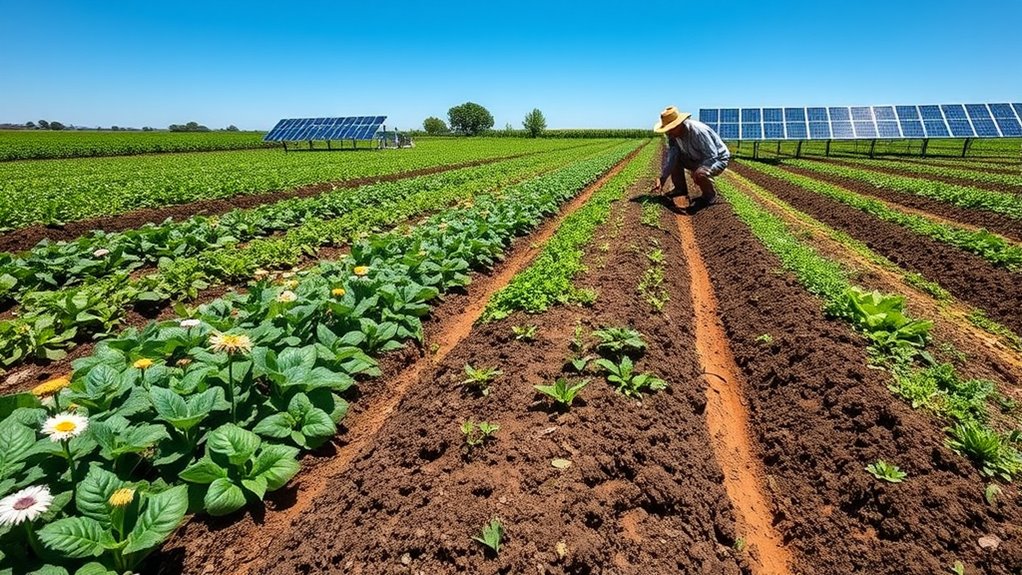

Sustainable agriculture with regenerative practices focuses on restoring soil health, increasing biodiversity, and building resilient farming systems. You can achieve this by diversifying crops, rotating them to prevent nutrient depletion, and using cover crops to protect and enrich the soil. Water management techniques like mulching and contour farming help conserve resources and reduce erosion. By adopting these methods, you’ll create a thriving, environmentally friendly farm—keep exploring to discover how these practices can transform your land.
Key Takeaways
- Implement crop rotation and diversity to maintain soil fertility and prevent nutrient depletion.
- Use cover crops to protect, enrich, and improve soil structure and microbial activity.
- Practice water conservation techniques like mulching and contour farming to reduce erosion and enhance soil health.
- Reduce synthetic inputs by enhancing natural pest control and soil nutrient cycling through regenerative methods.
- Foster a resilient ecosystem by promoting beneficial microbes and organic matter for long-term farm sustainability.
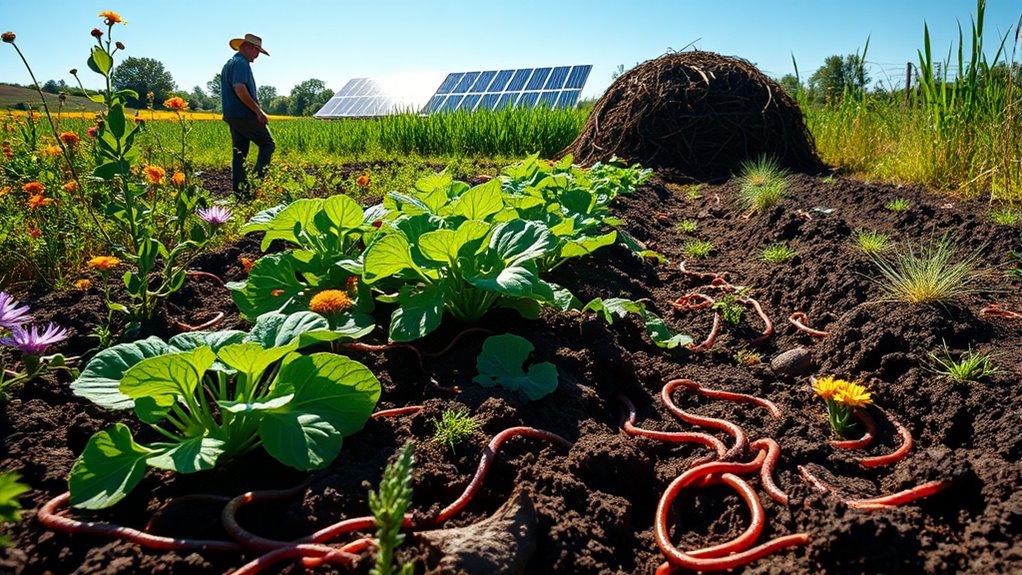
Have you ever wondered how farming can meet today’s food demands without harming the environment? It’s a pressing question, and the answer lies in adopting sustainable practices that prioritize the health of your soil and promote crop diversity. When you focus on soil health, you’re ensuring that the ground beneath your feet remains fertile, resilient, and capable of supporting crops for generations. Healthy soil isn’t just about nutrients; it’s about fostering a balanced ecosystem with beneficial microbes, organic matter, and proper structure. This foundation allows plants to grow stronger, resist pests and diseases naturally, and require fewer chemical inputs. By avoiding over-tilling and reducing synthetic fertilizers, you help maintain this delicate balance, ensuring the soil can regenerate itself over time.
Crop diversity plays a vital role in sustainable agriculture because it breaks the cycle of monoculture, which often depletes soil nutrients and increases vulnerability to pests. Instead of planting the same crop year after year, you diversify your planting schedule, introducing different species and varieties. This approach not only enhances soil resilience by preventing nutrient exhaustion but also creates a more stable ecosystem that supports beneficial insects, reduces pest outbreaks, and minimizes the need for chemical interventions. When you rotate crops—such as legumes with grains—you naturally replenish nitrogen levels in the soil, cutting down on synthetic fertilizers and improving overall soil quality.
Incorporating cover crops is another regenerative practice that boosts soil health. Cover crops like clover or vetch cover the soil during off-season periods, protecting it from erosion, suppressing weeds, and adding organic matter when they’re turned under. This practice enhances soil structure, increases microbial activity, and helps retain moisture, making your land more productive in the long run. Additionally, integrating crop diversity and cover cropping creates a resilient system that adapts better to changing weather patterns, pests, and diseases, reducing reliance on harmful chemicals. Using water management techniques such as contour farming and mulching further supports soil conservation and promotes sustainable growth.

No-Till Garden Farm and Garden Cover Crop Mix Seeds – 5 Lbs – Blend of Gardening Cover Crop Seeds: Hairy Vetch, Daikon Radish, Forage Collards, Triticale, More
🌱 Diverse 9-Seed Cover Crop Mix – Non-GMO & Heirloom – Includes Austrian Field Pea, Hard Red Winter…
As an affiliate, we earn on qualifying purchases.
As an affiliate, we earn on qualifying purchases.
Frequently Asked Questions
How Do Regenerative Practices Affect Crop Yields Long-Term?
Regenerative practices boost your crop yields long-term by improving soil health and increasing ecological resilience. When you adopt methods like cover cropping and reduced tillage, you enhance soil structure, fertility, and microbial activity, which helps plants grow stronger and more productive. Over time, these practices create a sustainable environment that supports consistent yields, even during adverse conditions, ensuring your farm remains resilient and productive for years to come.
What Are the Initial Costs of Transitioning to Regenerative Agriculture?
The initial costs of shifting to regenerative agriculture include investing in new equipment, soil health practices, and training, which can be significant upfront. While economic incentives like grants or subsidies can ease financial risks, you should be prepared for the short-term expenses. These costs often pay off over time through improved soil fertility, reduced input needs, and higher resilience, making the shift worthwhile despite initial financial challenges.
Can Regenerative Farming Be Integrated With Organic Certification Standards?
Yes, regenerative farming can be integrated with organic certification standards. You’ll need to make certain your practices meet organic compliance and adhere to certification standards, which emphasize soil health, biodiversity, and chemical-free inputs. By aligning regenerative techniques with these standards, you can obtain organic certification while improving sustainability. Just keep detailed records of your practices and inputs, and work closely with certifying bodies to maintain compliance throughout your shift.
How Does Regenerative Agriculture Impact Local Biodiversity?
Think of regenerative agriculture like a vibrant mosaic, where each piece enhances the whole. It boosts soil health by enriching nutrients and microbial life, creating a thriving environment for native species. As a result, local biodiversity flourishes because native plants and animals find new habitats and food sources. By fostering diverse ecosystems, regenerative practices help maintain ecological balance and support resilient, healthy landscapes.
What Training or Resources Are Available for Farmers New to Regenerative Methods?
You can access various training programs and resources to learn regenerative methods. Look for workshops on cover crop strategies, which teach you how to improve soil health naturally. Many organizations offer online courses and local farming groups provide hands-on experience. Also, utilizing soil health monitoring tools helps you track progress and adapt practices effectively. These resources empower you to implement regenerative techniques confidently and sustainably.
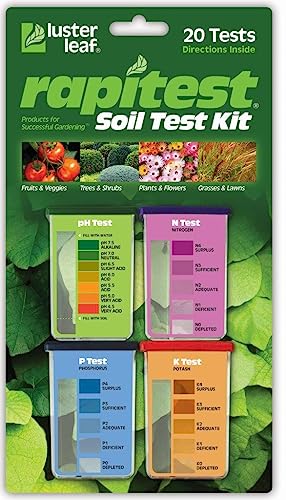
Rapitest Soil Test Kit for Gardens, Vegetables, Flowers and Lawns. USA designed and assembled soil tester completely, quickly and accurately measures/analyzes soil pH acidity and garden nutrients.
Quick, at home results for Soil pH, Nitrogen, Phosphorous and Potash Innovative and inexpensive soil test kit features…
As an affiliate, we earn on qualifying purchases.
As an affiliate, we earn on qualifying purchases.
Conclusion
Think of sustainable agriculture as tending a delicate garden—you’re nurturing the roots, honoring the earth, and planting seeds for a brighter future. Every regenerative practice you embrace is like watering those roots, ensuring they grow strong and resilient. By working with nature rather than against it, you become a steward of the land, shaping a legacy that blooms for generations to come. Your actions are the sunlight that helps this garden of hope flourish.

innovex Decorative Wood-Grain Mulching Cloth – Natural-Look Weed Control Fabric for Landscaping and Gardens, 3.3ft x 32.8ft (1m x 10m)
A weed control sheet that suppresses weeds by blocking sunlight without relying on chemicals!
As an affiliate, we earn on qualifying purchases.
As an affiliate, we earn on qualifying purchases.

The Family Garden Planner: Organize Your Food-Growing Year •Helpful Worksheets •Weekly Tasks •Expert Advice
As an affiliate, we earn on qualifying purchases.
As an affiliate, we earn on qualifying purchases.