
Advances in battery technology and smart grid integration are making renewable energy storage more efficient and accessible. Lithium-ion batteries now offer higher capacity at lower costs, helping you store excess solar or wind power for later use. Smart grid systems ensure energy flows smoothly and prevent overloads. However, barriers like high costs, environmental concerns, and lack of clear regulations still slow progress. Stay with us to discover how these challenges are being addressed and what the future holds.

Get the little things that make your day delivered free with Prime
- Fast, free delivery on millions of items
- Prime Video, Amazon Music and more included
- Member-only deals all year
Key Takeaways
- Advances in lithium-ion batteries have increased capacity and affordability, boosting renewable energy storage potential.
- Grid integration technologies enable real-time balancing of supply and demand, supporting renewable energy deployment.
- High costs, environmental concerns, and lack of regulatory frameworks remain barriers to widespread storage adoption.
- Innovations in long-term energy storage and smart grid infrastructure are driving future growth.
- Overcoming these barriers is crucial for enhancing renewable energy reliability, independence, and resilience.
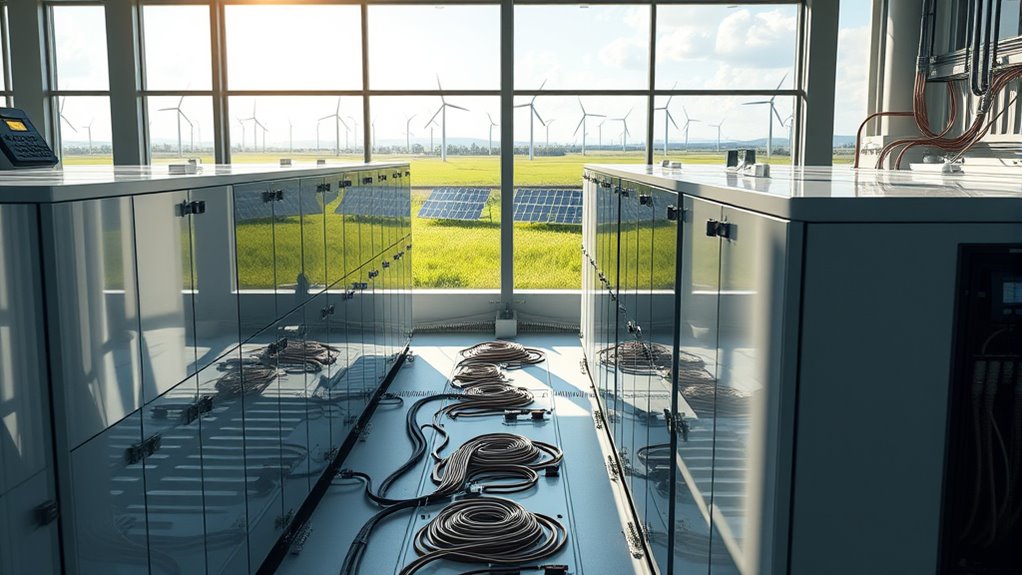
Have you ever wondered how renewable energy sources like solar and wind can power your home consistently? The key lies in how we store and manage that energy, especially through advances in battery technology and grid integration. Battery technology has improved dramatically over the past decade, making it possible to store large amounts of energy efficiently and safely. Modern batteries, such as lithium-ion, are now more affordable and have higher capacity than ever before, allowing you to store excess energy generated during sunny or windy days for use when the sun isn’t shining or the wind isn’t blowing. This shift means you’re less dependent on traditional power grids, which often rely on fossil fuels and are vulnerable to outages. As a result, your home can become more self-sufficient, guaranteeing a steady power supply regardless of external conditions.
Additionally, innovations in high-capacity energy storage are enabling longer-term storage solutions, making renewable energy more viable for everyday use. However, integrating these storage solutions into the existing energy grid presents its own set of challenges. Grid integration involves more than just plugging in batteries; it requires sophisticated systems to balance supply and demand in real-time. When your home produces excess energy, that energy needs to be efficiently fed back into the grid or stored for later use, and this process demands advanced control systems and smart grid technology. These systems coordinate energy flows, prevent overloads, and ensure stability across the entire network. Without proper grid integration, even the most advanced battery systems can cause issues, such as voltage fluctuations or reduced grid reliability. That’s why many utilities and energy providers are investing in smart grid infrastructure, which allows for seamless communication between individual energy sources and the larger grid.
Despite these advancements, barriers still exist. Battery costs, while decreasing, remain significant for widespread adoption. Additionally, the environmental impact of battery manufacturing and disposal raises concerns, prompting ongoing research into more sustainable options. Regulatory frameworks and policies also play a vital role; some regions lack clear regulations to incentivize or facilitate widespread battery deployment and grid modernization. These barriers slow down the acceleration of renewable energy storage solutions, but progress continues. As technology advances and policy evolves, integrating batteries into the grid becomes more practical and cost-effective. Ultimately, your ability to rely on renewable energy for consistent power depends on overcoming these hurdles, making the future of energy storage promising yet still a work in progress.
home lithium-ion battery storage system
As an affiliate, we earn on qualifying purchases.
As an affiliate, we earn on qualifying purchases.
Frequently Asked Questions
What Are the Latest Breakthroughs in Battery Technology?
You’ve likely heard about solid-state batteries, which use a solid electrolyte for safer, more efficient energy storage. Recent breakthroughs include improved stability and energy density, making them more viable for real-world use. Metal-air systems also see progress, offering high energy capacity with lightweight design. These innovations could revolutionize renewable energy storage by providing longer-lasting, faster-charging batteries, helping you harness cleaner energy more effectively and overcome previous barriers.
How Cost-Effective Are Emerging Energy Storage Solutions?
Emerging energy storage solutions are becoming increasingly cost-effective, boosting their economic feasibility and market competitiveness. You’ll find that new technologies like solid-state batteries and flow batteries reduce costs and improve efficiency, making renewable energy more affordable and reliable. As these innovations advance, they’re likely to lower overall energy storage expenses, helping you and others adopt cleaner energy sources more easily while supporting a sustainable and economically viable energy future.
What Policies Support Renewable Energy Storage Adoption?
Like Prometheus bringing fire to humanity, you benefit from policies that support renewable energy storage. Policy incentives, such as tax credits and grants, encourage adoption, while clear regulatory frameworks reduce uncertainties, making investments more attractive. Governments worldwide are crafting these policies to foster innovation and infrastructure development, ensuring you can harness renewable power efficiently. By embracing supportive policies, you help accelerate the shift to a sustainable, resilient energy future.
How Do Storage Systems Impact Grid Stability?
Storage systems improve grid stability by enabling effective grid balancing and peak shaving. When you use energy storage, you can store excess renewable power during low demand and release it during high demand, reducing stress on the grid. This helps prevent outages and maintains consistent power quality. By smoothing out fluctuations, storage systems make the grid more resilient, reliable, and capable of integrating more renewable energy sources seamlessly.
What Are the Environmental Impacts of New Storage Methods?
Think of new storage methods as double-edged swords, cutting both ways. They can reduce your reliance on fossil fuels, lowering your environmental footprint, but may also bring ecological effects like habitat disruption or resource depletion during manufacturing. While innovation aims to make energy cleaner, you should stay aware of possible environmental impacts, ensuring these storage solutions truly serve the planet’s health without unintended harm. Balance is key in this green evolution.
As an affiliate, we earn on qualifying purchases.
Conclusion
As you explore renewable energy storage, remember that progress is often a double-edged sword—there are breakthroughs, but hurdles remain. Keep pushing forward, because every challenge you face is an opportunity to innovate and improve. The road to a sustainable future isn’t a walk in the park, but with determination and smart solutions, you can turn the tide. Stay committed, because when the going gets tough, the tough get going, and change becomes possible.
smart grid energy management system
As an affiliate, we earn on qualifying purchases.
As an affiliate, we earn on qualifying purchases.
long-term renewable energy storage solutions
As an affiliate, we earn on qualifying purchases.
As an affiliate, we earn on qualifying purchases.
Halloween Picks
halloween
As an affiliate, we earn on qualifying purchases.