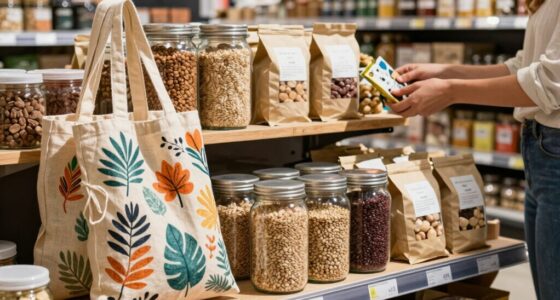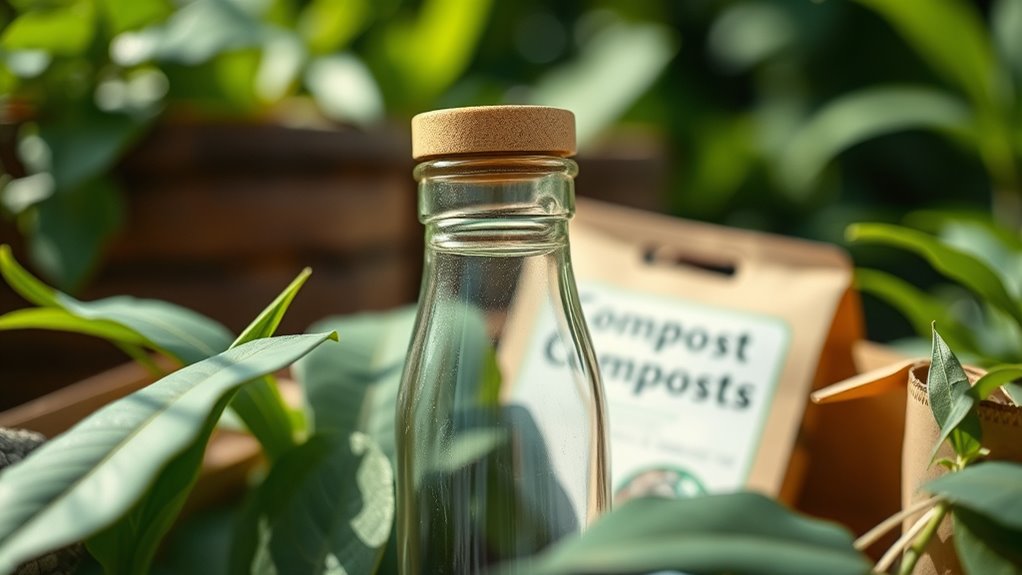

You can advance sustainability by adopting refillable and compostable packaging systems. These innovations minimize waste and reduce your reliance on single-use plastics, helping you lower your environmental impact. Reusable containers promote a circular economy, while compostable materials break down safely, lessening landfill burden. Incorporating such systems in your business supports eco-friendly practices and appeals to conscious consumers. Want to explore how these solutions can transform your packaging approach? Keep exploring for more insights.

Get the little things that make your day delivered free with Prime
- Fast, free delivery on millions of items
- Prime Video, Amazon Music and more included
- Member-only deals all year
Key Takeaways
- Refillable systems reduce waste by encouraging consumers to reuse containers through refill stations and return programs.
- Compostable packaging made from biodegradable plastics decomposes safely, minimizing environmental impact at end-of-life.
- Circular economy models promote the reuse and recycling of packaging materials, extending product lifecycle and reducing landfill waste.
- Innovations integrate durable, reusable containers with biodegradable options for a sustainable, low-impact packaging approach.
- Lifecycle considerations ensure packaging design prioritizes end-of-life options, supporting environmental goals and responsible consumption.

As consumers become increasingly aware of environmental issues, companies are actively seeking sustainable packaging innovations to reduce waste and carbon footprints. One of the most promising developments is the use of biodegradable plastics, which break down more quickly and safely in the environment compared to traditional plastics. These materials are designed to decompose through natural processes, leaving behind minimal residue and reducing long-term pollution. By incorporating biodegradable plastics into their packaging, companies can considerably lower the amount of plastic waste that ends up in landfills and oceans. This shift not only appeals to eco-conscious consumers but also aligns with global efforts to minimize environmental impact.
Alongside biodegradable plastics, reusable containers have gained popularity as a sustainable alternative to single-use packaging. These containers are designed for multiple uses, encouraging consumers to reduce their reliance on disposable options. When you opt for products packaged in reusable containers, you help decrease the demand for new packaging materials and cut down on waste generation. Reusable containers are often made from durable materials like glass, stainless steel, or sturdy plastics, ensuring they withstand repeated use without degrading. Their versatility makes them suitable for storing food, beverages, and other household items, making them a practical choice for everyday life.
Implementing refillable and compostable systems offers a dual benefit: it fosters a circular economy where resources are reused rather than discarded. Companies are now developing systems where consumers can return empty containers for refilling or recycling, creating a closed-loop process that minimizes waste. This approach not only reduces environmental impact but also encourages consumer participation in sustainability efforts. For example, refill stations for liquids like detergents or beverages are becoming more common, allowing consumers to bring in their own containers and refill them multiple times. Such initiatives help cut down on packaging waste and promote responsible consumption.
Moreover, the integration of biodegradable plastics and reusable containers into packaging strategies shows a growing awareness of lifecycle impacts. Companies are designing products with end-of-life considerations in mind, ensuring that materials can either be reused efficiently or safely decomposed. This shift towards thoughtful packaging reduces reliance on fossil fuels and minimizes pollution, making a tangible difference for the environment. Additionally, adopting batteryless inverters in sustainable packaging supply chains can further reduce energy consumption, emphasizing the importance of energy-efficient solutions. As a consumer, your choices—favoring products with biodegradable plastics or opting for items in reusable containers—can drive demand for these innovations, encouraging more brands to adopt sustainable practices. Together, these efforts move us closer to a future where packaging is not just functional but also environmentally friendly.
As an affiliate, we earn on qualifying purchases.
Frequently Asked Questions
How Do Refillable Systems Impact Long-Term Cost Savings for Businesses?
Refillable systems can substantially reduce your long-term costs by lowering packaging expenses and waste disposal fees. As you implement these systems, you’ll see ongoing cost reduction through fewer packaging purchases. Plus, they boost brand loyalty, attracting eco-conscious customers who value sustainability. Over time, the combination of cost savings and enhanced customer support helps your business grow more profitable and environmentally responsible.
What Are the Challenges in Scaling Compostable Packaging for Mass Production?
You might face challenges in scaling compostable packaging for mass production due to supply chain complexities and material durability issues. Ensuring consistent quality and availability of compostable materials can be difficult, especially as demand grows. Additionally, maintaining the durability needed for transportation and shelf life while keeping the packaging compostable requires innovative solutions. These factors can slow down adoption and increase costs, making large-scale implementation more complex.
How Do Consumers Respond to Refillable and Compostable Packaging Options?
You might worry that consumers resist refillable and compostable packaging, but many are increasingly open to these options. Their perceptions are shifting as awareness of environmental impacts grows, encouraging behavioral adoption. When brands clearly communicate eco benefits and make recycling or refilling easy, consumers respond positively, embracing sustainable practices. Over time, this acceptance can lead to broader adoption, helping you reduce waste and support environmental goals effectively.
What Certifications Ensure the Sustainability Claims of These Packaging Systems?
You can trust sustainability claims on refillable and compostable packaging through third-party certifications like FSC, B Corporation, or USDA Organic. Look for eco label standards such as the Green Seal or EcoLabel, which verify environmental benefits. These certifications guarantee the packaging meets strict criteria for sustainability, transparency, and eco-friendliness, giving you confidence that the products you’re choosing truly support environmental responsibility.
How Do These Innovations Affect the Overall Lifecycle Carbon Footprint?
Imagine a world where your packaging choices transform the climate. These innovations reduce the overall lifecycle carbon footprint by enhancing material durability and encouraging supply chain adaptation, leading to less waste and lower emissions. Refillable and compostable systems mean fewer resources are needed over time, cutting emissions from production and disposal. You play a crucial role in this change, helping to create a more sustainable future with every thoughtful packaging decision you make.
As an affiliate, we earn on qualifying purchases.
Conclusion
As you embrace refillable and compostable packaging, you’re planting the seeds of a greener future. Each choice becomes a ripple in the vast ocean of sustainability, symbolizing hope and renewal. By choosing innovation over waste, you become the steward of change, nurturing the Earth with every mindful decision. Together, these sustainable systems are the roots that will grow into a resilient, thriving planet—your legacy of care and commitment for generations to come.
reusable glass storage containers
As an affiliate, we earn on qualifying purchases.
As an affiliate, we earn on qualifying purchases.
As an affiliate, we earn on qualifying purchases.
Columbus Day / Indigenous Peoples' Day Picks
long weekend sales
As an affiliate, we earn on qualifying purchases.