
A circular economy encourages you to make smarter choices by focusing on products that last longer, can be repaired, or reused, reducing waste and conserving resources. You can support second-hand goods, share items, and choose durable products, which helps cut environmental impact and saves money. Your actions influence businesses to adopt sustainable practices, fostering innovation and resource efficiency. Keep exploring how your daily decisions can contribute to a more sustainable future and make a lasting difference.

Get the little things that make your day delivered free with Prime
- Fast, free delivery on millions of items
- Prime Video, Amazon Music and more included
- Member-only deals all year
Key Takeaways
- Consumers can extend product life by choosing durable, repairable, and upgradable items.
- Supporting second-hand and reuse-focused products helps reduce resource depletion.
- Making conscious purchases encourages companies to design for longevity and sustainability.
- Repairing and refurbishing products minimizes waste and conserves raw materials.
- Everyday choices influence business practices towards more resource-efficient and circular models.
Have you ever wondered how your everyday choices impact the environment? The concept of a circular economy offers a fresh perspective on how you can make more sustainable decisions. Unlike the traditional linear model—where products are made, used, and then discarded—a circular economy encourages you to think about keeping products in use for as long as possible. This shift means prioritizing product longevity, which directly benefits resource conservation. When you choose items that are durable, repairable, or upgradable, you’re reducing waste and lessening the demand for new resources. This approach not only cuts down on the environmental footprint but also saves you money in the long run.
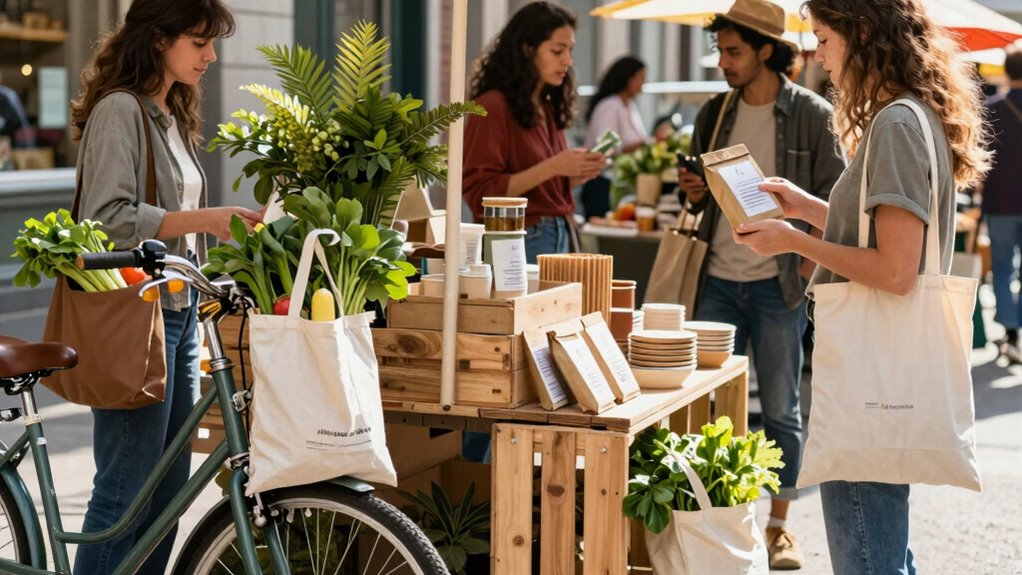
Choosing durable, repairable products reduces waste and conserves resources for a sustainable future.
By embracing the principles of a circular economy, you become an active participant in reducing resource extraction. When you constantly buy new products, you may inadvertently contribute to environmental depletion, whereas opting for second-hand items, participating in sharing schemes, or supporting companies that design for reuse and recycling helps combat this issue. When you extend the life of products through repairs or refurbishments, you’re conserving raw materials like metals, plastics, and minerals. This practice helps prevent the depletion of finite resources, ensuring they remain available for future generations. It also reduces the energy required to produce new goods, which lowers greenhouse gas emissions and lessens environmental pollution.
Your choices as a consumer can influence companies to adopt more sustainable practices. When you demand products with longer lifespans and better repairability, manufacturers are incentivized to rethink their designs. This could mean choosing electronics with modular components or clothing made from durable fabrics. Such decisions contribute to a shift where resource conservation becomes a core part of production, creating a more sustainable cycle. Not only do you help reduce waste, but you’re also supporting a system that values the reuse and recycling of materials.
In a circular economy, waste is viewed as a resource in itself, and your role is vital in closing the loop. By making conscious purchasing decisions, you help foster a culture of sustainability that minimizes environmental impact. Every time you repair an item instead of discarding it, or choose products designed for longevity, you’re reinforcing the importance of resource conservation. Developing an understanding of resource management can empower you to make more informed choices that benefit both the environment and the economy. Incorporating sustainable consumption into your lifestyle can further accelerate this positive change. Moreover, supporting companies that prioritize product durability can accelerate the transition toward sustainable manufacturing practices. When consumers demand transparency and accountability from brands, it encourages the development of innovative solutions that reduce waste and promote circular business models. Recognizing that resource efficiency is essential for long-term sustainability can motivate consumers and companies alike to pursue more responsible practices. This mindset not only benefits the planet but also encourages innovation in product design and business models, ultimately leading to a more resilient and sustainable economy. Your everyday choices truly matter—they shape the future of resource use and help build a world where sustainability is the norm.
Popular right now

Samsung 42-Inch Class OLED S90F 4K Smart TV (2025)

Vitamix Propel Series 510 Professional-Grade Blender, 3 Programs, Black

KitchenAid Artisan 5-Quart Tilt-Head Stand Mixer, Almond Cream
As an affiliate, we earn on qualifying purchases.
Frequently Asked Questions
How Can I Identify Products Made With Circular Economy Principles?
To identify products made with circular economy principles, look for sustainable packaging and labels indicating eco-friendly materials. Check if the product is designed for reuse, repair, or recycling, often marked with symbols or descriptions. Choose items from brands committed to reducing waste and using recycled content. These products typically emphasize durability, minimal waste, and environmental impact, helping you support a more sustainable cycle of consumption and waste reduction.
Are There Specific Brands Leading in Circular Economy Practices?
You’ll find that brands like Patagonia and IKEA are leading the charge in circular economy practices through brand innovation and sustainability leadership. They’re walking the talk by designing products for reuse, recycling, and durability. These companies prove that staying ahead means embracing a circular mindset, showing that they’re not just paying lip service but truly committed to reducing waste. Keep an eye out for brands that prioritize eco-friendly initiatives—you’re likely to see real change.
How Does Recycling Differ From Circular Economy Initiatives?
Recycling mostly focuses on waste reduction by reprocessing used materials into new products, but circular economy initiatives go further by designing products for resource efficiency and longevity. You benefit by supporting systems that keep resources in use longer, reducing waste and conserving raw materials. Unlike simple recycling, circular economy practices aim to create a closed-loop system, minimizing environmental impact and promoting sustainable consumption habits in your daily life.
What Are Simple Steps I Can Take at Home?
You can start by practicing upcycling ideas, turning old items into new, useful objects instead of throwing them away. Use sustainable packaging whenever possible, like reusable bags or containers, to reduce waste. Also, compost food scraps and choose products made from recycled materials. These simple steps help close the loop, support a circular economy, and make a positive impact on the environment right from your home.
Will Circular Economy Products Cost More Than Conventional Ones?
Imagine paying a premium for eco-friendly packaging or upcycled fashion, as if you’re funding a boutique for unicorns and fairy dust. Circular economy products might cost more initially, but you’re investing in sustainable choices that last longer and reduce waste. Think of it as buying a second-hand treasure chest; it’s pricier upfront but saves you money and the planet over time. So, yes, they can be more expensive, but worth every penny.
Conclusion
Embracing a circular economy is like joining a well-orchestrated dance, where every step counts and nothing goes to waste. As a consumer, your choices are the rhythm that keeps this dance moving forward—reusing, recycling, and valuing resources. By staying in sync with these principles, you help create a world where products live longer and waste diminishes. Together, we can choreograph a sustainable future, one mindful step at a time.