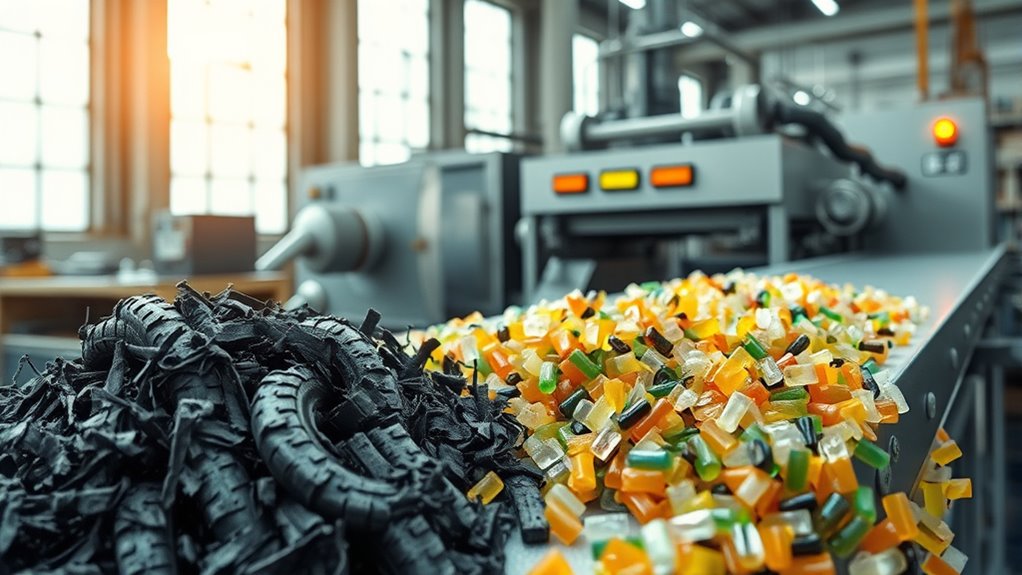

Collaborations in sustainable materials are revolutionizing how we recycle tires into plastics. Industry partners work together to develop scalable, efficient processes like pyrolysis and advanced chemical recycling, turning waste into valuable resources. These efforts help reduce landfills, lower reliance on fossil fuels, and promote a circular economy. By uniting expertise and resources, companies are creating high-quality recycled plastics for packaging, construction, and consumer products. Keep exploring to discover more about these innovative partnerships transforming waste into sustainable materials.

Get the little things that make your day delivered free with Prime
- Fast, free delivery on millions of items
- Prime Video, Amazon Music and more included
- Member-only deals all year
Key Takeaways
- Industry partnerships are crucial for developing scalable tire-to-plastic recycling technologies.
- Collaborations pool resources and expertise to advance chemical and pyrolysis recycling methods.
- These alliances promote a circular economy by transforming waste tires into high-quality plastics.
- Joint efforts help shape policies ensuring recycled materials meet safety and quality standards.
- Industry collaborations increase awareness and adoption of sustainable tire recycling solutions.

Have you ever wondered how innovative collaborations are shaping the future of sustainable materials? The answer lies in how industry partnerships are driving recycling innovations that transform previously hard-to-recycle waste into valuable resources. One of the most promising developments involves recycling tires into plastics, a process that tackles two major environmental issues at once: rubber waste and plastic pollution. When you look into these collaborations, you’ll see a concerted effort between manufacturers, research institutions, and sustainability organizations working together to develop scalable, efficient methods for repurposing tires.
Innovative industry collaborations are transforming waste into valuable, sustainable materials through tire-to-plastic recycling efforts.
The key to these recycling innovations is the power of industry partnerships. Companies that once saw tires as waste now recognize their potential as raw materials for plastics. By pooling resources and expertise, these partnerships accelerate the development of technologies that break down tires into their chemical components. This process often involves pyrolysis or advanced chemical recycling methods that convert rubber into oil, gases, or even raw plastic materials. The result? A closed-loop system that reduces landfill accumulation and decreases reliance on virgin fossil fuels for plastic production.
As you follow these collaborations, you’ll notice how they promote technological breakthroughs that weren’t possible in isolation. Industry partnerships often provide the necessary funding, infrastructure, and market access to scale these innovations. For example, tire recycling plants are now able to produce high-quality plastics suitable for packaging, construction materials, or consumer products. This shift not only minimizes environmental impact but also opens new business opportunities for companies committed to sustainability.
Furthermore, these collaborations are pushing regulatory and industry standards forward. When multiple stakeholders work together, they can influence policies that favor more sustainable practices, making it easier for innovations to reach the market. This collective effort also encourages transparency and accountability, ensuring that recycled materials meet safety and quality standards. If you’re interested in the future of sustainable materials, observing how these partnerships evolve will give you insight into a more circular economy where waste is transformed into valuable resources.
In addition, advancements in sound design techniques and tools are enabling better dissemination and promotion of these innovations, increasing awareness and adoption across industries. These collaborations exemplify how collective innovation and shared expertise can create practical, scalable solutions for environmental challenges. As you see more industry partnerships emerge, you’ll understand how these collaborations are not just transforming waste management—they’re shaping a more sustainable, resource-efficient world. By continuing to support and engage with these initiatives, you contribute to a future where waste is no longer discarded but repurposed into the materials that build our world.
As an affiliate, we earn on qualifying purchases.
Frequently Asked Questions
What Are the Environmental Benefits of Recycling Tires Into Plastics?
Recycling tires into plastics offers significant environmental benefits by providing eco-friendly alternatives to traditional materials. It helps reduce pollution by diverting tires from landfills and preventing harmful chemicals from leaching into the environment. Additionally, this process conserves natural resources and energy, lowering the carbon footprint. You contribute to a healthier planet by supporting such initiatives, which promote sustainable practices and help combat waste and pollution effectively.
How Cost-Effective Is the Tire-To-Plastic Recycling Process?
You’ll find that tire-to-plastic recycling can be quite cost-effective, especially with a solid cost analysis showing lower raw material costs and potential savings. While initial investments might be high, the process’s economic viability improves over time as technology advances and scales up. Plus, the environmental benefits can translate into financial incentives, making it a smart choice for businesses aiming for sustainability without sacrificing profitability.
Are There Any Health Risks Associated With Recycled Tire Plastics?
Are you worried about health concerns from recycled tire plastics? While they are generally safe, you might wonder about chemical exposure. Some chemicals from tires, like heavy metals and additives, could pose risks if not properly processed. However, strict regulations and advanced recycling methods minimize these risks. If you stay informed and support responsible recycling practices, you can reduce potential health concerns associated with recycled tire plastics.
What Innovations Are Emerging in Tire Recycling Technologies?
You’ll see innovations like using pyrolysis to convert tires into synthetic rubber and recover carbon black more sustainably. New methods focus on breaking down tires more efficiently, reducing environmental impact, and producing high-quality materials for reuse. Advanced recycling technologies now aim to reclaim these components with minimal emissions, making tire recycling cleaner and more cost-effective. These breakthroughs help close the loop, turning waste into valuable resources for industries worldwide.
How Do Regulations Impact Tire Recycling Collaborations?
Government policies and industry standards substantially influence your tire recycling collaborations. They set requirements that ensure safety, environmental protection, and quality, guiding your partnership decisions. Regulations can either facilitate or hinder innovation by offering incentives or imposing restrictions. Staying compliant with these policies helps you build trust and credibility, while also encouraging the development of sustainable practices. Ultimately, understanding and maneuvering these regulations enables you to create effective, compliant collaborations in tire recycling.
tire recycling pyrolysis equipment
As an affiliate, we earn on qualifying purchases.
As an affiliate, we earn on qualifying purchases.
Conclusion
By now, you’ve seen how collaborations in sustainable materials can turn waste tires into valuable plastics. It’s inspiring to think about the positive impact these innovations can have on our environment. Wouldn’t you agree that working together makes a real difference? With continued efforts and partnerships, we can transform more waste into resources, creating a cleaner, greener future for everyone. So, are you ready to support and champion these sustainable collaborations?
chemical recycling tire to plastic
As an affiliate, we earn on qualifying purchases.
As an affiliate, we earn on qualifying purchases.
sustainable plastic packaging materials
As an affiliate, we earn on qualifying purchases.
As an affiliate, we earn on qualifying purchases.
NFL season / tailgating Picks
team gear
As an affiliate, we earn on qualifying purchases.