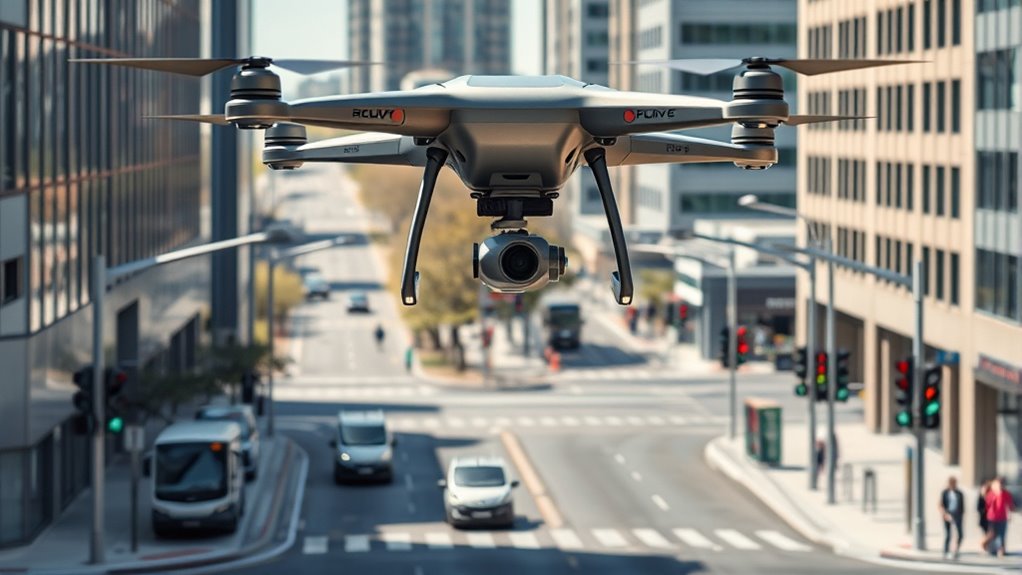

Robotics and automation are revolutionizing urban infrastructure by making city systems more efficient, sustainable, and responsive. You’ll see autonomous garbage collectors, smart traffic management, and interconnected sensors that optimize city operations. These technologies reduce congestion, lower emissions, and improve your daily experience. Cities are becoming smarter and more resilient, with automation boosting quality of life. If you want to discover how these innovations are shaping your urban environment, keep exploring for more insights.
Key Takeaways
- Autonomous vehicles optimize waste collection routes, reducing costs and improving city cleanliness through intelligent navigation and obstacle avoidance.
- Smart traffic systems use sensors and AI to dynamically manage signals and lane usage, reducing congestion and emissions.
- Integrated automation enhances city efficiency, promoting cleaner environments and more responsive urban services.
- Urban residents benefit from shorter travel times, cleaner streets, and improved daily routines enabled by automated infrastructure.
- Future urban infrastructure emphasizes adaptive, sustainable, and connected systems that make cities more resilient and environmentally friendly.
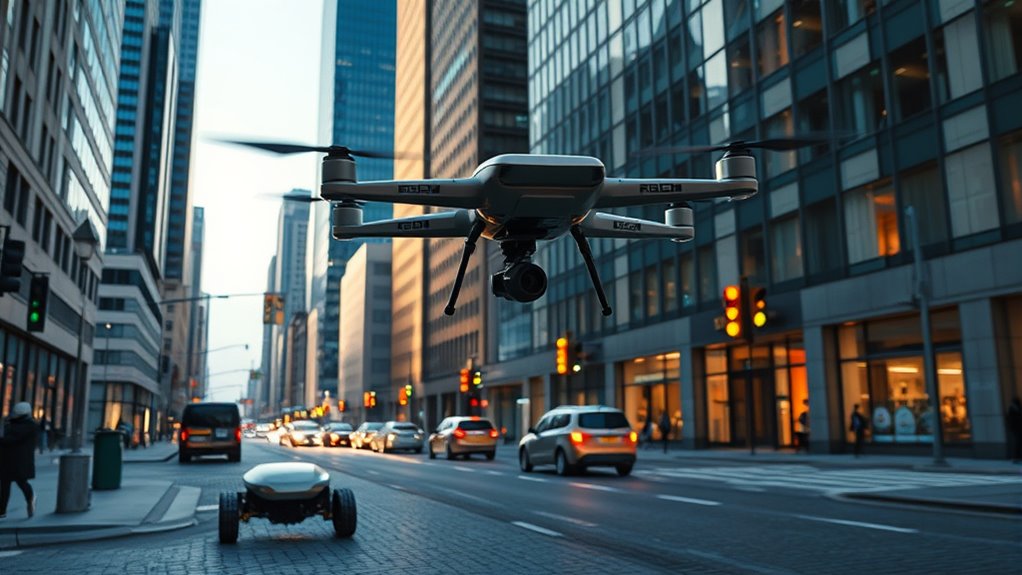
Urban infrastructure is increasingly transforming through robotics and automation, revolutionizing how cities operate and maintain essential services. This shift brings efficiency, speed, and accuracy to tasks that once relied heavily on manual labor or outdated systems. One of the most noticeable changes is in autonomous garbage collection, where robotic vehicles now navigate city streets, collecting waste more efficiently and consistently. These autonomous trucks use sensors and AI algorithms to optimize routes, avoid obstacles, and ensure timely pickup, reducing the need for human drivers and decreasing operational costs. As a result, city sanitation services become more reliable, cleaner, and environmentally friendly, with fewer disruptions caused by delays or inefficiencies. This advancement frees up human resources to focus on other critical urban tasks, while robotic systems handle routine chores with precision.
Alongside autonomous garbage collection, smart traffic management systems are transforming how you experience daily commutes. Traditional traffic control relied on fixed signals and manual adjustments, often leading to congestion and longer travel times. Now, cities deploy interconnected sensors, cameras, and AI-driven algorithms that analyze real-time traffic data. These systems dynamically adjust traffic lights, manage lane usage, and even reroute vehicles to prevent bottlenecks before they form. As a result, traffic flows more smoothly, congestion diminishes, and emissions decrease because vehicles spend less time idling. When you drive through a city with smart traffic management, you’ll notice fewer stop-and-go moments and a more predictable commute. These systems also integrate with public transportation and emergency services, ensuring they operate seamlessly within the urban fabric. The integration of automated systems enhances overall city resilience and responsiveness.
Implementing robotics and automation in urban infrastructure isn’t just about improving efficiency; it’s about creating smarter, more sustainable cities. Autonomous garbage collection reduces pollution and promotes cleaner environments, while smart traffic management minimizes congestion and carbon footprints. You, as a city resident, benefit from cleaner streets, shorter travel times, and a more responsive urban environment. These technologies work behind the scenes, yet their impact is felt daily in your routines. As more cities adopt these innovations, you’ll witness a transformation into more livable, resilient urban spaces where automation enhances quality of life. The future of urban infrastructure lies in these intelligent systems that adapt, optimize, and streamline city functions, making urban living more sustainable and less stressful for everyone.

ToyFinity Trash Truck Toy with 4 Trash Bins | Front Lifting Frame for Garbage Disposal | Waste Management Garbage Truck Toys | Light & Sound Effects | Holiday and Birthday Gift for Boys & Girls
Fun Realistic Play: This large garbage truck toy lets kids experience real waste management fun! Equipped with a…
As an affiliate, we earn on qualifying purchases.
As an affiliate, we earn on qualifying purchases.
Frequently Asked Questions
What Are the Environmental Impacts of Robotics in Urban Areas?
You might find that robotics in urban areas help reduce pollution by optimizing waste management and traffic flow. These technologies can lead to cleaner air and water, benefiting the environment. Additionally, robots can support biodiversity enhancement by maintaining green spaces and monitoring ecosystems more effectively. Overall, integrating robotics into cities can positively impact the environment, creating healthier, more sustainable urban environments for everyone.
How Do Robotics Improve Emergency Response in Cities?
You might think robots slow down emergency responses, but they actually speed things up. Autonomous drones can quickly survey disaster sites, providing real-time intel that saves lives. Robotic firefighting units can reach fires faster and operate in hazardous environments, reducing risk to humans. Ironically, it’s these robotic innovations that make cities safer, proving that automation isn’t replacing humans—it’s empowering them to respond more effectively during crises.
What Is the Cost Comparison Between Manual and Automated Infrastructure Maintenance?
You’ll find that automated infrastructure maintenance often has higher initial costs due to equipment and technology investments. However, over time, it reduces maintenance costs by improving labor efficiency and minimizing manual labor needs. While manual maintenance may seem cheaper upfront, it usually involves ongoing labor expenses and slower repairs. Ultimately, automation offers long-term savings and enhanced consistency, making it a smarter choice for sustainable urban infrastructure management.
How Do Urban Residents Perceive Robotic Interventions in Daily Life?
You might feel mixed about robotic interventions in daily life; studies show 65% of urban residents are open to automation, but many worry about privacy concerns. Public acceptance varies based on perceived benefits and trust in technology. While some appreciate enhanced efficiency and safety, others fear data breaches or loss of personal privacy. Your perspective depends on how well these innovations address your concerns and improve your everyday experience.
What Are Future Technological Advancements Expected in Urban Robotics?
You can expect future advancements like autonomous delivery systems and smarter traffic management to transform your urban experience. Autonomous delivery drones and robots will bring packages directly to your door more efficiently, while smart traffic systems will reduce congestion and improve commute times. These innovations will make your city more interconnected, sustainable, and convenient, as technology continues to evolve and seamlessly integrate into your daily routines.

Intelligent Transportation Systems: Functional Design for Effective Traffic Management
As an affiliate, we earn on qualifying purchases.
As an affiliate, we earn on qualifying purchases.
Conclusion
As you witness robotics and automation transforming city landscapes, it’s easy to imagine a future where urban life flows seamlessly like clockwork. These innovations aren’t just machines—they’re the heartbeat of smarter, safer cities. Picture streets alive with autonomous vehicles and drones tending to infrastructure, reducing chaos and accidents. It’s not just a theory; it’s a future where technology becomes the invisible hand guiding your city’s pulse, making everyday life smoother and more connected.

The City of Tomorrow: Sensors, Networks, Hackers, and the Future of Urban Life (The Future Series)
As an affiliate, we earn on qualifying purchases.
As an affiliate, we earn on qualifying purchases.

Automated Defect Prevention: Best Practices in Software Management (IEEE Press)
As an affiliate, we earn on qualifying purchases.
As an affiliate, we earn on qualifying purchases.