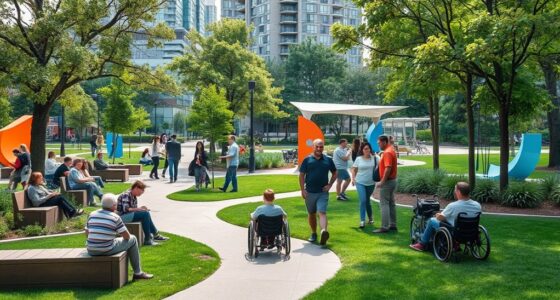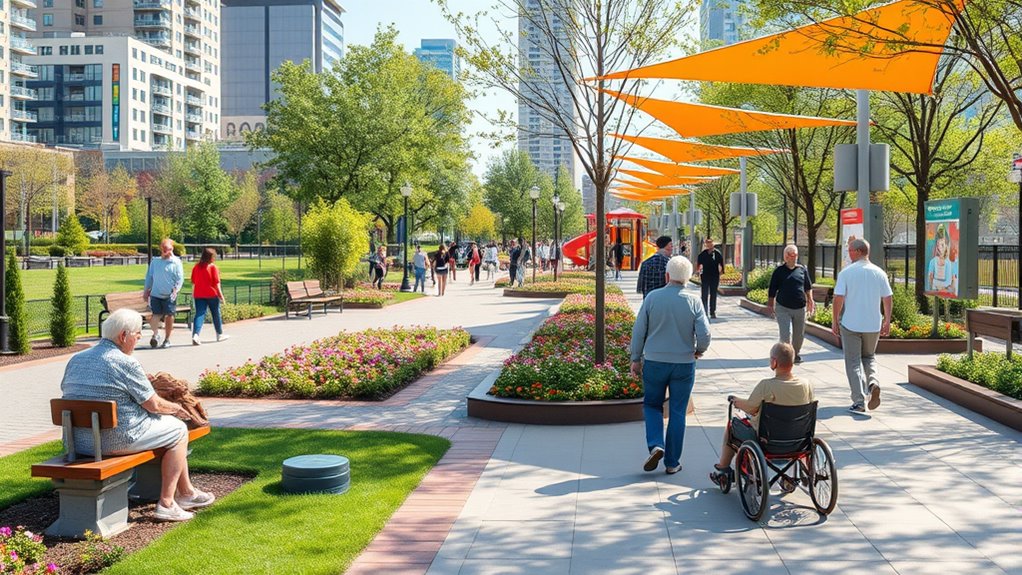

To plan for aging populations with inclusive design, focus on involving older adults early in the process to understand their needs and preferences. Incorporate accessible physical features like wide doorways and slip-resistant flooring, and use technology to support social connection and feedback. Prioritize community engagement and adaptive outdoor spaces that promote activity and independence. By considering these strategies, you’ll create environments where everyone can thrive, and there’s more to discover on building truly inclusive spaces.

Get the little things that make your day delivered free with Prime
- Fast, free delivery on millions of items
- Prime Video, Amazon Music and more included
- Member-only deals all year
Key Takeaways
- Involve older adults actively in the design process to ensure spaces and products meet their needs and preferences.
- Incorporate accessible features like wide doorways, slip-resistant flooring, and clear signage to support mobility and safety.
- Leverage technology to facilitate social engagement, feedback, and adaptive solutions for aging residents.
- Design outdoor and community spaces that are inclusive, safe, and promote physical and mental well-being.
- Prioritize continuous innovation and community input to create age-friendly environments that foster independence and dignity.
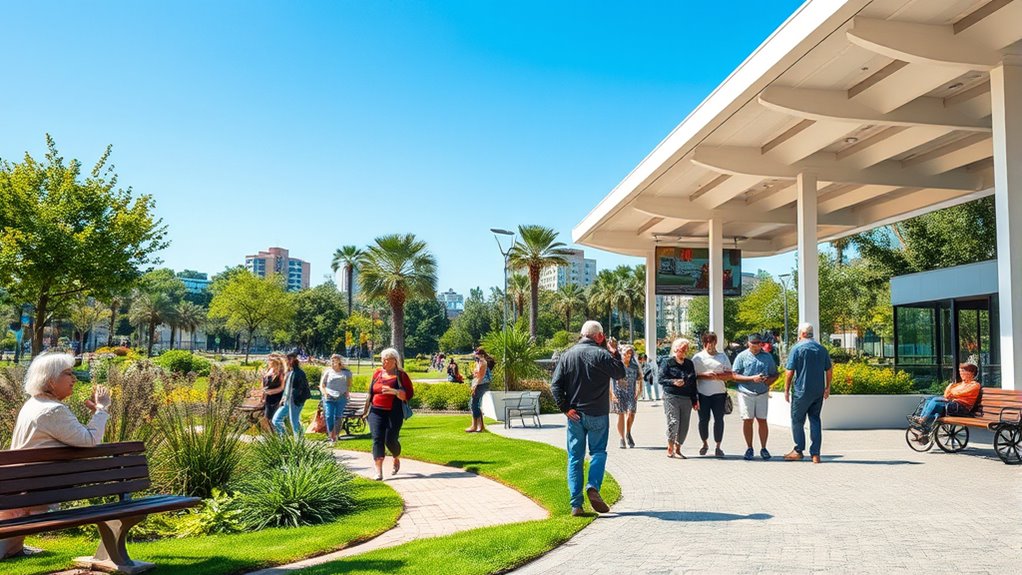
As populations worldwide continue to age, designing environments and products that cater to older adults becomes increasingly essential. You need to think beyond traditional designs and consider how assistive technology can improve quality of life for seniors. Incorporating assistive devices like hearing aids, mobility aids, and easy-to-use home automation systems can make daily activities more manageable. When you prioritize these innovations, you’re not just making life easier—you’re fostering independence and confidence among older adults. But assistive technology alone isn’t enough. Community engagement plays a vital role in creating inclusive environments. By involving older adults in the planning process, you ensure that their unique needs and preferences shape the design. This participatory approach helps identify barriers that might not be obvious from an outsider’s perspective and promotes a sense of ownership and belonging. You can facilitate community engagement through surveys, focus groups, or town hall meetings, giving older residents a voice in decisions that directly affect them. When they feel heard, they’re more likely to embrace new designs and technologies, leading to better adoption and satisfaction. Creating accessible physical spaces is equally crucial. You should consider features like curb cuts, wide doorways, slip-resistant flooring, and clear signage, all of which support mobility and safety. These architectural elements benefit everyone, but they’re especially important for seniors with limited mobility or sensory impairments. Incorporating these features shows that your planning is thoughtful and inclusive, reducing accidents and increasing usability. Additionally, you should leverage assistive technology to enhance community engagement. For instance, digital platforms can connect older adults with local events, support groups, or volunteer opportunities, fostering social connections that combat loneliness. You can also use technology to gather ongoing feedback, making it easier for seniors to share their experiences and suggest improvements. This continuous loop of involvement helps refine your designs and ensures they remain responsive to evolving needs. Furthermore, integrating portable camping products into community programs can promote outdoor activities that support physical and mental well-being among seniors. Ultimately, your goal is to create environments where older adults feel safe, valued, and empowered. By combining assistive technology with community engagement, you build a foundation for inclusive design that benefits everyone. When you actively listen to seniors and incorporate innovative solutions, you’re not just designing for aging populations—you’re fostering a more accessible, equitable society. The impact of thoughtful planning extends beyond individual comfort; it shapes a community where aging is embraced with dignity and support. Your efforts in integrating assistive tech and engaging the community demonstrate a commitment to inclusivity that will serve generations to come.
Frequently Asked Questions
How Can Technology Enhance Accessibility for Aging Populations?
Technology can greatly enhance accessibility for aging populations by integrating smart homes and wearable tech. Smart homes automate lighting, temperature, and security, making daily life easier and safer. Wearable tech monitors health data, detects falls, and alerts caregivers promptly. You can stay independent longer by using these innovations, which adapt to your needs and provide peace of mind. Embracing these tools guarantees better safety, health management, and overall quality of life.
What Funding Options Are Available for Inclusive Design Projects?
You might discover that innovative funding and grant opportunities are available through government agencies, nonprofits, and private foundations. These sources often prioritize inclusive design projects that promote accessibility for aging populations. By actively researching and applying for grants, you can secure the financial support needed to implement your ideas. Keep an eye on evolving funding trends, as new programs frequently emerge to foster inclusive, age-friendly environments.
How to Involve Seniors in the Design Process Effectively?
You involve seniors effectively by prioritizing user involvement through user-centered design. Engage them early in the process, hold focus groups, and conduct interviews to gather their insights and preferences. Make sure to create a comfortable environment where they feel valued and listened to. Incorporate their feedback into prototypes and test iterations, ensuring the design truly meets their needs. This approach fosters meaningful participation and results in more inclusive, accessible solutions.
What Are Common Barriers to Implementing Inclusive Design?
You might think everyone’s on board with inclusive design, but common barriers include limited public awareness and weak policy advocacy. It’s ironic how society often overlooks the needs of seniors, despite the clear benefits. Without increased awareness and stronger policies, implementing inclusive design remains a challenge. You need to push for education and advocacy, making sure these barriers are addressed so inclusive environments become the norm, not the exception.
How Does Inclusive Design Impact Community Cohesion?
Inclusive design boosts community cohesion by encouraging intergenerational interaction and social integration. When spaces are accessible and welcoming for all ages, you help foster understanding and connections among diverse groups. This creates a sense of belonging and mutual support, strengthening bonds within your community. By prioritizing inclusive features, you enable everyone to participate fully, making your community more vibrant, resilient, and united.
Conclusion
By embracing inclusive design, you guarantee aging populations can navigate their world with independence and dignity. Think of it as future-proofing your community—like installing Wi-Fi in the 1800s, it might seem ahead of its time, but it’s essential. When you prioritize accessibility now, you’re creating a space where everyone, regardless of age or ability, can thrive. Don’t wait for a DeLorean to fix the problem; start today and make inclusivity your legacy.
Evergreen bestsellers Picks
bestsellers
As an affiliate, we earn on qualifying purchases.