Designing green spaces thoughtfully offers ecological benefits like boosting urban biodiversity, supporting pollinators, and creating habitats for local wildlife. Incorporate native plants, sustainable materials, and permeable surfaces to enhance resilience and water management. This approach balances aesthetics with ecological health and aligns with regional policies. By applying these best practices, you can transform urban areas into vibrant, sustainable environments. Exploring more about these strategies will help you craft truly impactful green spaces.
Key Takeaways
- Incorporate native plants and habitats to boost urban biodiversity and support local wildlife.
- Use sustainable, recycled, and locally sourced materials to minimize ecological impact.
- Design permeable surfaces and efficient water management systems to reduce runoff and enhance resilience.
- Balance aesthetic appeal with ecological functions to create sustainable and visually appealing green spaces.
- Align green space design with regional policies and sustainability goals for long-term environmental benefits.
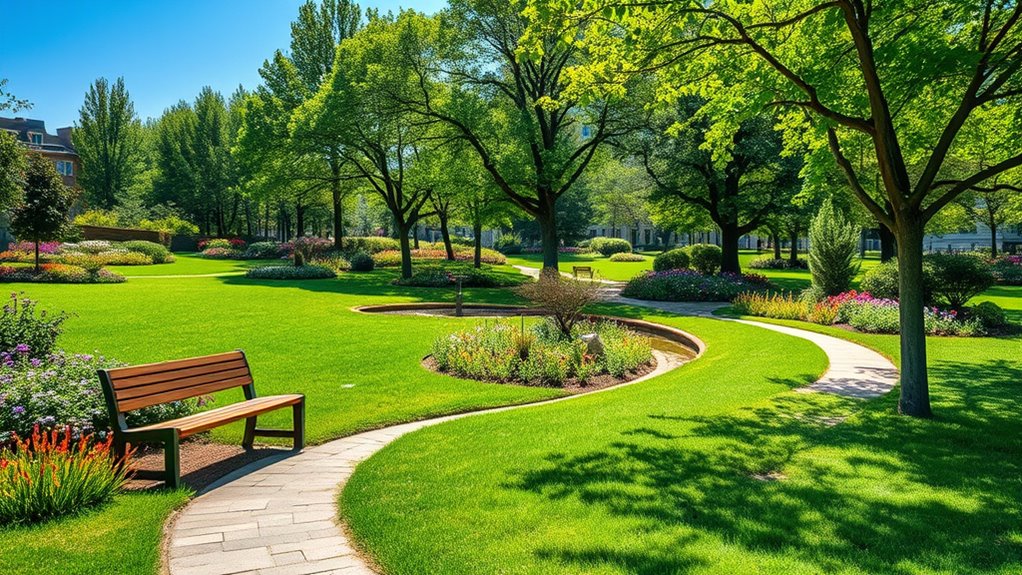
Have you ever wondered how thoughtfully designed green spaces can transform urban environments? When you integrate green spaces into cities, you’re not just adding aesthetic value—you’re fostering urban biodiversity and promoting sustainability. By prioritizing native plants and creating habitats for local wildlife, you enhance the city’s ecological health. These green areas can attract pollinators like bees and butterflies, support bird populations, and even help control pests naturally. The key is understanding that every plant and feature should serve a purpose, contributing to a balanced ecosystem within the urban fabric. Using sustainable materials in the design further amplifies these benefits. Opting for recycled or locally sourced materials reduces environmental impact and promotes resource efficiency. For example, permeable paving options allow rainwater to seep into the ground, reducing runoff and replenishing groundwater supplies. When you incorporate sustainable materials into pathways, benches, and planters, you’re creating resilient spaces that stand the test of time while minimizing ecological footprints. These choices also influence the overall health of the environment, ensuring that the green space remains both functional and eco-friendly for years to come. Incorporating local environmental policies can help ensure your design aligns with regional sustainability goals.
Frequently Asked Questions
How Does Green Space Design Impact Local Air Quality?
Green space design improves your local air quality by enhancing air filtration and pollutant absorption. Plants naturally filter out airborne pollutants, reducing harmful particles and gases. When you incorporate trees and shrubs into your environment, they act as natural air filters, absorbing pollutants and releasing oxygen. This not only cleans the air but also creates a healthier community space. By thoughtfully designing green areas, you help make certain cleaner, fresher air for everyone around you.
What Are Cost-Effective Strategies for Maintaining Urban Green Spaces?
Think of your green space as a thriving garden; to keep it vibrant without draining your budget, focus on cost-saving techniques like native plantings that require less water and maintenance. Incorporate simple maintenance strategies such as community volunteer days and seasonal pruning. These approaches not only reduce costs but also foster community pride, turning your green space into a sustainable oasis that benefits everyone without breaking the bank.
How Can Green Spaces Be Designed for Inclusive Accessibility?
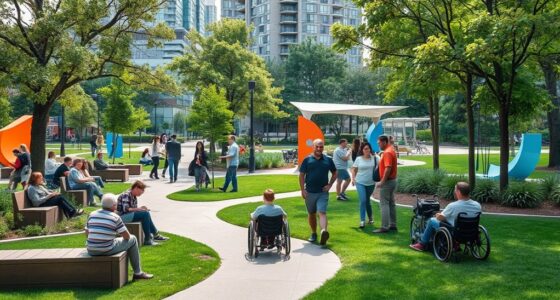
You can design green spaces for inclusive accessibility by ensuring universal access, like wheelchair-friendly paths and ramps. Incorporate sensory-friendly features such as textured surfaces, shaded areas, and calming plantings to accommodate diverse needs. Keep pathways wide and clear, add signage with simple visuals, and include resting spots. These thoughtful elements make green spaces welcoming and usable for everyone, regardless of mobility, sensory sensitivities, or age.
What Are Innovative Materials Used in Sustainable Green Space Projects?
You can incorporate innovative construction using sustainable materials like recycled plastics, bamboo, and reclaimed wood to make green spaces more eco-friendly. These materials reduce environmental impact and promote durability. Innovative construction techniques, such as modular and prefabricated elements, streamline project timelines and minimize waste. By choosing sustainable materials and innovative construction methods, you enhance the resilience and sustainability of green spaces, making them more accessible and enjoyable for everyone.
How Do Green Spaces Influence Mental Health in Urban Populations?
You find that green spaces naturally boost your mental health by providing a refuge from urban chaos. When you experience nature therapy, your stress levels decrease, and your mood improves. These spaces promote stress reduction by offering calm, restorative environments that encourage mindfulness and relaxation. As you spend time in green areas, you notice increased feelings of well-being and mental clarity, making urban green spaces essential for maintaining your emotional balance amidst city life.
Conclusion
So, next time you’re dreaming of a lush oasis, remember: green space design isn’t just about pretty plants. It’s about creating a haven that actually makes your life better—without needing a green thumb or a PhD in botany. Sure, you could leave it to chance, but why leave your well-being to the whims of weeds? Invest in smart, thoughtful design, and watch your space become your personal paradise—minus the yard work misery.