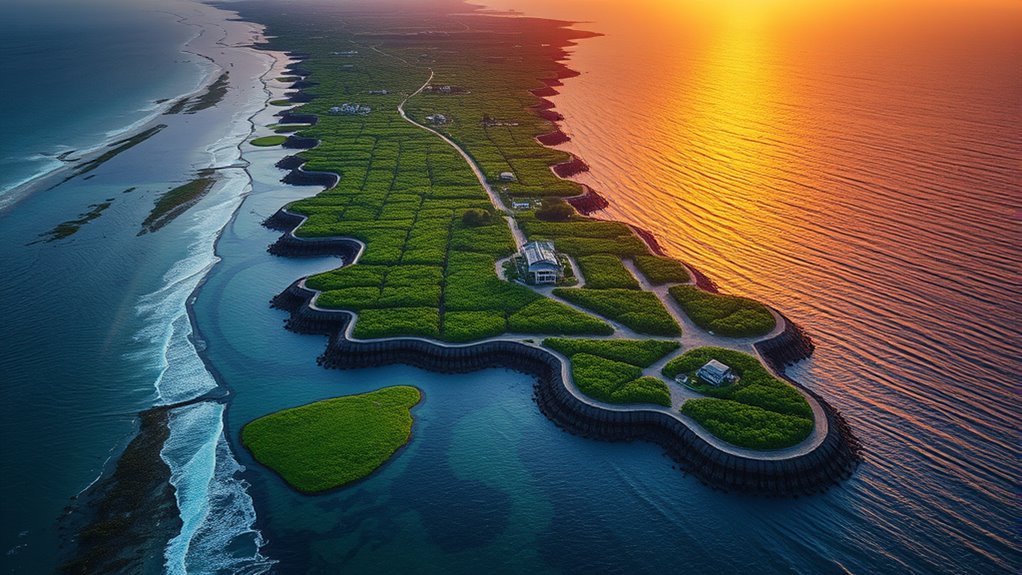

To create climate-resilient coastal plans, you should focus on integrating natural ecosystems like wetlands, dunes, and mangroves to buffer storms and erosion. Engaging local communities early guarantees their needs and knowledge shape sustainable solutions, from natural barriers to adaptive infrastructure. This partnership enhances resilience and supports biodiversity while protecting shorelines. If you keep exploring, you’ll uncover more effective strategies to safeguard coastal regions against rising seas and climate impacts.

Get the little things that make your day delivered free with Prime
- Fast, free delivery on millions of items
- Prime Video, Amazon Music and more included
- Member-only deals all year
Key Takeaways
- Integrate natural features like wetlands and dunes to buffer storm impacts and enhance ecosystem resilience.
- Engage local communities early to incorporate local knowledge and foster support for sustainable coastal measures.
- Design adaptable infrastructure, such as elevated structures and natural barriers, to withstand rising sea levels and erosion.
- Promote ecosystem-based solutions that support biodiversity, fisheries, and tourism, strengthening ecological and economic resilience.
- Foster collaboration among stakeholders to develop flexible, sustainable plans that align with natural systems and community needs.
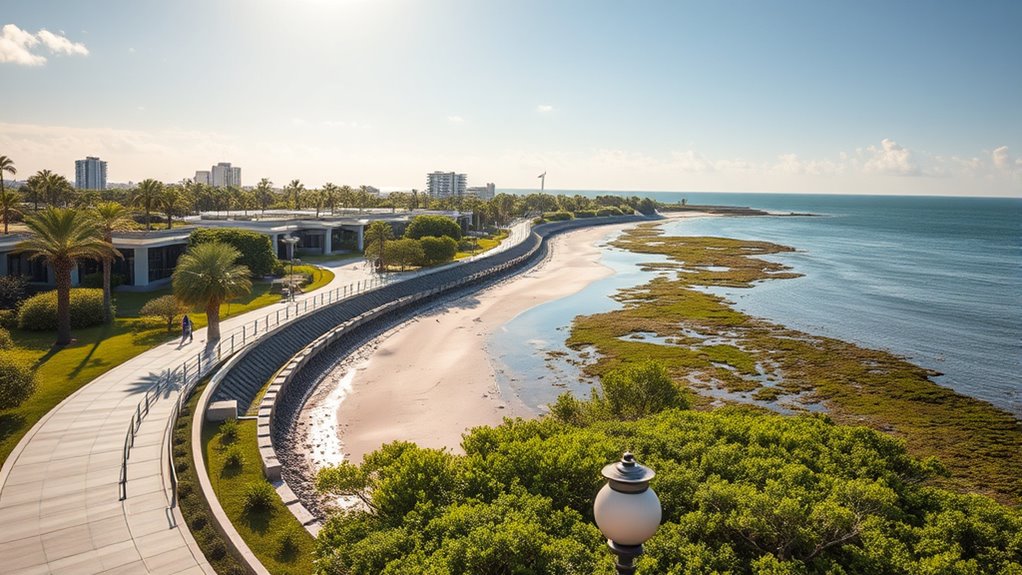
Have you ever wondered how coastal areas balance development with environmental protection? It’s a complex challenge that requires careful planning and a deep understanding of the local ecosystem. One key approach is ecosystem integration, which involves designing projects that work harmoniously with the natural environment rather than against it. When you focus on ecosystem integration, you prioritize preserving natural features like wetlands, dunes, and mangroves, recognizing their essential role in buffering storms and maintaining biodiversity. By aligning development with these natural systems, you reduce the risk of environmental degradation and create more resilient coastal communities. This integration isn’t just about protecting nature; it also benefits people by sustaining fisheries, supporting tourism, and enhancing overall quality of life.
Ecosystem integration helps protect coastal communities by preserving natural features like wetlands and dunes, reducing environmental risks and supporting local livelihoods.
Community engagement plays an equally critical role in climate-resilient coastal planning. When you involve local residents, businesses, indigenous groups, and other stakeholders early in the process, you tap into a wealth of local knowledge and ensure that plans reflect the community’s needs and values. Engaging the community fosters a sense of ownership and responsibility, motivating everyone to protect and maintain coastal resources because they’re invested in the outcomes. It also helps identify potential conflicts or overlooked vulnerabilities that planners might miss. Effective community engagement involves transparent communication, public consultations, and workshops that allow residents to voice concerns and contribute ideas. This collaborative approach leads to more innovative, accepted, and sustainable solutions.
Bringing ecosystem integration and community engagement together creates a powerful foundation for climate resilience. You can develop adaptable infrastructure—such as elevated buildings, natural barriers, or green spaces—that complements the environment and is supported by local stakeholders. When communities understand the importance of preserving natural features and participate actively in planning, they’re more likely to support measures like restoring dunes or implementing sustainable land-use policies. This collective effort enhances the overall resilience of coastal areas against rising sea levels, storm surges, and erosion.
In the end, climate-resilient coastal planning isn’t just about building stronger defenses; it’s about fostering a partnership between humans and nature. By integrating ecosystems into development strategies and engaging communities throughout the process, you can create a sustainable, resilient future for coastal regions. It’s about working with what the environment provides and empowering local voices to shape a safer, healthier coastline for generations to come.
coastal erosion natural barriers
As an affiliate, we earn on qualifying purchases.
As an affiliate, we earn on qualifying purchases.
Frequently Asked Questions
How Do Climate Projections Influence Coastal Planning Decisions?
You consider climate projections to anticipate future storm surge levels and sea level rise, which directly influence your coastal planning. By understanding these projections, you can design infrastructure that maintains habitat connectivity and withstands extreme weather events. This proactive approach helps you minimize risks, protect ecosystems, and ensure community resilience, effectively integrating scientific data into your decisions to adapt to a changing climate and safeguard coastal areas for the future.
What Are the Costs Associated With Implementing Climate-Resilient Strategies?
Implementing climate-resilient strategies can be a tall order, with costs that include infrastructure upgrades and long-term maintenance. You’ll face economic trade-offs and funding challenges, making it feel like you’re trying to kill two birds with one stone. While upfront expenses are high, these investments can save money in the long run by reducing disaster damage and preserving coastal ecosystems. Balancing costs with benefits is key to successful planning.
How Can Local Communities Participate in Coastal Resilience Initiatives?
You can participate in coastal resilience initiatives by engaging in community activities and advocating for supportive policies. Attend local meetings, join community groups focused on climate resilience, and share your concerns. You can also collaborate with policymakers, pushing for stronger regulations and funding for resilience projects. Your active involvement helps raise awareness, shapes effective strategies, and guarantees your community’s needs are prioritized in coastal planning efforts.
What Are the Best Practices for Integrating Ecological Preservation?
To effectively integrate ecological preservation, prioritize ecosystem restoration and enhance habitat connectivity. You should work with local experts to restore natural habitats like mangroves and dunes, which buffer storms and support biodiversity. Maintain corridors that connect these habitats, allowing species to move freely and adapt to climate changes. Engage community members in conservation efforts, ensuring sustainable practices are followed and ecological health is preserved for future resilience.
How Is Climate Resilience Monitored and Evaluated Over Time?
You monitor climate resilience by collecting data regularly and analyzing performance indicators over time. Coincidentally, this ongoing process helps you spot trends and assess how well your strategies work. You can use tools like remote sensing, surveys, and sensor networks to gather accurate data, then evaluate improvements or vulnerabilities. This continuous evaluation guarantees your coastal plans stay adaptive, effective, and resilient against changing climate conditions.
As an affiliate, we earn on qualifying purchases.
Conclusion
As you embrace climate-resilient coastal planning, remember the wisdom of the old mariners who read the stars to navigate storms. By foresight and adaptation, you can safeguard communities and ecosystems against rising seas. Like those sailors, you hold the power to steer toward a sustainable future, where resilience becomes your guiding constellation. Together, you can turn the tides of change into a steady voyage toward hope and stability.
As an affiliate, we earn on qualifying purchases.
As an affiliate, we earn on qualifying purchases.
Halloween Picks
halloween
As an affiliate, we earn on qualifying purchases.