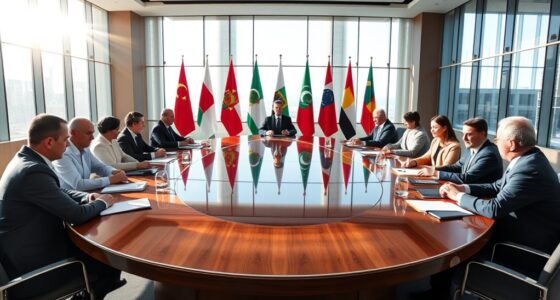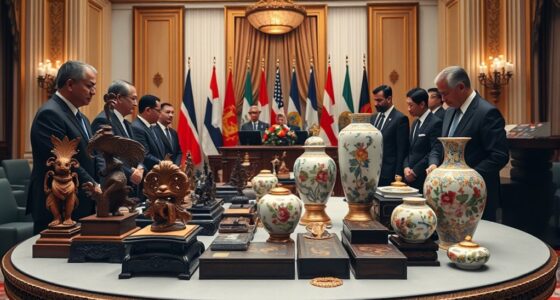
In today’s digital world, social media transforms public diplomacy by allowing you to connect directly with global audiences, shape perceptions, and promote cultural values. It offers real-time engagement, making outreach more authentic and accessible. You can tailor messages to specific communities, respond quickly to emerging events, and turn viewers into active cultural ambassadors. This dynamic, interactive approach fosters trust and understanding across cultures. Keep exploring to discover how social media continues to reshape international relations in exciting ways.
Key Takeaways
- Social media enables direct, real-time engagement with global audiences, enhancing cultural outreach and perception management.
- Digital platforms foster authentic conversations, helping dispel stereotypes and build trust in diplomatic efforts.
- Customizing content based on regional trends increases relevance and strengthens cross-cultural understanding.
- Social media’s responsiveness allows quick adaptation and amplification of cultural initiatives, maintaining audience interest.
- Transitioning from one-way messaging to interactive dialogue transforms public diplomacy into a dynamic, relationship-building process.

In today’s interconnected world, social media has become a powerful tool for public diplomacy, allowing governments and organizations to directly engage with global audiences. This digital landscape offers a unique opportunity to shape perceptions, foster understanding, and promote cultural values in real time. When you leverage social media for cultural outreach, you can reach diverse communities instantly, breaking down traditional barriers of distance and language. It enables you to share stories, traditions, and achievements in a way that resonates across borders, making cultural diplomacy more accessible and engaging than ever before.
Your digital engagement on social media platforms can serve as a bridge to build trust and credibility. Instead of relying solely on traditional channels, you can create authentic conversations, respond to questions, and participate in cultural dialogues that highlight the nuances of your country’s identity. This direct interaction helps dispel stereotypes and fosters a more nuanced understanding of your culture among international audiences. It’s about making diplomacy more transparent and relatable, turning passive viewers into active participants in cultural exchange.
Engage authentically online to build trust, dispel stereotypes, and turn passive viewers into active cultural ambassadors.
Furthermore, social media allows you to customize your cultural outreach efforts based on audience interests and regional trends. You can craft targeted messages that showcase specific traditions, festivals, or innovations that align with the values of different communities. By doing so, you’re not just broadcasting information; you’re creating meaningful engagement that encourages dialogue and mutual respect. This personalized approach enhances the effectiveness of public diplomacy campaigns, making them more memorable and impactful.
Using social media also gives you the flexibility to adapt your messaging quickly. If a cultural event or initiative gains unexpected attention, you can amplify your response in real time, maximizing its reach. Conversely, if a particular approach isn’t resonating, you can pivot swiftly without the delays associated with traditional media. This agility allows you to maintain relevance and stay connected with your global audience, ensuring your cultural outreach efforts remain fresh and compelling.
Ultimately, social media transforms public diplomacy from a one-way message to a dynamic conversation. Through strategic digital engagement, you can showcase your culture’s richness, foster cross-cultural understanding, and build lasting relationships. It’s about harnessing the power of technology to promote a more open, inclusive, and informed global community. When you embrace social media as a diplomatic tool, you open new pathways for cultural outreach that are immediate, interactive, and deeply impactful.

Corporate Diplomacy
As an affiliate, we earn on qualifying purchases.
As an affiliate, we earn on qualifying purchases.
Frequently Asked Questions
How Does Social Media Influence Traditional Diplomatic Strategies?
Social media transforms traditional diplomatic strategies by enabling you to engage directly with global audiences through digital engagement. You can shape public perception instantly, bypassing conventional channels. This immediacy allows you to respond swiftly to international events, promote your country’s image, and build trust. By leveraging social media, you make diplomacy more transparent and interactive, fostering stronger relationships and influencing public opinion more effectively than ever before.
What Are the Risks of Misinformation in Social Media Diplomacy?
You should be aware that 60% of social media users encounter fake news daily, risking misinformation in diplomacy. This can deepen echo chambers, making it harder to promote accurate info. Misinformation spreads quickly, undermining trust and diplomacy efforts. If you’re not cautious, fake news can distort perceptions and escalate conflicts. Stay vigilant, verify sources, and counteract false narratives to guarantee your diplomatic messages aren’t hijacked by misinformation.
How Do Governments Measure Social Media Diplomacy Success?
You measure social media diplomacy success by analyzing digital engagement and audience analytics. Track metrics like likes, shares, comments, and follower growth to gauge how well your message resonates. Use data to understand your audience’s preferences and behaviors, adjusting your strategies accordingly. Regularly assess these insights to determine if your diplomatic efforts are fostering positive relationships, increasing visibility, and achieving your communication goals effectively.
Can Social Media Foster Genuine International Cultural Understanding?
Yes, social media can foster genuine international cultural understanding by enabling cultural exchange and promoting digital empathy. You can connect with diverse communities, share traditions, and listen to different perspectives in real-time. These interactions help break down stereotypes and build trust. While not a complete substitute for face-to-face contact, social media offers a powerful platform for cultivating empathy and understanding across cultures.
What Ethical Concerns Arise From Social Media Public Diplomacy?
Coincidentally, you might overlook the ethical concerns social media public diplomacy presents, such as privacy concerns and data manipulation. You could unknowingly compromise individuals’ personal data or be misled by manipulated content designed to sway opinions. These issues challenge transparency and trust, making it crucial that you critically assess the motivations behind online campaigns and advocate for safeguarding privacy, ensuring authentic and ethical diplomatic engagement through social media platforms.
cultural outreach digital marketing tools
As an affiliate, we earn on qualifying purchases.
As an affiliate, we earn on qualifying purchases.
Conclusion
You might think social media only spreads superficial messages, but it’s a powerful tool for genuine public diplomacy. When you engage authentically, you build trust and understanding across borders. Don’t underestimate your role—every post, comment, or share can foster meaningful connections. In this digital age, your active participation can challenge stereotypes and promote peace. Embrace social media’s potential; it’s not just about visibility but about creating lasting, positive influence worldwide.

McAfee Privacy & Identity Guardian 1-User 2026 | Cybersecurity Software for Personal Data Protection from Identity Theft with AI Text Scam Detection | 1-Year Subscription with Auto-Renewal | Download
PERSONAL DATA PROTECTION – Experience essential protection for your info and privacy with McAfee antivirus software, helping stop…
As an affiliate, we earn on qualifying purchases.
As an affiliate, we earn on qualifying purchases.
interactive cultural diplomacy platforms
As an affiliate, we earn on qualifying purchases.
As an affiliate, we earn on qualifying purchases.