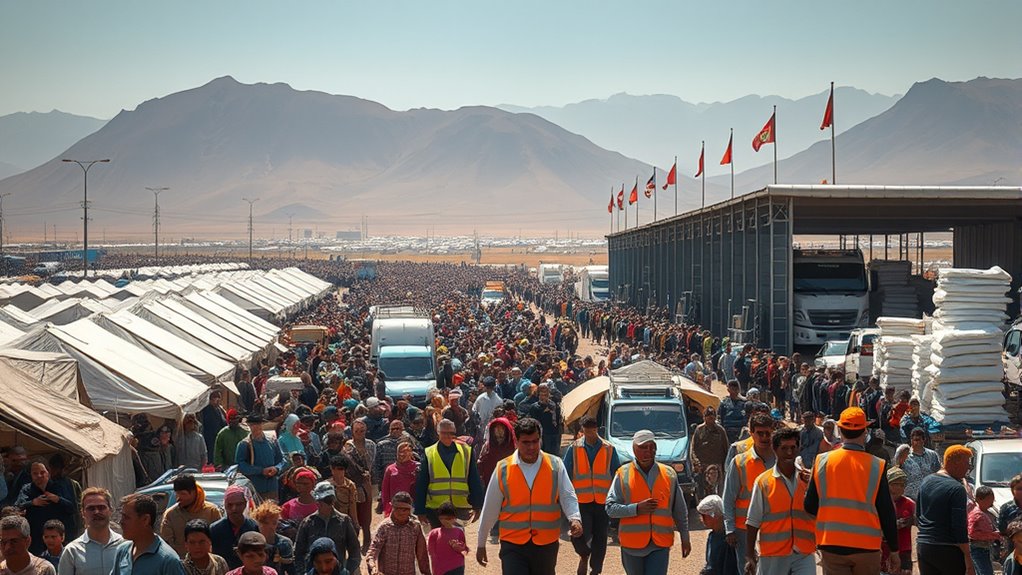

International responses to migration and refugee movements focus on balancing security with humanitarian needs. Countries sign treaties like the 1951 Refugee Convention to protect those fleeing danger, but policies can vary widely, with some tightening borders and others offering protection. Technological innovations help improve border management and asylum processes. Understanding these strategies helps you see how nations work together to manage migration flows responsibly. If you want to know more about how policies shape refugee experiences, continue exploring these critical topics.

Get the little things that make your day delivered free with Prime
- Fast, free delivery on millions of items
- Prime Video, Amazon Music and more included
- Member-only deals all year
Key Takeaways
- International treaties like the 1951 Refugee Convention establish legal protections for refugees globally.
- Countries collaborate through organizations such as UNHCR to manage migration and uphold human rights.
- Policies vary widely, with some nations tightening borders and others providing asylum and support.
- Border control measures aim to balance security with humane treatment of migrants and refugees.
- Technological advancements improve border management, ensuring more efficient and fair asylum processing.
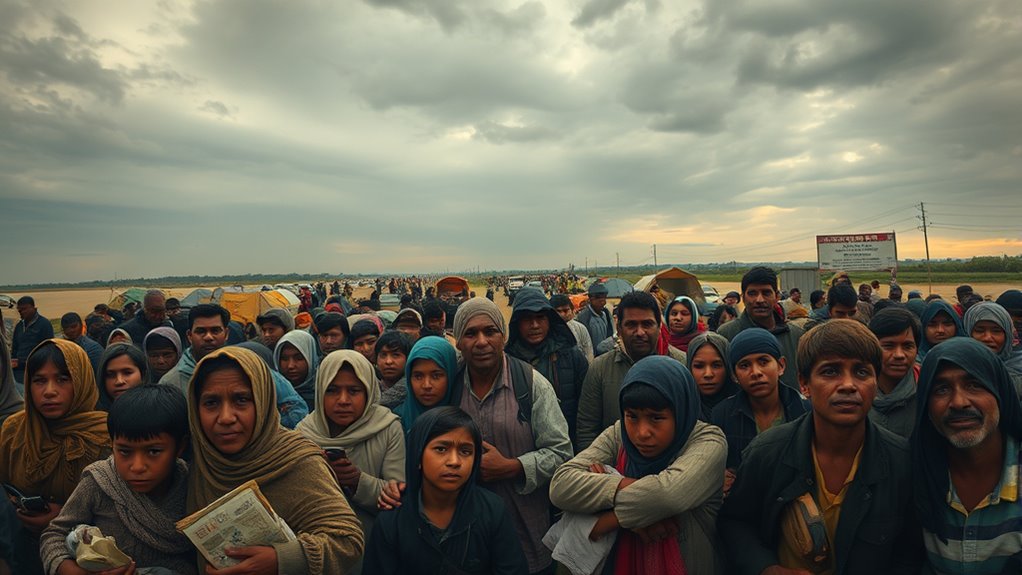
Have you ever wondered why millions of people leave their homes each year to seek better lives elsewhere? The reasons are complex—conflict, economic hardship, persecution—but the journey itself is often shaped by the policies countries put in place. Central to this process are border control measures and asylum procedures, which directly influence how refugees and migrants are received and processed. Border control acts as the first line of defense for nations, aiming to regulate who enters and exits. While it’s essential for security and sovereignty, strict border controls can also create barriers that make it difficult for those fleeing danger to find safety. When people arrive at borders, they often face a maze of regulations designed to verify their identities and intentions. This is where asylum procedures come into play, determining whether an individual qualifies for refugee status. These procedures can be lengthy, bureaucratic, and emotionally draining, but they serve an indispensable purpose: ensuring that genuine refugees are protected while maintaining border integrity. Asylum processes vary widely from country to country, influenced by legal frameworks, resources, and political climate. Some nations have streamlined procedures that allow for quick assessments, while others require extensive interviews and evidence collection. During this process, applicants must convincingly demonstrate that they face persecution or harm if returned to their home country. This burden of proof can be overwhelming, especially for those who have fled traumatic experiences. International responses to these issues often involve collaboration to uphold human rights and manage migration flows effectively. Many countries have signed international treaties, like the 1951 Refugee Convention, which obligate them to protect those fleeing persecution. Yet, in practice, policies can be inconsistent, with some nations tightening borders to deter arrivals or denying asylum claims based on political considerations. You might notice that recent global events, such as conflicts or climate crises, have pushed border controls to become more restrictive, complicating asylum procedures further. Governments are tasked with balancing national security with humanitarian responsibilities, a challenge that often sparks debate and controversy. While border control is essential for national interests, it shouldn’t come at the expense of compassion and justice. Effective asylum procedures are indispensable, but they require transparency, fairness, and efficiency to truly serve those in need. Additionally, the implementation of high-accuracy technology can help improve the effectiveness and fairness of border management and asylum processing. As someone interested in migration issues, understanding how border control and asylum procedures work helps you grasp the complexity behind refugee movements and the international efforts to respond compassionately and responsibly. It’s a delicate balance—protecting borders without shutting out those who seek safety and dignity.
border security and immigration scanner
As an affiliate, we earn on qualifying purchases.
As an affiliate, we earn on qualifying purchases.
Frequently Asked Questions
How Do Countries Coordinate Refugee Resettlement Efforts Globally?
Countries coordinate refugee resettlement efforts through bilateral agreements and international organizations. You can participate in resettlement programs that facilitate sharing responsibilities and resources. These programs often involve coordinated planning, information sharing, and joint efforts to identify and support refugees. By working together, countries make certain refugees find safe havens more efficiently, reducing disparities and enhancing global response effectiveness. This collaboration helps balance commitments and provides refugees with timely, secure resettlement options.
What Are the Long-Term Impacts of Migration on Host Countries’ Economies?
You might think migration strains economies, but it actually boosts economic growth and strengthens labor markets. Long-term, migrants fill vital job gaps, increase consumer demand, and foster innovation. These contributions can lead to higher productivity and new business opportunities. While there are challenges, embracing migration’s benefits helps host countries thrive, creating more diverse, resilient economies that adapt better to global changes.
How Is International Law Evolving to Better Protect Refugees’ Rights?
International law is evolving through legal reforms aimed at strengthening humanitarian protections for refugees. You’ll see new treaties and protocols that emphasize the rights of refugees, ensuring they receive safety, access to services, and dignity. These changes reflect a global commitment to better safeguarding vulnerable populations, encouraging countries to adopt more inclusive policies. By supporting these legal reforms, you help promote a more just, humane response to refugee crises worldwide.
What Role Do Non-Governmental Organizations Play in Refugee Crises?
You see NGOs play a vital role in refugee crises by delivering humanitarian aid and support directly to those in need. They often lead advocacy campaigns to raise awareness, influence policy changes, and secure resources. Your involvement or support helps NGOs provide essential services like shelter, food, and medical care, ensuring refugees’ rights are protected and their dignity maintained during difficult times. Their efforts make a tangible difference in countless lives.
How Can Countries Address the Root Causes of Forced Migration?
Think of addressing root causes of forced migration as trimming a tree’s overgrown branches. You need targeted development strategies that tackle poverty, conflict, and inequality, which are the roots pushing people to leave their homes. Countries can invest in education, healthcare, and economic opportunities, fostering stability. By nurturing these areas, you help create resilient communities, reducing the need for people to seek safety elsewhere.
asylum application processing kit
As an affiliate, we earn on qualifying purchases.
As an affiliate, we earn on qualifying purchases.
Conclusion
As you navigate the complex landscape of migration and refugees, remember that international responses are the guiding stars illuminating the night sky of uncertainty. Policies act as bridges over turbulent waters, offering safe passage to those seeking refuge. Together, your awareness and compassion can transform the stormy seas of displacement into a peaceful harbor, where hope blossoms like a resilient garden. It’s your role to help craft a world where every journey leads to a new dawn.
refugee identification document scanner
As an affiliate, we earn on qualifying purchases.
As an affiliate, we earn on qualifying purchases.
border control management software
As an affiliate, we earn on qualifying purchases.
As an affiliate, we earn on qualifying purchases.
NFL season / tailgating Picks
team gear
As an affiliate, we earn on qualifying purchases.