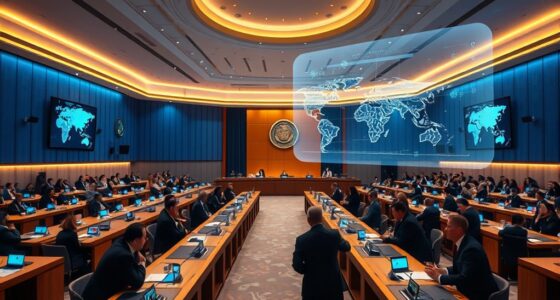
Non-state actors like NGOs, corporations, and terrorist groups markedly influence international relations by shaping security, humanitarian efforts, and advocacy. They operate beyond governments, often responding faster to crises, launching cyberattacks, or pushing for social and environmental change. Their actions can challenge traditional power structures and impact global stability. As their roles grow more complex, understanding how these actors shape world affairs becomes essential—stay with us to uncover more about their influence.

Get the little things that make your day delivered free with Prime
- Fast, free delivery on millions of items
- Prime Video, Amazon Music and more included
- Member-only deals all year
Key Takeaways
- Non-state actors influence global politics by shaping policies, advocating for norms, and exerting pressure on governments and international organizations.
- They play a critical role in cybersecurity, launching cyberattacks, defending infrastructure, and collaborating with states to enhance digital security.
- NGOs and humanitarian groups provide rapid relief and access in crisis zones, often operating where governments cannot or will not.
- Advocacy organizations shape international norms on human rights, environmental issues, and social justice, impacting global policy agendas.
- Non-state actors challenge traditional state sovereignty, fostering a decentralized, multifaceted international system that influences stability and development.

Non-state actors play a critical role in shaping international relations, often influencing global politics, economics, and security outside the traditional state-centric framework. You might find that organizations like NGOs, multinational corporations, terrorist groups, and advocacy networks are not bound by borders or governments, yet they exert significant influence on the world stage. One key area where non-state actors are especially impactful is cybersecurity. As digital technology advances, you face increasing cybersecurity challenges that transcend national borders. Hackers, cybercriminal groups, and even private corporations can launch attacks that disrupt essential infrastructure, steal sensitive data, or sway public opinion. These threats force governments and organizations to rethink their security strategies, often collaborating with non-state actors to develop defenses. You must stay vigilant, recognizing that cyber threats often originate from non-state sources that operate independently of traditional state control, making response more complex and urgent. Additionally, the evolving methods of attack highlight the importance of threat detection and swift response capabilities in maintaining security. Beyond cybersecurity, non-state actors play a pivotal role in humanitarian aid initiatives. When crises erupt—whether due to natural disasters, armed conflicts, or pandemics—you rely on NGOs and international organizations to deliver relief efficiently. These actors often have the agility and local knowledge that governments lack, enabling them to reach vulnerable populations swiftly. Their efforts include providing food, medical supplies, shelter, and psychological support, often working in dangerous or inaccessible areas where state presence is limited or compromised. You see how these organizations mobilize resources and coordinate logistics on a scale that sometimes surpasses government efforts, especially in conflict zones or disaster-stricken regions. Their independence from state agendas can be both an advantage and a challenge; while they can operate more flexibly, they also face issues of funding, coordination, and legitimacy. In addition, non-state actors influence international relations by advocating for human rights, environmental protection, and social justice. You might observe advocacy groups campaigning against human rights abuses or lobbying for policy changes at the global level. Their ability to shape public opinion can pressure governments and international bodies to act, demonstrating that influence doesn’t always come from formal diplomatic channels. As you navigate the complex web of global interactions, it’s clear that these actors foster a more decentralized and multifaceted international system. Their roles in cybersecurity and humanitarian aid exemplify how non-state entities shape global stability and development, often filling gaps left by states or challenging traditional power structures. Recognizing their importance helps you better understand the evolving landscape of international relations, where influence is shared among many diverse and dynamic players.
Frequently Asked Questions
How Do Non-State Actors Influence Global Economic Policies?
You influence global economic policies through corporate lobbying, shaping regulations to benefit your interests, and by providing humanitarian aid, which can sway international priorities and funding. Your ability to mobilize resources and advocate for specific issues impacts decision-making at the global level. By engaging with policymakers and demonstrating social responsibility, you help steer economic strategies and foster international cooperation that aligns with your goals.
What Legal Frameworks Govern Non-State Actors’ Actions Internationally?
The rule of law acts as a guiding star for non-state actors, yet shadows of sovereign immunity often obscure accountability. You must understand that legal frameworks like international treaties, UN resolutions, and customary law govern their actions. While legal accountability holds them responsible, sovereign immunity can shield certain non-state actors from prosecution. Managing these laws requires vigilance, as they shape how non-state actors operate and influence international relations.
How Do Non-State Actors Impact Diplomatic Negotiations?
You influence diplomatic negotiations through public diplomacy and cultural diplomacy, shaping perceptions and fostering trust. Non-state actors like NGOs, corporations, or cultural organizations can facilitate dialogue, share information, and build relationships that complement official diplomacy. By engaging in these activities, you help create a more open environment for negotiations, often bridging gaps between states and promoting mutual understanding, which can lead to more successful diplomatic outcomes.
What Are Examples of Non-State Actors Involved in Peacekeeping?
You see non-state actors involved in peacekeeping through organizations like civil society groups and humanitarian aid agencies. These actors often work alongside governments and the UN to promote stability, provide humanitarian assistance, and support post-conflict recovery. Their efforts help facilitate dialogue, rebuild communities, and guarantee aid reaches affected populations, making them essential players in peacekeeping processes. Their involvement underscores the importance of diverse non-state contributions to global peace efforts.
How Do Non-State Actors Affect International Environmental Agreements?
You influence international environmental agreements through climate activism, advocacy, and pushing for stronger commitments. You shape policies by raising awareness and mobilizing public support. You affect funding by directing resources toward sustainable projects and conservation efforts. You foster collaboration among governments, NGOs, and businesses to implement goals. Your efforts can expedite progress, hold parties accountable, and ensure environmental priorities stay central in international negotiations.
Conclusion
In conclusion, non-state actors fundamentally shape, shift, and shake up international relations. By bridging borders, building bonds, and boldly battling for influence, they challenge traditional power structures. Recognize their reach, rally around their roles, and realize their remarkable, revolutionary impact. As you see their scope expand, stay sharp and savvy, for non-state actors continue to carve an essential, creative course through the complex canvas of global affairs.
NFL season / tailgating Picks
team gear
As an affiliate, we earn on qualifying purchases.