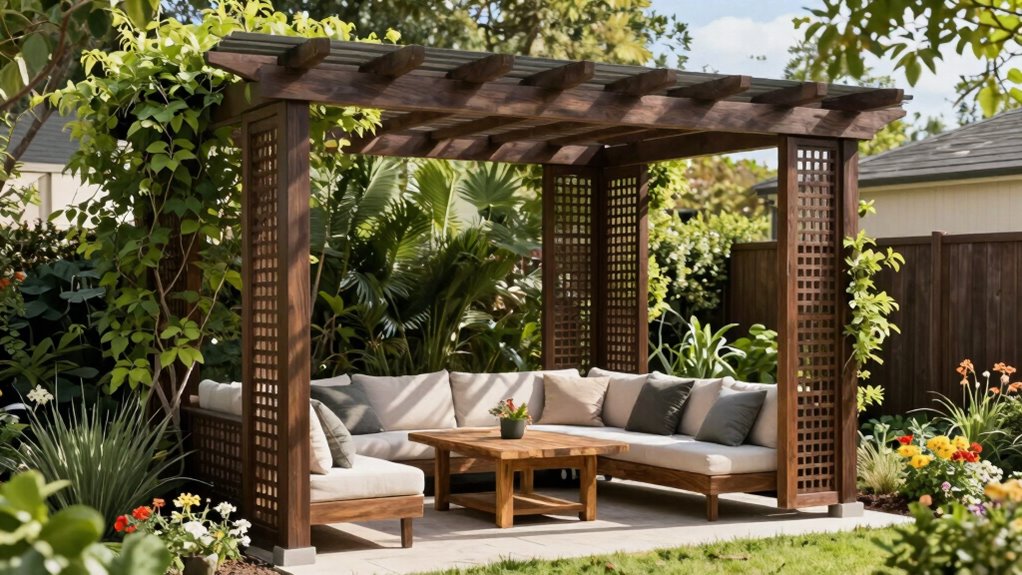

Before adding a pergola, consider how it fits with your landscape—whether it’ll be a focal point or subtle accent. Measure your space to choose the right size and decide on a style that matches your home’s aesthetic. Think about the materials, like wood or vinyl, based on climate and maintenance needs. Also, plan for shade, support for plants, and installation practices that guarantee stability. To make the most of your outdoor upgrade, explore more essential tips ahead.

Get the little things that make your day delivered free with Prime
- Fast, free delivery on millions of items
- Prime Video, Amazon Music and more included
- Member-only deals all year
Key Takeaways
- Assess your yard space and decide on the pergola’s size, height, and shape to complement your landscape and desired function.
- Choose materials that match your climate, maintenance preferences, and aesthetic style, such as wood, vinyl, aluminum, or steel.
- Consider the pergola’s purpose, like providing shade, supporting climbing plants, or serving as a focal point.
- Ensure proper installation techniques for safety, stability, and long-term durability.
- Incorporate sustainable practices and eco-friendly materials for an environmentally conscious addition.
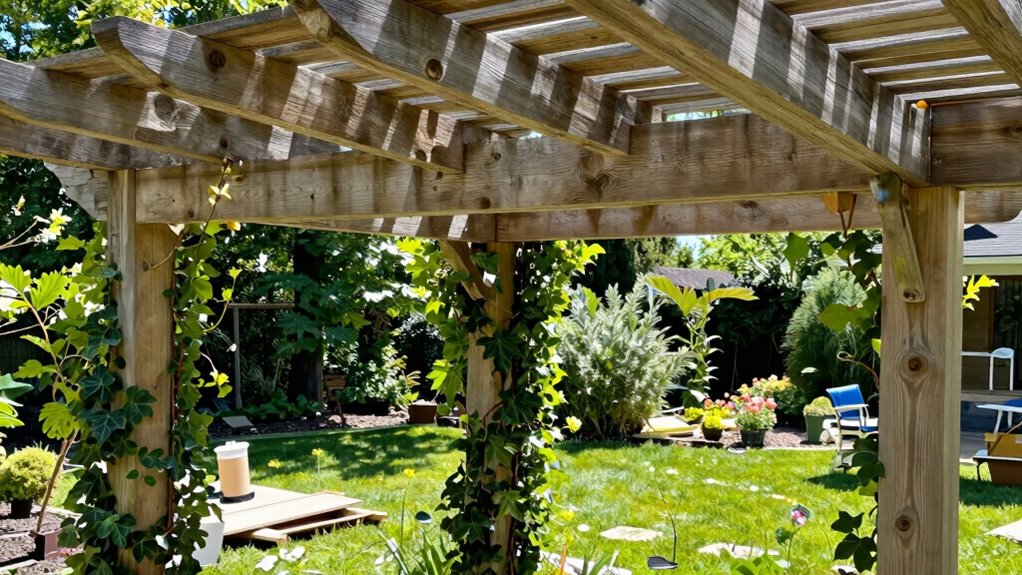
Adding a pergola to your yard can transform your outdoor space, but before you start building, it’s vital to understand what’s involved. One of the first things to think about is design considerations. Think about how the pergola will fit into your existing landscape. Do you want it to create a focal point or serve as a subtle accent? Measure your space carefully to determine the size that works best. Consider how much shade you want it to provide and whether you want it to support climbing plants or lighting fixtures. The style of your home and yard should influence your design choice; a modern residence might call for sleek, minimalist lines, while a traditional garden may suit more ornate details. Also, think about the height and shape—should it be a low, intimate structure or a taller, more open one? Planning these elements ahead guarantees your pergola complements your overall outdoor aesthetic. Additionally, understanding material options is crucial to ensure the durability and appearance of your structure over time. Knowing how materials respond to your climate can help prevent issues like warping or corrosion, ensuring your investment lasts longer. Material options play an essential role in both the appearance and durability of your pergola. Common choices include wood, vinyl, aluminum, and steel. Wood offers a natural look that blends well with garden surroundings, but it requires regular maintenance to prevent rot and insect damage. Hardwoods like cedar or redwood are popular because they’re more resistant to weathering. Vinyl and aluminum are low-maintenance options that won’t warp or rot, making them suitable if you prefer a set-it-and-forget-it approach. Steel, though sturdy and long-lasting, can be heavier and more expensive, but it allows for more elaborate designs. When choosing materials, think about your climate, maintenance preferences, and budget. For example, if you live in a humid area, a rot-resistant wood or metal might be best. If you want a quick, hassle-free installation, vinyl could be your top choice. The material you select also influences the overall style of your pergola, so pick something that aligns with your aesthetic and functional needs. Considering sustainable building practices can also help you make environmentally conscious choices that reduce your carbon footprint. Exploring innovative materials can further enhance your pergola’s longevity and eco-friendliness, especially when integrated with sustainable practices. Additionally, researching proper installation techniques can help ensure your pergola remains stable and safe over time.
As an affiliate, we earn on qualifying purchases.
Frequently Asked Questions
How Long Does a Pergola Typically Last?
A pergola typically lasts between 10 to 25 years, depending on materials and maintenance. If you choose durable materials like cedar, vinyl, or metal, it can extend its lifespan. Proper landscape integration and regular upkeep help prevent weather damage and rot. With quality seating options and careful care, your pergola remains a beautiful, functional feature, enhancing your yard’s charm for many years to come.
Can I Install a Pergola Myself?
Yes, you can install a pergola yourself if you have some DIY experience and are comfortable with basic tools. Make certain to follow the instructions carefully and consider pergola maintenance, like checking for loose bolts or weather damage, after installation. Planning your layout and securing permits if needed will ensure your DIY pergola stands strong and lasts long. Patience and proper preparation are key to a successful project.
What Are the Most Popular Pergola Materials?
The most popular pergola materials include wood, vinyl, and metal, each offering unique aesthetics and durability. Wood provides a natural look perfect for plant integration, allowing you to incorporate climbing plants and flowers. Vinyl is low-maintenance and weather-resistant, while metal offers a modern vibe and sturdy support for decorative lighting. Consider your style and climate when choosing, and think about how decorative lighting will enhance your space at night.
Do Pergolas Require a Building Permit?
You likely need a building permit for your pergola, depending on local zoning regulations. Check with your city or county’s permitting process because rules vary widely. Some areas require permits if the pergola exceeds certain size or height limits, while others don’t. Failing to follow these regulations can lead to fines or needing to remove the structure later. Always verify with your local authorities before starting your project.
How Much Does a Pergola Usually Cost?
A pergola usually costs between $3,000 and $8,000, depending on design options like materials, size, and complexity. When planning your budget, consider maintenance tips—wood pergolas may need regular sealing or staining, while vinyl or metal options require less upkeep. Custom designs can add to the cost but offer more personalization. Investing in quality materials guarantees your pergola remains a beautiful, durable feature in your yard for years to come.
As an affiliate, we earn on qualifying purchases.
Conclusion
Adding a pergola transforms your yard into a cozy retreat, much like planting a seed that blossoms over time. Just as a gardener tends to each detail, considering your space, budget, and needs guarantees your pergola becomes a lasting sanctuary. Remember, the right choice can turn a simple structure into a cherished gathering spot, much like a well-tended garden that flourishes year after year. With careful planning, your yard’s new focal point will truly thrive.
As an affiliate, we earn on qualifying purchases.
pergola with climbing plant support
As an affiliate, we earn on qualifying purchases.
As an affiliate, we earn on qualifying purchases.
Halloween Picks
halloween
As an affiliate, we earn on qualifying purchases.