
TL;DR

Get the little things that make your day delivered free — and shop member deals
- Fast, free delivery on millions of items
- Access to Prime Big Deal Days deals on October 6–7
- Prime Video, Amazon Music and more included
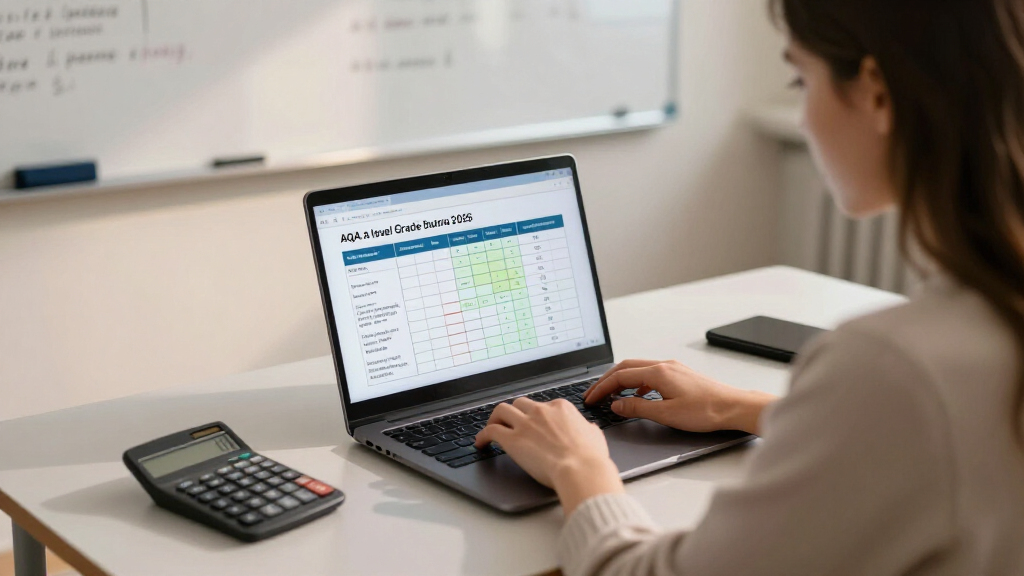
AQA has officially released the grade boundaries for A Level exams in 2026. These thresholds determine the minimum marks needed for each grade. The boundaries are critical for students, teachers, and exam centres to understand grading standards for this year.
AQA has published the official grade boundaries for A Level examinations in 2026. These boundaries specify the minimum scores students must achieve in each subject to earn specific grades, affecting thousands of students and educators across the UK. The release provides clarity on grading standards for this year’s assessments, which are crucial for exam planning and student progression.
The 2026 AQA A Level grade boundaries were officially released on March 15, 2026, and apply to all subjects examined by AQA this year. The boundaries determine the minimum raw scores required for each grade, from Grade A* to E, and are based on the examiners’ assessments of exam difficulty and student performance. For example, in Mathematics, the boundary for Grade A* is set at 92%, while in English Literature, it is 88%. These thresholds are generally comparable to previous years but can vary slightly depending on subject and exam session.
According to AQA officials, the boundaries are set to reflect the standard of work expected for each grade, ensuring fairness and consistency across the board. They also stated that the boundaries are informed by statistical analysis of exam results and are reviewed to account for variations in exam difficulty. The release of these boundaries is part of AQA’s commitment to transparency and supporting schools, students, and parents in understanding grading criteria.
Implications for Students and Educators
The grade boundaries are vital for students as they determine the grades needed for university offers, apprenticeships, or employment. Slight variations in these thresholds can significantly impact a student’s results and future opportunities. For teachers and schools, understanding the boundaries helps in advising students and planning post-exam strategies. Additionally, the boundaries serve as a benchmark for assessing the exam’s difficulty and ensuring grading fairness across different cohorts.
Furthermore, the 2026 boundaries come amid ongoing discussions about grading fairness following the pandemic years, where adjustments were made to account for disruptions. While these boundaries aim to reflect typical standards, some educators and students may scrutinize them for consistency with previous years or perceived difficulty levels. Overall, the boundaries will influence how results are interpreted and how students are ranked for further education or careers.
As an affiliate, we earn on qualifying purchases.
2026 Grade Boundary Setting Process
The 2026 grade boundaries were established following a standard process used by AQA, involving statistical analysis and expert judgment. In recent years, grading boundaries have occasionally been adjusted to account for exam difficulty and cohort performance, especially after the disruptions caused by COVID-19. The 2025 boundaries, for example, saw slight increases in some subjects to maintain standards, and similar considerations have influenced the 2026 setting.
AQA consults with subject experts, teachers, and statisticians to determine appropriate thresholds, aiming for consistency with prior years while reflecting current exam conditions. The boundaries are then published publicly, providing transparency for students and schools. Prior to this release, some speculation existed about possible adjustments due to changes in exam formats or difficulty levels, but AQA confirmed that the 2026 boundaries follow their established methodology.
“The 2026 grade boundaries are set to ensure fairness and consistency across all subjects, reflecting the standard of work expected at each grade.”
— AQA spokesperson
As an affiliate, we earn on qualifying purchases.
Potential Variations in Future Boundaries
It is not yet clear whether the 2026 boundaries will be adjusted later in the year in response to exam performance trends or unforeseen difficulties. While AQA states that the boundaries are final for this cycle, some educators speculate that post-results reviews could lead to minor adjustments, as seen in previous years. The impact of any such changes remains to be seen and has not been officially confirmed.
best revision guides for A Level students
As an affiliate, we earn on qualifying purchases.
As an affiliate, we earn on qualifying purchases.
Next Steps for Exam Results and Appeals
Following the release of grade boundaries, students’ results will be published in August 2026. Schools and students will review their scores against these thresholds to determine grades. If students or schools believe results do not accurately reflect performance, they can submit appeals or request reviews, which may lead to adjustments if errors are identified. AQA has also indicated that detailed grade boundaries per subject will be available on their website, aiding transparency and understanding.
As an affiliate, we earn on qualifying purchases.
Key Questions
When will the AQA A Level results be published in 2026?
The results are scheduled for release in August 2026, following the usual exam timetable.
How are the grade boundaries determined?
They are set through a combination of statistical analysis of exam performance and expert judgment to reflect standard achievement levels.
Can students challenge their results based on grade boundaries?
Yes, students and schools can request reviews or appeals if they believe there has been an error or inconsistency in grading.
Will the grade boundaries change after they are published?
Typically, boundaries are final once published, but minor adjustments can occur if discrepancies are identified during post-results reviews.
Are the 2026 boundaries different from previous years?
They are generally similar to recent years but may vary slightly depending on exam difficulty and cohort performance.
Source: google-trends
NFL season / tailgating Picks
team gear
As an affiliate, we earn on qualifying purchases.