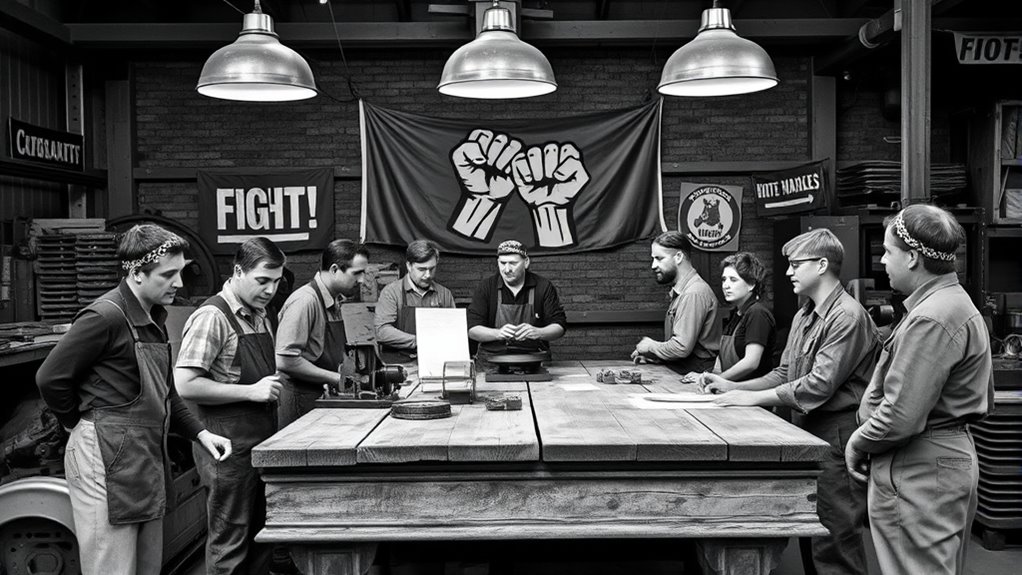

Trade unions have a long history of fighting for workers’ rights, starting with collective actions like strikes and protests to challenge exploitation and poor conditions. Over time, governments enacted labor laws to protect workers, from setting minimum wages to restricting long hours. These laws gave unions a legal foundation to bargain collectively and push for better wages and safer workplaces. To learn how these efforts have shaped today’s employment standards, keep exploring this important history.
Key Takeaways
- Trade unions emerged to address exploitation, long hours, and unsafe conditions, advocating for workers’ rights through collective action.
- Labor legislation evolved to regulate employment standards, protect union activities, and establish legal rights for workers.
- Legal reforms created protections for unions, enabling effective collective bargaining and safeguarding workers from unfair practices.
- Collective bargaining shifted from individual negotiations to organized efforts, formalized within legal frameworks to improve working conditions.
- Unions have historically secured fair pay, safer workplaces, and employment protections, demonstrating the power of collective worker advocacy.

Trade unions play an essential role in defending workers’ rights and ensuring fair treatment in the workplace. One of the key ways they do this is through collective bargaining, where workers unite to negotiate wages, working conditions, and benefits with their employers. This process gives employees a stronger voice, helping to balance the power dynamic that often favors management. Over time, collective bargaining has become a cornerstone of labor relations, enabling workers to secure fairer pay and safer workplaces. It’s a direct way for employees to influence decisions that impact their daily lives and long-term well-being.
Trade unions strengthen workers’ voices through collective bargaining for fair wages and better working conditions.
The history of trade unions is deeply intertwined with the development of labor legislation, which was created to protect workers from exploitation and unfair practices. In the early days, workers faced long hours, dangerous conditions, and little legal recourse. Unions emerged as a response, organizing strikes and protests to demand better treatment. As these efforts gained momentum, governments around the world began enacting laws to regulate employment standards, limit working hours, and establish minimum wages. These laws helped formalize workers’ rights and provided a legal framework for unions to operate within.
Labor legislation also set the stage for collective bargaining to become a recognized and protected activity. Governments saw the value in giving workers a formal mechanism to negotiate with employers, which helped prevent conflicts from escalating into violence or widespread strikes. Over the years, legislation expanded to include protections for union organizers, outlawed unfair labor practices, and established agencies to oversee labor relations. This legal foundation reinforced the power of unions, enabling them to advocate more effectively for their members. Additionally, the recognition of collective bargaining rights has been pivotal in establishing workers’ protections and ensuring fair treatment across various industries.
You might notice that, today, collective bargaining is still a crucial tool for improving working conditions, but it’s also a reflection of longstanding legal protections. It’s not just about individual negotiations — it’s about workers coming together to shape their employment terms and hold employers accountable. The evolution of labor legislation has been instrumental in giving unions a legal standing, ensuring that collective efforts are recognized and respected. This history shows that, through persistent effort and legal reform, workers have gained significant protections. Your rights at work, from fair pay to safe environments, are rooted in this ongoing struggle and the collective power that unions have harnessed over the years.
Frequently Asked Questions
How Have Trade Unions Influenced Modern Labor Laws Globally?
Trade unions have considerably influenced modern labor laws globally by advocating for workers’ rights through collective bargaining. You benefit from these laws that establish fair wages, safe working conditions, and reasonable hours. Unions push for labor legislation that protects employees against unfair treatment and exploitation. Their efforts lead to legal reforms that prioritize worker welfare, ensuring that your rights are recognized and upheld in workplaces worldwide.
What Challenges Do Trade Unions Face in the Digital Economy?
Imagine fighting a digital tide—trade unions face new challenges in the digital economy, like automation threats and the rise of digital activism. You might struggle to organize workers whose jobs are automated or remotely connected. As technology evolves quickly, you must adapt strategies, harness digital tools, and counteract automation challenges. Staying relevant means embracing change while defending workers’ rights in a shifting landscape.
How Do Trade Unions Impact Workplace Diversity and Inclusion?
Trade unions actively promote workplace diversity and inclusion by advocating for cultural integration and gender equality. You’ll find that they push for fair hiring practices, equal pay, and respectful environments where different perspectives thrive. By supporting policies that embrace diverse backgrounds and challenge discrimination, unions help create a more equitable workplace. Your involvement can strengthen these efforts, ensuring everyone feels valued and included, which benefits both employees and the organization as a whole.
What Role Do Trade Unions Play in Advocating for Gig Workers?
Trade unions play a essential role in advocating for gig workers by providing freelance representation and supporting fair contract negotiations. You can rely on unions to amplify your voice, push for better wages, benefits, and job security, and guarantee your rights are protected in a flexible, often unregulated, gig economy. They help level the playing field, giving you collective strength to negotiate terms that reflect your needs and contributions.
How Have International Trade Agreements Affected Workers’ Rights?
International trade agreements often impact your workers’ rights by shaping labor standards through trade policies. They can improve conditions by promoting fair wages and safe workplaces, but sometimes they weaken protections to boost competitiveness. As a worker, you may notice changes in job security and workplace regulations depending on how these agreements prioritize economic growth over labor rights. Staying informed helps you advocate for fair labor standards in global trade.
Conclusion
As you see, trade unions have been the backbone of workers’ rights, standing tall like ancient trees weathering storms. They’ve fought tirelessly to shape fair working conditions and protect your rights. Remember, their history is a proof to your power when united. Just as a single drop can fill a bucket, your collective voice can spark lasting change. Keep standing strong, because your strength is the spark that keeps progress alive.