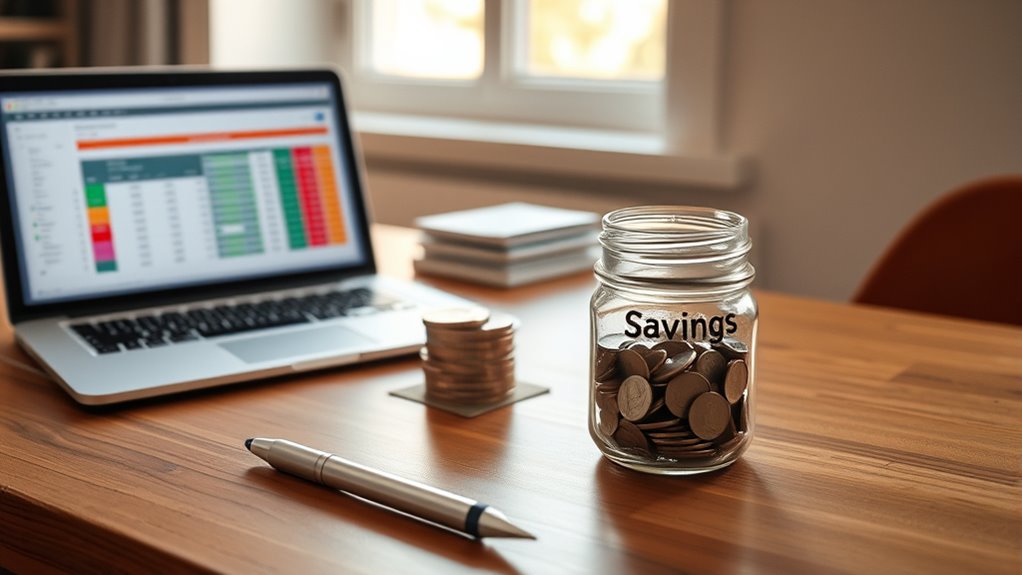

To set up a sinking fund for big purchases, start by identifying your upcoming expenses like a car or home project. Estimate the total cost and decide when you’ll make the purchase. Then, divide the amount by the months until your goal, committing to saving that amount regularly. Consistent contributions help you accumulate funds steadily, giving you peace of mind. Keep going to discover more about building and managing your sinking fund effectively.
Key Takeaways
- Identify major expenses and estimate the total amount needed for each purchase.
- Set a realistic timeline and divide the total cost by the number of months until purchase.
- Commit to consistent monthly contributions to steadily build the fund.
- Track progress regularly to stay motivated and adjust savings if needed.
- Use the accumulated funds confidently for the big purchase, avoiding debt and impulsive spending.
Are you looking for a smart way to manage future expenses without straining your budget? Setting up a sinking fund is an excellent strategy to handle big purchases smoothly. Instead of scrambling for cash at the last minute or dipping into high-interest debts, you proactively allocate money over time. By doing so, you can avoid unnecessary stress and keep your finances on track. Establishing a sinking fund not only helps you save systematically but also encourages disciplined investment planning. You decide how much to save each month, gradually building a dedicated pool of funds for your upcoming expenses. This approach minimizes the temptation to borrow, reducing the need for debt reduction later on, and keeps your financial health intact.
When you create a sinking fund, you’re fundamentally planning ahead for major costs like a new car, home renovations, or a vacation. The process begins with estimating the total amount you’ll need and setting a timeline for your purchase. Divide the total by the number of months until your goal, and commit to saving that amount regularly. This consistent effort turns a potentially overwhelming expense into manageable, bite-sized payments. As you contribute over time, your fund grows, and you gain peace of mind knowing you’re prepared when the time comes to make your purchase. Over time, you’ll see the benefits of disciplined investment planning—your savings accumulate steadily without impacting your day-to-day finances. Additionally, understanding the importance of personal and community resilience can help you remain flexible and prepared for unforeseen financial challenges that may arise unexpectedly.
A key advantage of a sinking fund is that it helps you avoid the pitfalls of impulsive spending or taking on debt to cover large expenses. Instead of relying on credit cards or loans, you draw from your dedicated savings, which keeps interest costs at bay and improves your credit standing. Plus, when you reach your savings goal, you can make your purchase confidently, knowing you’ve already set aside the necessary funds. This disciplined approach also encourages better money management habits, making it easier to prioritize your financial goals and stay on track. Over the long term, maintaining a sinking fund can contribute to overall better financial stability, reducing stress and giving you more control over your money.

Yamahiko Large Clear Coin Bank Jar with Slotted Lid, Half Gallon Reusable Money Tip Change Savings Coin Jar for Coin or Raffle Ticket, Big Clear Money Coin Tip Piggy Change Bank Box for Adults Teens
❤️CLEAR COIN BANK: The coin bank is made from highly clear PET material. Our plastic coin bank is…
As an affiliate, we earn on qualifying purchases.
As an affiliate, we earn on qualifying purchases.
Frequently Asked Questions
How Much Should I Contribute Monthly to My Sinking Fund?
You should contribute a specific amount monthly based on your target purchase timeframe and cost, balancing your investment strategies and debt management. Calculate the total amount needed, then divide it by the months remaining before your big purchase. This disciplined approach guarantees consistent savings, minimizes financial stress, and helps you stay on track. Adjust your contributions if your financial situation changes, keeping your sinking fund aligned with your goals.
What’s the Ideal Timeframe for Saving in a Sinking Fund?
The ideal timeframe for saving in a sinking fund depends on your purchase timeline, typically ranging from a few months to several years. You should align your savings strategy with your investment goals, balancing risk management and liquidity needs. Short-term goals require more conservative investments, while longer periods allow for growth-focused strategies. Regular contributions and timely adjustments help make sure you meet your big purchase without financial strain.
Can I Use a High-Yield Savings Account for My Sinking Fund?
Using a high-yield savings account for your sinking fund is like placing your money in a safe, accessible locker. It’s a smart choice because of its excellent interest rates and easy account accessibility, allowing you to deposit and withdraw funds without hassle. While it’s not an investment option with high risk, it’s perfect for saving steadily for big purchases, giving you peace of mind knowing your money is safe and growing.
How Do I Adjust Contributions if My Financial Situation Changes?
If your financial situation changes, you should review your budget flexibility and adjust your contributions accordingly. Increase or decrease your savings based on your current income and expenses, making emergency adjustments if needed. It is crucial to stay proactive, ensuring your sinking fund remains on track without straining your finances. Regularly reassess your goals and modify contributions to maintain a healthy balance between saving and spending.
Are There Tax Implications When Funding or Withdrawing From a Sinking Fund?
Funding or withdrawing from a sinking fund generally doesn’t have direct tax implications, but it can influence your tax deductions if the fund is tied to a deductible expense. You won’t need to report contributions or withdrawals to the IRS unless you’re earning interest or investment income within the fund. Always keep records for IRS reporting and consult a tax professional to ensure you understand any potential impacts on your taxes.

2026 Monthly Savings Challenge Book with A6 Acrylic Binder,saving $2,026 in 2026 Floral Themed Tracking,12 Month Budget Cash Stuffing Tracker Cash Envelopes
Save $2,026 in 2026: A structured and motivating challenge to help you systematically reach your savings goal of…
As an affiliate, we earn on qualifying purchases.
As an affiliate, we earn on qualifying purchases.
Conclusion
As you step back and see your sinking fund grow, it’s like watching a small river swell into a mighty stream, ready to carry you toward your big purchase. With each deposit, you create a steady current of savings, making the future feel closer and clearer. Before long, those coins will come together like a perfect puzzle piece, seamlessly fitting into your plans. Trust the process—you’re building a financial momentum that’s almost too good to be a coincidence.

Sooez 100 Envelopes Money Saving Challenge, Savings Challenges Book with Envelopes & Challenge Tracker, Motivational Process to Save $5050, Money Saving Binder 100 Pocket Pre-Numbered, Birthday Gifts
DIY Your Own Binder – Motivational & Fun Way to Save: Want to save money but have a…
As an affiliate, we earn on qualifying purchases.
As an affiliate, we earn on qualifying purchases.

B00000JZKB
As an affiliate, we earn on qualifying purchases.
As an affiliate, we earn on qualifying purchases.