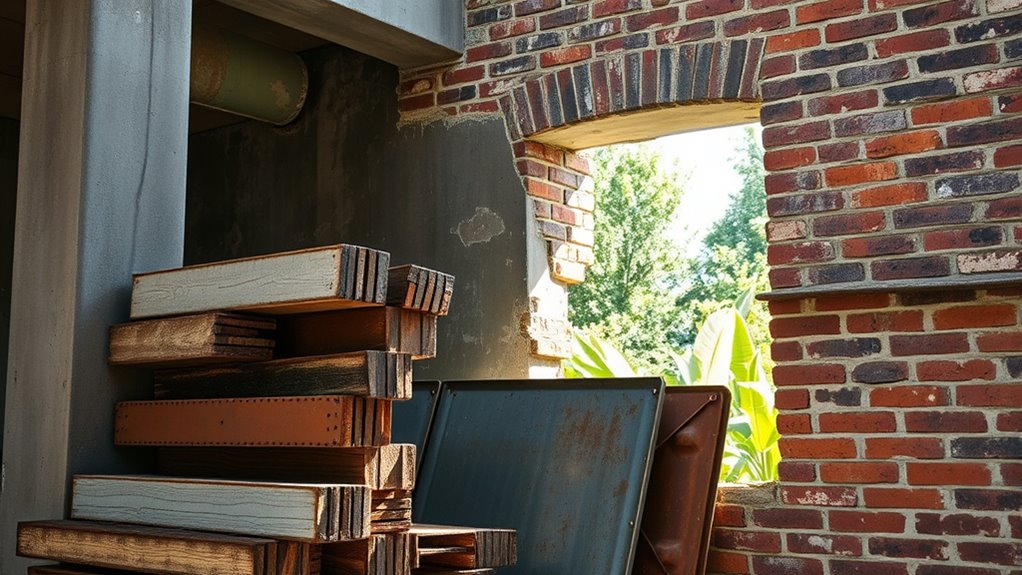

Implementing circularity in construction involves actively reusing materials and adopting deconstruction techniques to reduce waste and promote sustainability. By carefully dismantling buildings, you can salvage valuable components like doors, bricks, and fixtures for reuse or resale, lowering costs and minimizing environmental impact. Planning for easy disassembly during design further supports resource efficiency. Embracing these practices not only benefits the environment but also enhances your reputation. Keep exploring to learn ways to embed circularity into your projects seamlessly.

Get the little things that make your day delivered free with Prime
- Fast, free delivery on millions of items
- Prime Video, Amazon Music and more included
- Member-only deals all year
Key Takeaways
- Circularity in construction emphasizes reusing materials and designing for disassembly to extend material lifecycles.
- Deconstruction techniques carefully dismantle buildings to salvage components for reuse, reducing waste.
- Planning during the design phase facilitates easier material recovery and promotes sustainable, circular building practices.
- Reusing salvaged materials lowers project costs and enhances environmental sustainability in construction.
- Embracing circularity supports resource conservation, reduces environmental impact, and boosts industry reputation.
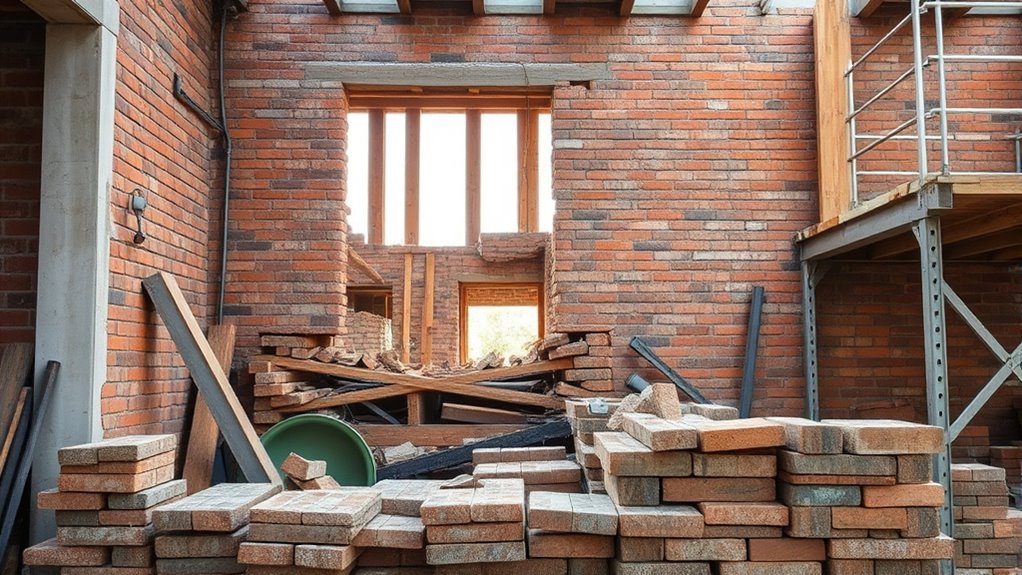
Have you ever considered how the construction industry can reduce waste and boost sustainability? It’s a pressing question, especially as urban development continues to grow and environmental concerns become more urgent. One effective way to address this is through material reuse, which involves repurposing existing materials instead of demolishing and sending waste to landfills. By adopting material reuse strategies, you can markedly lower the demand for new raw materials, reduce energy consumption, and cut down on greenhouse gas emissions tied to manufacturing and transportation. This approach not only minimizes waste but also promotes a circular economy in construction, where materials are kept in use for as long as possible.
Reducing waste through material reuse promotes sustainability and a circular construction economy.
Integral to this effort are deconstruction techniques, a set of methods focused on carefully dismantling structures to preserve their components. Unlike traditional demolition, deconstruction emphasizes gentle disassembly, allowing you to salvage windows, doors, fixtures, and even structural elements like beams and bricks. These components, once recovered, can be reused in new projects or sold to other builders, creating a sustainable loop. When you implement deconstruction techniques, you not only prevent valuable materials from becoming waste but also reduce the environmental impact associated with producing new construction materials. It’s a proactive step toward designing buildings with their end-of-life in mind, promoting reuse and extending the lifecycle of building components.
Deconstruction is more than just a method; it’s a mindset shift that encourages you to think about the entire lifespan of a building’s materials. Instead of viewing demolition as the end, you see it as an opportunity to recover and reuse valuable parts. This requires planning from the design phase, choosing materials that are easier to dismantle and reuse, and training crews to work with deconstruction techniques. When you approach projects with this perspective, you’re helping to close the loop in the construction cycle, turning what would be waste into a resource.
Furthermore, implementing material reuse and deconstruction techniques can provide economic benefits. Salvaged materials often cost less than new ones, and the ability to reuse parts can reduce overall project costs. Plus, demonstrating sustainable practices can enhance your reputation, attracting clients who prioritize environmentally responsible construction. As regulations tighten and sustainability becomes a higher priority in the industry, embracing these practices positions you as a forward-thinking professional committed to reducing environmental impact. Recognizing how common goal tracking pitfalls can hinder progress allows you to set more effective strategies for adopting sustainable construction methods.
As an affiliate, we earn on qualifying purchases.
Frequently Asked Questions
How Cost-Effective Is Material Reuse in Construction Projects?
Material reuse in construction is quite cost-effective because it boosts cost savings and enhances material efficiency. By reusing existing materials, you reduce expenses on new resources and waste disposal. Additionally, deconstruction allows you to salvage valuable components, cutting overall project costs. Although upfront efforts might be higher, the long-term financial benefits include lower material costs and minimized environmental impact, making reuse a smart choice for budget-conscious projects.
What Are the Biggest Regulatory Hurdles for Deconstruction Practices?
You’ll face legal barriers and permitting challenges that hinder deconstruction practices. Regulations often lack clear guidelines for safely dismantling buildings and reusing materials, creating uncertainty. Local permitting processes can be lengthy or restrictive, delaying projects and increasing costs. To overcome these hurdles, you need to work closely with authorities, advocate for clearer policies, and guarantee compliance with safety standards, making deconstruction more feasible and sustainable.
How Does Circularity Influence Building Design Choices?
Circularity transforms your building design choices, making them almost magical! It forces you to contemplate the entire material lifecycle, turning waste into resource and inspiring groundbreaking design innovation. You’ll find yourself choosing materials not just for their function but for their ability to be reused or repurposed, creating a loop of sustainability. This approach pushes you to think beyond traditional methods, making every decision a step toward a more sustainable, circular future.
Are There Successful Case Studies of Circular Construction?
Yes, there are innovative examples of circular construction that demonstrate sustainable strategies. For instance, the Edge Olympic in London uses modular design and recycled materials, showcasing how buildings can adapt and reduce waste. Another example is the Bullitt Center in Seattle, which employs deconstruction methods to maximize material reuse. These projects prove that embracing circular principles leads to environmentally responsible, flexible, and forward-thinking building solutions.
What Training Is Needed for Workers in Deconstruction Techniques?
You need to hit the ground running with all-encompassing training programs that focus on deconstruction techniques. Skills development should cover safe dismantling, material sorting, and recycling methods, so workers are well-equipped for the job. Think of it as sharpening your toolkit—you’ll need knowledge of hazardous materials, proper use of specialized equipment, and sustainable practices. This way, everyone’s on the same page, turning deconstruction into a smooth, eco-friendly process.
deconstruction tools for construction
As an affiliate, we earn on qualifying purchases.
As an affiliate, we earn on qualifying purchases.
Conclusion
By embracing circularity in construction, you’re not just building structures—you’re shaping a sustainable future. Reusing materials and deconstructing responsibly allows you to cut waste and conserve resources, proving that every little bit counts. Remember, a chain is only as strong as its weakest link, so your commitment to reuse and rethink can make a world of difference. It’s time to turn the tide and build smarter, not just bigger.
As an affiliate, we earn on qualifying purchases.
disassembly-friendly building fixtures
As an affiliate, we earn on qualifying purchases.
As an affiliate, we earn on qualifying purchases.
Columbus Day / Indigenous Peoples' Day Picks
long weekend sales
As an affiliate, we earn on qualifying purchases.