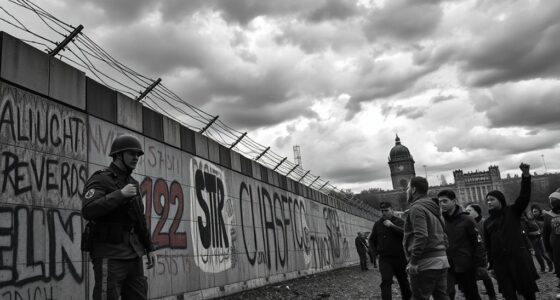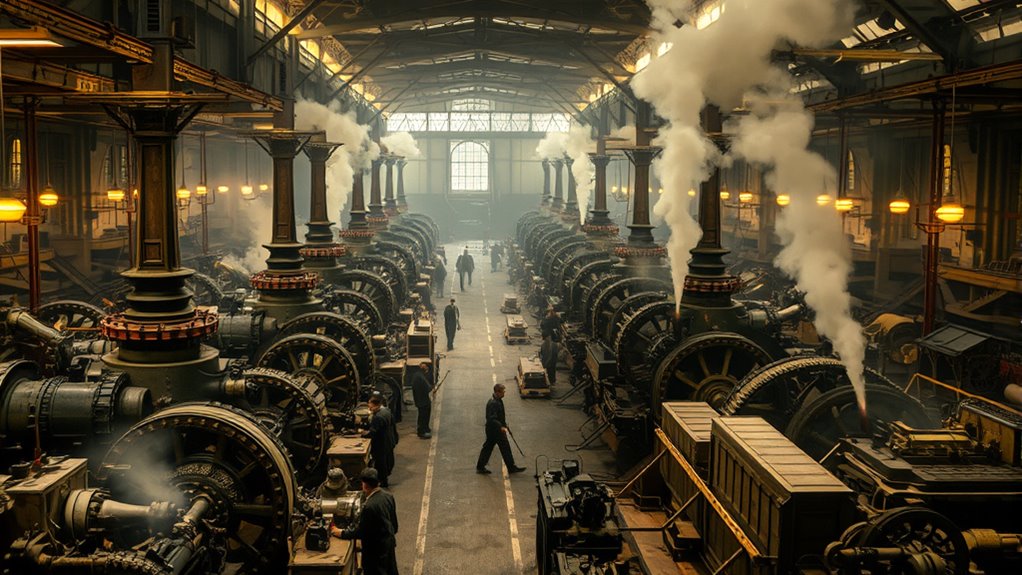

The Industrial Revolution dramatically changed society and the economy by introducing new machines and factories that boosted production. You likely notice how cities expanded rapidly, bringing challenges like overcrowding, poor sanitation, and housing issues. Workers faced tough conditions, prompting movements for fair wages, safer workplaces, and child labor reforms. These changes transformed urban life and set the stage for modern community improvements. To understand how these shifts continue to influence today’s world, keep exploring this fascinating history.

Get the little things that make your day delivered free with Prime
- Fast, free delivery on millions of items
- Prime Video, Amazon Music and more included
- Member-only deals all year
Key Takeaways
- The Industrial Revolution introduced machines and factories, transforming societal functions and boosting economic growth.
- Rapid urbanization led to overcrowded cities with social and infrastructural challenges, prompting civic reforms.
- Labor movements emerged to improve wages, working conditions, and limit child labor, shaping modern workers’ rights.
- Urbanization and labor reforms interconnected, creating more organized and humane city environments.
- The revolution’s legacy influences contemporary urban planning, labor protections, and economic policies worldwide.
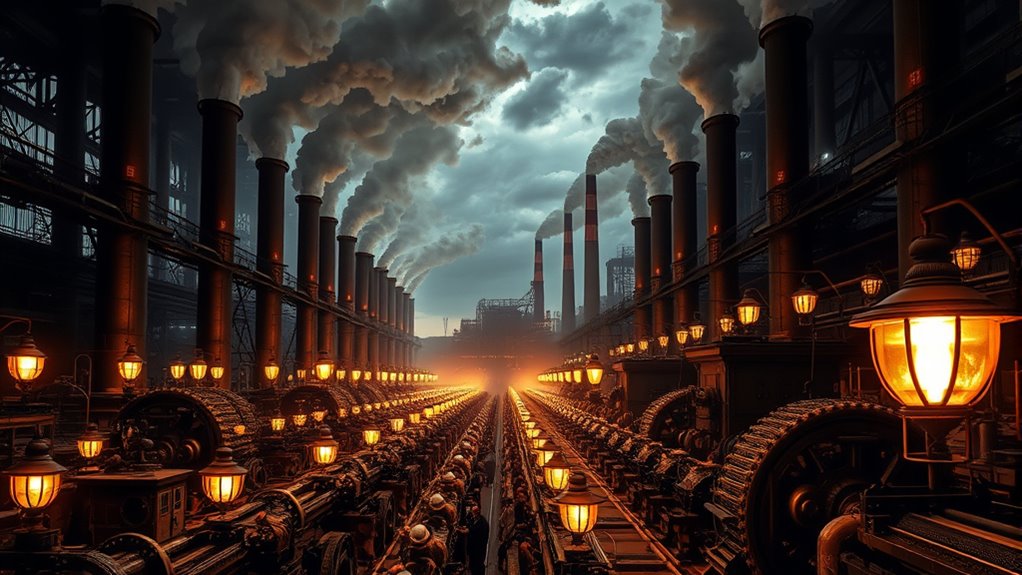
Have you ever wondered how the Industrial Revolution transformed our world? It wasn’t just about new machines or factories; it fundamentally reshaped how societies function and how economies grow. As industries expanded rapidly, cities began swelling with new residents seeking work. This rapid urbanization brought significant challenges. Overcrowded neighborhoods, poor sanitation, and inadequate housing became common, making life difficult for many. These urbanization challenges pushed communities and reformers to recognize the need for change. People started advocating for better living conditions, leading to the rise of labor reform movements. These movements aimed to improve wages, reduce working hours, and ensure safer workplaces. You can see their impact today in labor laws and workers’ rights that still protect employees.
During this period, many workers faced long hours, low pay, and dangerous environments. In response, labor reform movements emerged, driven by the frustrations of those who endured harsh conditions daily. Strikes and protests became common as workers demanded fair treatment. These efforts gradually led to reforms like the abolition of child labor, regulations on factory safety, and the establishment of minimum wages. You might not realize it, but these movements laid the groundwork for modern labor protections. They also fostered a sense of collective identity among workers, encouraging solidarity and activism.
The challenges of urbanization and the push for reforms weren’t isolated incidents; they were interconnected forces that shaped society. Cities grew chaotically, and authorities struggled to keep up with the needs of their expanding populations. This led to a push for civic improvements such as better sanitation, public health initiatives, and improved infrastructure. Meanwhile, labor reform movements fought to ensure that economic growth didn’t come at the expense of workers’ well-being. These efforts gradually transformed urban life from a chaotic, unhealthy environment into a more organized and humane setting. The rise of urbanization challenges also prompted innovations in public health and city planning to better accommodate the growing populations.
Through these struggles and reforms, society learned important lessons about balancing economic progress with human rights. The Industrial Revolution forced communities to confront the realities of rapid change and to develop systems that protected workers while fostering economic development. Today, the legacy of these urbanization challenges and labor reform movements continues to influence policies and societal attitudes. You can see their echoes in today’s discussions about workers’ rights, workplace safety, and urban planning. The transformation was profound, shaping the modern world in ways that benefit millions and ensuring progress doesn’t leave anyone behind.
industrial revolution history book
As an affiliate, we earn on qualifying purchases.
As an affiliate, we earn on qualifying purchases.
Frequently Asked Questions
How Did the Industrial Revolution Influence Global Trade Routes?
You see, the Industrial Revolution transformed global trade routes by boosting production and creating more efficient trade networks. As industries expanded, goods moved faster across continents, making global commerce more interconnected. You’d notice new shipping methods and faster transportation, which reduced costs and opened markets worldwide. This revolution encouraged countries to develop new trade routes, strengthening international ties and fueling economic growth, ultimately making global trade more dynamic and accessible.
What Were the Environmental Consequences of Industrialization?
You might think industrialization only boosted economies, but it also brought serious environmental consequences. Pollution effects increased dramatically, contaminating air and water, harming ecosystems and human health. Resource depletion accelerated as factories consumed vast amounts of coal, iron, and other raw materials, often without sustainable practices. This unchecked exploitation led to long-term environmental damage, making it clear that industrial growth came with significant ecological costs that still affect us today.
How Did the Revolution Affect Gender Roles in Society?
You see that the revolution shifted gender dynamics profoundly, altering societal roles for men and women. Women entered factories in large numbers, taking on new work opportunities, which challenged traditional expectations. Men often remained breadwinners, but the changing economic landscape prompted a reevaluation of gender responsibilities. This upheaval led to increased awareness of gender equality, laying groundwork for future social reforms and gradually transforming societal roles across communities.
Were There Regional Differences in Industrialization Impacts?
Imagine you’re in 19th-century Europe, and yes, regional differences matter. You’d notice that industrialization impacts vary by region, with places like Manchester booming due to urbanization patterns, while rural areas lag behind. Regional disparities shaped economic growth and social change, so you see faster development in some areas and slower in others. These differences highlight how the revolution didn’t affect everyone equally, creating a patchwork of progress across regions.
How Did Technological Innovations Evolve During the Industrial Revolution?
You see that technological innovations evolved rapidly during the Industrial Revolution through mechanical advancements like the spinning jenny and power loom, which boosted production. Labor innovations also emerged, such as the introduction of the factory system and assembly lines, streamlining work processes. These changes drastically increased efficiency, transformed industries, and shifted economies from manual craftsmanship to mechanized manufacturing, shaping modern industry and society as you know it today.
urban sanitation improvement kit
As an affiliate, we earn on qualifying purchases.
As an affiliate, we earn on qualifying purchases.
Conclusion
You see, the Industrial Revolution transformed society and economy forever. It accelerated technological progress, boosted production, and created new job opportunities—though not without challenges. Imagine starting a small textile business today; back then, similar innovations like the spinning jenny made such ventures possible and profitable overnight. Just like that, you realize these changes reshaped your world, fueling growth and progress that still influence us today. The revolution’s impact is truly lasting and profound.
As an affiliate, we earn on qualifying purchases.
As an affiliate, we earn on qualifying purchases.
Halloween Picks
halloween
As an affiliate, we earn on qualifying purchases.