TL;DR

Get the little things that make your day delivered free with Prime
- Fast, free delivery on millions of items
- Prime Video, Amazon Music and more included
- Member-only deals all year
A lifestyle article titled “How to Spread Joy: 99 Random Acts of Kindness” offers practical ideas for showing care at home, among friends and neighbors, and in the wider community. The supplied material is advice and suggestions, not a report of a new program or evidence that these acts produce specific outcomes.
A lifestyle guide titled “How to Spread Joy: 99 Random Acts of Kindness” offers readers practical ways to help people around them, from preparing a shared meal to checking in on a neighbor. The supplied material frames kindness as something that can be expressed through small, ordinary gestures as well as community involvement, while also suggesting people choose an act of self-kindness if they lack the capacity to help others.
The supplied excerpt of “How to Spread Joy: 99 Random Acts of Kindness” begins with suggestions for home, where the guide recommends taking on a task that eases someone else’s day. Examples include refilling a water pitcher, making dinner and handling cleanup, unloading a clean dishwasher or adding a missing ingredient to a shared grocery list. It also proposes bringing someone a glass of water, tidying a home-workspace with care, or offering a walk during a break. The guide cautions that tidying another person’s area should not mean discarding anything important.
Other home-based ideas in the guide focus on attention and relationships: listening closely rather than preparing a reply, remembering a housemate’s preferred tea or coffee, repairing well-worn clothing, and offering patience to someone learning a skill. The list also encourages genuine compliments and appreciation, including a note to a child’s teacher or caretaker and a thank-you sign for a mail carrier.
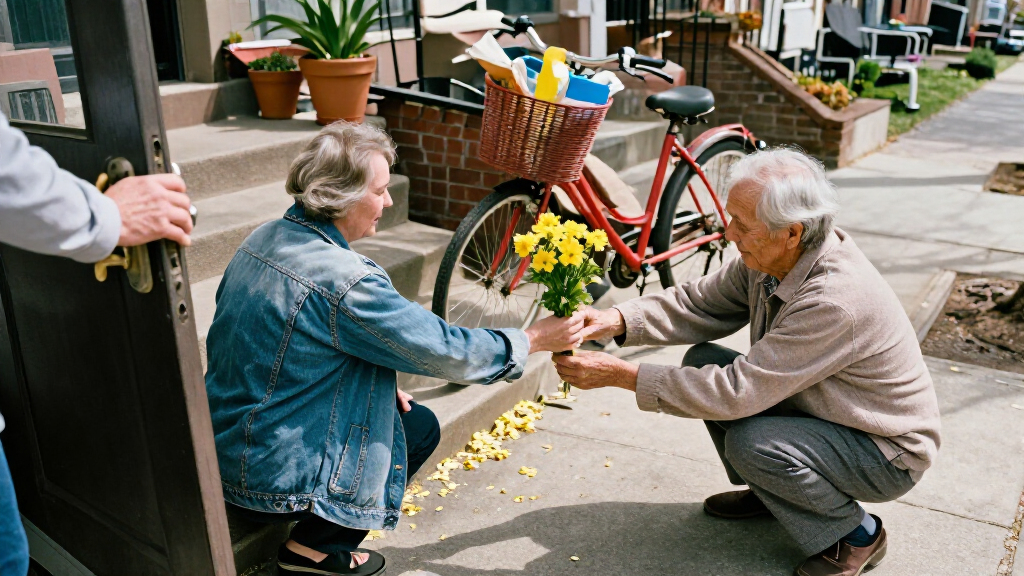
For friends and neighbors, the guide suggests sharing extra baking, leaving flowers, checking in with a message, and remembering meaningful anniversaries. It also includes practical offers of help, such as teaching a skill someone can use, provided the helper has the time and means. Beyond one-to-one gestures, the excerpt proposes starting a small neighborhood book library, contacting local representatives about community concerns, and thanking officials for work residents value. These are suggestions, not reported actions; the supplied source does not identify a study, organizer or measured results.
A practical guide to everyday care
How to Spread Joy: 99 Random Acts of Kindness
A menu of small, adaptable ways to show care at home, with friends and neighbors, and in the wider community. Choose what fits your circumstances and capacity.
01 / Start close to home
Turn ordinary routines into care
The guide points to familiar moments—meals, shared chores, workspaces, and conversations—as opportunities to make someone’s day easier.
Take one thing off the list
Refill the water pitcher, unload a clean dishwasher, or add a missing ingredient to the shared grocery list.
Make dinner, then reset
Prepare a shared meal and handle cleanup so the care includes the work that follows.
Remember their usual order
Bring someone a glass of water or make the tea or coffee they prefer.
Offer a thoughtful tidy
Help organize a home workspace with care. Keep important belongings in place.
Listen to understand
Give someone your focus without preparing your reply while they are speaking.
Suggest a break outdoors
Offer to take a walk during a break, or bring patience as someone learns a new skill.
02 / Friends & neighbors
Make connection practical
Many suggestions rely on attention, sharing, and a specific offer of help. Adapt each gesture to the person and the situation.
Bring extra baking
Offer a neighbor some of what you have made, if sharing works for both of you.
Send a simple message
Reach out to a friend and remember anniversaries or dates that matter to them.
Teach something useful
Share a skill someone could use, when you have the time and means to help.
Say thank you directly
Write a note to a teacher or caretaker, or leave a thank-you sign for a mail carrier.
Leave flowers
A small gift can be a way to let someone know you are thinking of them.
Choose what you can give
Time, attention, and existing skills can matter; spending money is not required.
Ask before you arrange
A meal, visit, or offer of professional help may be welcome in one situation and unwanted in another. Use your judgment, make offers specific, and respect what the other person says they need.
03 / Widen the circle
From a personal gesture to a shared place
The excerpt also includes community-minded ideas. They are possible actions, not evidence of policy change or a new organized program.
Notice a concern
Identify an issue affecting people nearby, such as pollution, racism, or homelessness.
Choose a channel
Contact a local representative about a community concern—or thank officials for work residents value.
Share a resource
Consider starting a small neighborhood book library that makes reading material easier to share.
Fit the action to you
Choose an approach suited to your time, means, local circumstances, and other people’s needs.
A set of options to consider — no specific results are reported
04 / Read the source carefully
What the supplied material establishes
The source is an advice list. Its limits are part of the picture.
The supplied excerpt contains suggestions numbered through 29 and ends partway through an idea about making room for someone who has been interrupted.
The remaining acts, publication date, author, and publisher are not identified in the material provided.
No study, outcome data, or verified accounts show whether these suggestions were carried out or what effects they had.
The source promotes The Daily Good, described as a short email about self-care and sustainable living; no independent details are supplied.
“Choose one manageable action that fits the person, the moment, and your capacity.” A practical next step — not a promise of a particular outcome
A note on capacity
Kindness is encouragement, not an obligation
The guide recognizes that helping others can feel vulnerable and that people may not have the bandwidth to do it.
Include yourself in the circle of care
If you cannot support someone else right now, the guide suggests choosing an act of kindness for yourself. There is no deadline or follow-up event identified in the supplied material.
Small Gestures, Practical Support
The supplied guide presents kindness as a set of accessible choices rather than a single large project. Many examples involve time, attention or sharing existing skills, not spending money: listening without interruption, doing a household chore, or remembering a difficult anniversary can be adapted to different circumstances. That makes the guidance relevant to readers looking for concrete ways to support people they know, without implying that any one gesture will resolve a larger problem.
The community-focused ideas in the guide also widen the scope beyond personal relationships. Contacting a representative about pollution, racism or homelessness, for instance, is presented as one possible way to act on concerns affecting neighbors. The source does not report policy results or claim that an individual call will change an issue. Its value is as a menu of possible actions, with the choice depending on a person’s capacity and local circumstances.
The material explicitly recognizes that helping others can feel vulnerable and that people may not have the bandwidth to do it. Its suggestion to choose an act of kindness for oneself offers a less demanding alternative. That qualification matters: the list is framed as encouragement, not an obligation or a promise that kindness will reliably improve another person’s circumstances.
personalized thank you notes for teachers
As an affiliate, we earn on qualifying purchases.
As an affiliate, we earn on qualifying purchases.
Ideas Organized Around Daily Life
The supplied excerpt organizes its suggestions by setting, beginning with acts at home and moving to friends and neighbors. It uses familiar routines—meals, errands, shared workspaces and conversations—as places where someone might notice a need and respond. The excerpt includes examples numbered through 29 and ends partway through a suggestion about making space for someone who has been interrupted in a meeting or social gathering.
Because the source is an advice list rather than a news release, it does not describe a newly launched campaign, give a publication date, name an author or provide research supporting the suggestions. It also promotes a daily newsletter called The Daily Good, described in the source as a short email about self-care and sustainable living. No independent information about the newsletter or its subscriber base is supplied.
As an affiliate, we earn on qualifying purchases.
What the Supplied List Establishes
The provided material does not include all 99 acts: the excerpt stops during item 29. The remaining suggestions, the guide’s publication date, and the identity of its publisher or author are not available in the supplied source. It is also unclear whether the list has been tested, how readers have used it, or whether the publisher has evidence of particular effects.
The examples in the guide are recommendations, not verified accounts of people carrying them out. Their suitability will vary: a shared meal, an offer of professional help, or a visit may be welcome in one situation and unwanted in another. The source does not offer a general method for gauging consent, so readers would need to use their judgment and respect what others say they need.
As an affiliate, we earn on qualifying purchases.
Choosing an Act That Fits
The immediate next step suggested by the guide is to choose one manageable action suited to the person and circumstances. That could mean completing a shared chore, sending a brief message, offering a specific form of help, or asking before making plans on someone else’s behalf. Readers can also choose an act directed toward themselves if they do not have the capacity to support someone else.
No event, deadline or follow-up announcement is identified in the supplied material. The source promotes The Daily Good newsletter for further everyday suggestions, but it gives no subscription details beyond describing it as a short morning email. Any broader impact from the list remains unreported.
As an affiliate, we earn on qualifying purchases.
Key Questions
What is “How to Spread Joy: 99 Random Acts of Kindness”?
It is a lifestyle guide listing suggested ways to show kindness at home, among friends and neighbors, and in the wider community. The supplied excerpt contains only part of the list.
What are some of the suggestions?
Examples in the supplied guide include making a meal and cleaning up, refilling a water pitcher, listening closely, sharing extra baking, checking in with a friend, and starting a small community book library.
Does the source show that these acts have measured results?
No. The supplied material offers recommendations but provides no study, outcome data or evidence measuring their effects.
What if I cannot help someone else right now?
The guide says readers can choose an act of kindness for themselves if they do not have the bandwidth to help another person.
Source: rss
Halloween Picks
halloween
As an affiliate, we earn on qualifying purchases.