
By embracing the circular economy, you can turn packaging waste into valuable resources through upcycling. This approach reduces environmental impacts, conserves raw materials, and promotes sustainability. You can creatively reuse materials like jars or cardboard, supporting companies committed to eco-friendly practices. Upcycling not only helps minimize landfill waste but also opens new opportunities for innovation and resource efficiency. Keep exploring how upcycling packaging waste can make a real difference in building a greener future.
Key Takeaways
- Upcycling transforms used packaging into valuable, reusable products, reducing waste and extending material lifecycles.
- Circular economy promotes sustainable innovation for packaging designs that facilitate reuse and repurposing.
- Individual and community efforts support waste minimization through creative reuse of packaging materials.
- Upcycling packaging reduces environmental impact by conserving raw materials and lowering greenhouse gas emissions.
- Emphasizing reusability and innovative design fosters a shift toward a more sustainable, circular economy.
Have you ever wondered how we can reduce waste and make better use of resources? The answer lies in the concept of a circular economy, especially when it comes to upcycling packaging waste. Instead of discarding used packaging, you can think of it as a valuable resource waiting to be transformed. This approach promotes sustainable innovation, where new ideas and technologies help turn waste into useful products, reducing the need for virgin materials. Upcycling packaging waste isn’t just about recycling; it’s about creatively reusing materials to extend their lifecycle, which considerably enhances resource efficiency.
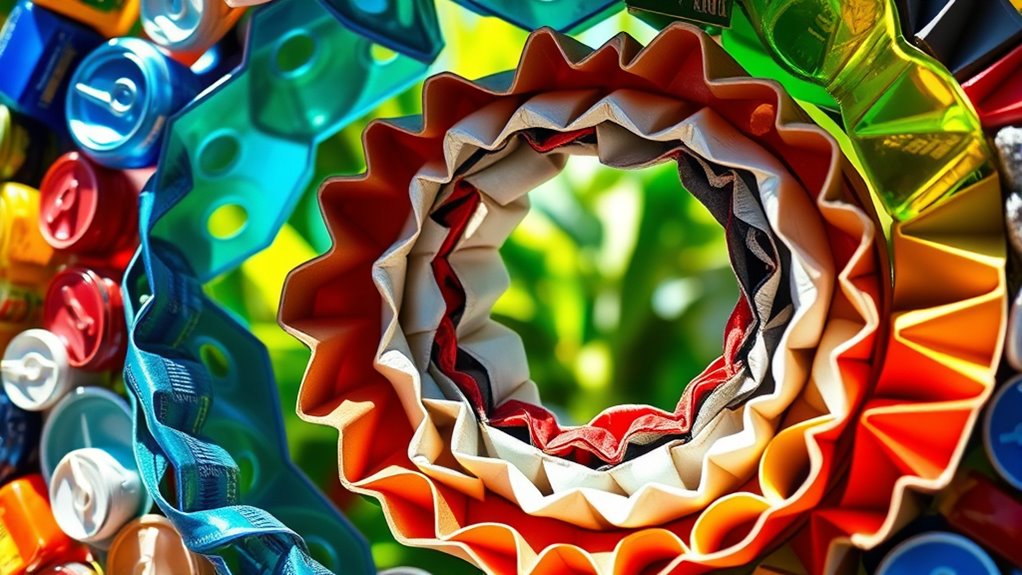
Upcycling packaging waste transforms materials into valuable resources, promoting sustainability and extending their lifecycle.
When you participate in upcycling, you’re actively contributing to a system that minimizes waste and maximizes the utility of every resource. Sustainable innovation plays a critical role here, as it drives the development of new processes, materials, and designs that make reusing packaging easier, more effective, and more appealing. For example, companies are now developing packaging that can be transformed into home decor, fashion accessories, or building materials. These innovations reduce the environmental footprint of packaging and keep materials circulating in the economy longer, rather than ending up in landfills.
Resource efficiency becomes a key benefit when you embrace upcycling. By reimagining packaging waste as a resource, you help conserve raw materials, reduce energy consumption, and lower greenhouse gas emissions. Each piece of waste that’s upcycled reduces the demand for new resources, which in turn diminishes environmental degradation and promotes a more sustainable future. It also encourages manufacturers to rethink their packaging designs, making them more durable, reusable, or easier to repurpose. This shift not only benefits the environment but can also lead to economic savings and new business opportunities.
You can get involved in this movement by supporting brands that prioritize upcycled packaging or by finding creative ways to reuse packaging at home and in your community. Whether it’s turning a discarded jar into a planter or repurposing cardboard boxes into storage solutions, your small actions contribute to a broader shift toward resource efficiency. By doing so, you’re helping to close the loop—where waste becomes a resource, not a problem. This mindset fosters sustainable innovation and demonstrates that reducing waste isn’t just a duty but an opportunity for creativity and growth. Embracing cybersecurity solutions can even help protect the innovations and data involved in developing new upcycling technologies. Ultimately, embracing upcycling packaging waste brings us closer to a circular economy that values every resource, minimizes environmental impact, and builds a more sustainable future for everyone.
Frequently Asked Questions
How Does Upcycling Differ From Recycling in Packaging?
You’ll find that upcycling differs from recycling in packaging because it emphasizes design innovation and creative reuse, transforming waste into new, valuable products without breaking down materials. Recycling, on the other hand, involves processing used packaging to create raw materials for new items. Upcycling often requires thoughtful material sourcing to maintain quality and uniqueness, making it a sustainable choice that reduces waste and promotes a circular economy.
What Are the Main Challenges in Implementing Upcycled Packaging?
Did you know that 70% of consumers prefer brands that use sustainable packaging? The main challenges in implementing upcycled packaging include securing effective brand collaboration and increasing consumer awareness. You might find it tough to source consistent, high-quality materials or to educate your audience on the benefits. Overcoming these hurdles requires partnerships and transparent communication, but doing so can boost your brand’s reputation and contribute to a greener future.
Can Upcycled Packaging Meet Safety and Hygiene Standards?
Yes, upcycled packaging can meet safety and hygiene standards if you guarantee proper chemical safety and contamination prevention measures. You should thoroughly clean and sterilize materials, verify they don’t contain harmful residues, and use safe, approved processes. Regular testing and compliance with industry regulations help maintain hygiene standards. By prioritizing these steps, you can confidently use upcycled packaging that’s both eco-friendly and safe for consumers.
What Industries Are Leading in Upcycling Packaging Waste?
Imagine a world where waste transforms into wonder—that’s where industries like fashion, food, and consumer goods lead in upcycling packaging waste. They’re driven by industrial innovation and material transformation, turning discarded materials into new products. These sectors actively embrace sustainable practices, making upcycled packaging not just a trend but a standard. By pioneering these efforts, they set a powerful example, proving that creativity and eco-consciousness go hand in hand.
How Can Consumers Support Upcycling Initiatives Effectively?
You can support upcycling initiatives by staying informed through consumer awareness and choosing brands that prioritize transparency. Opt for products from companies committed to sustainable packaging and upcycling practices. Share your knowledge to encourage others, and participate in community programs or recycling efforts. Your choices influence brands to adopt eco-friendly practices, helping close the loop in the circular economy and making a positive impact on the environment.
Conclusion
By embracing upcycling packaging waste, you become part of a circular economy that’s like a well-oiled machine, turning trash into treasure. Every small effort you make keeps resources circulating, reducing waste and environmental harm. Just as a river flows endlessly, your actions ripple outward, creating positive change. Together, you can transform packaging waste from a problem into a sustainable solution—making the world cleaner, greener, and more resilient for future generations.