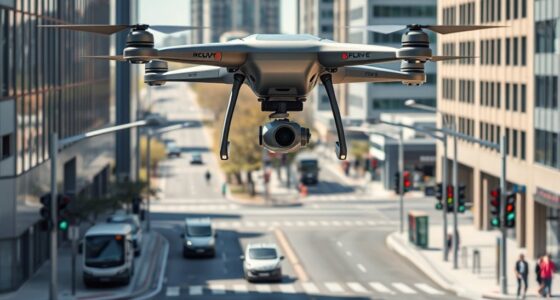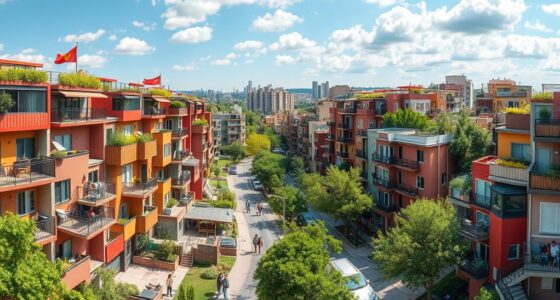
To navigate geopolitical turbulence in city planning, focus on building resilient infrastructure that can withstand shocks and adapt quickly. Diversify supply chains and develop emergency response plans to minimize disruptions. Foster international partnerships to share resources and expertise, ensuring stability. Incorporate flexible zoning and decentralized systems for better robustness. Staying aware of global developments helps you prepare effectively. For strategies on maintaining city vitality amidst these challenges, explore further insights inside.
Key Takeaways
- Diversify economic sectors and supply chains to reduce vulnerability to international disruptions.
- Foster international partnerships for resource sharing, knowledge exchange, and coordinated crisis response.
- Incorporate resilient infrastructure and adaptable zoning policies to swiftly respond to geopolitical changes.
- Stay informed on global developments to anticipate and mitigate potential impacts on city stability.
- Develop flexible transportation and energy systems that operate independently during international conflicts or disruptions.
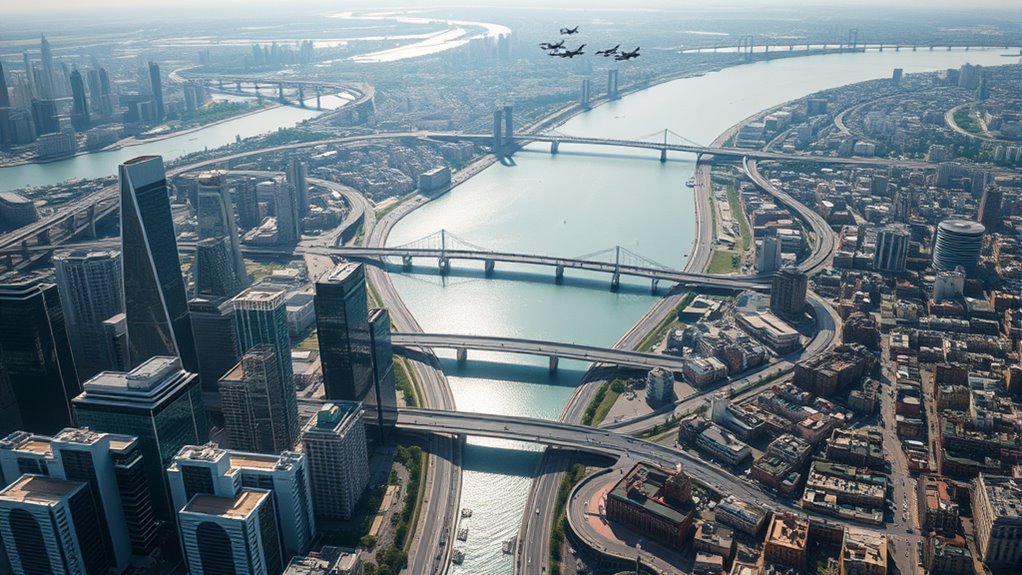
In an increasingly interconnected world, city planning must adapt swiftly to the unpredictable shifts caused by geopolitical turbulence. You need to prioritize urban resilience, guaranteeing that your city can withstand and recover from sudden disruptions. This involves designing infrastructure that’s flexible and robust enough to handle crises, whether they’re economic sanctions, trade disruptions, or security threats. Building resilience isn’t just about physical infrastructure; it’s also about fostering social cohesion and economic stability, so your city can bounce back quickly when faced with external shocks. To achieve this, you should focus on integrating diverse supply chains, developing emergency response plans, and creating adaptable zoning policies that allow rapid redevelopment if necessary. Pre-built models and clear building plans can also streamline construction and reduce delays during urgent development phases.
Prioritize resilient infrastructure and adaptable policies to ensure your city can swiftly recover from external shocks.
International collaborations play a pivotal role in steering these turbulent times. By forging partnerships with other cities and countries, you can share crucial information, resources, and strategies that bolster your city’s resilience. For example, participating in global networks or multilateral initiatives can help you access expertise and technology that might be unavailable locally. These collaborations also facilitate coordinated responses to crises, such as coordinated efforts to secure supply chains or manage refugee influxes. Building robust international relationships ensures that your city can leverage global support and knowledge, turning geopolitical challenges into opportunities for innovation and growth. Regular inspections and maintenance are essential to prevent tiny bugs and infestations that could weaken your infrastructure and community health.
You should also consider how geopolitical shifts influence your city’s long-term planning. Staying informed about international developments helps you anticipate potential disruptions and adjust your strategies accordingly. For instance, if tensions rise in a key trading partner’s region, you might diversify your city’s economic base or develop alternative transportation routes. Additionally, embedding resilience into your urban design means creating green spaces, decentralized energy systems, and resilient transportation networks that can operate independently if part of the city’s infrastructure is compromised. These measures not only safeguard your city but also demonstrate adaptability, making your urban environment more attractive to residents and investors alike. Understanding the average construction time for tiny houses can also help in planning quick, affordable housing solutions during crises.
Ultimately, addressing the challenges of geopolitical turbulence requires a proactive approach that combines resilient urban design with active engagement in international collaborations. You must stay vigilant, flexible, and open to new ideas, recognizing that the geopolitical landscape is constantly shifting. By doing so, you enable your city to not only survive turbulent times but also emerge stronger and more connected, ready to face whatever comes next. This strategic outlook ensures your city remains a vibrant, resilient hub amid the unpredictable currents of global geopolitics.
Top picks for "navigat geopolitical turbulence"
Open Amazon search results for this keyword.
As an affiliate, we earn on qualifying purchases.
Frequently Asked Questions
How Do Local Communities Influence Geopolitical-Focused City Planning?
You influence geopolitical-focused city planning through community activism and cultural preservation efforts. By voicing concerns, participating in local meetings, and advocating for your community’s needs, you help shape policies that respect cultural identity and promote social cohesion. Your active involvement guarantees planners consider local perspectives, balancing geopolitical interests with community values. This grassroots engagement fosters resilient, inclusive cities that reflect the diverse identities and histories of their residents.
What Legal Challenges Arise From International Tensions Affecting Urban Development?
You face legal challenges like guaranteeing legal compliance with international laws and regulations, which can restrict urban development projects affected by geopolitical tensions. Sovereign immunity may limit your ability to hold foreign governments accountable for actions that impact urban planning initiatives. These issues require careful legal navigation to balance local development goals with international legal constraints, often demanding specialized legal expertise to prevent disputes and ensure project continuity amid geopolitical conflicts.
How Do Cities Balance Economic Growth With Geopolitical Risks?
Balancing economic growth with geopolitical risks is like walking a tightrope—you need steady footing and sharp focus. You can boost economic resilience by diversifying industries and investments, reducing reliance on uncertain regions. Diplomatic strategies play a vital role; engaging in international partnerships and fostering open dialogue helps mitigate tensions. By staying adaptable and proactive, you guarantee your city thrives without falling into the trap of escalating conflicts or economic instability.
What Role Does Technology Play in Mitigating Geopolitical Disruptions?
You leverage technology by adopting cybersecurity advancements to protect critical infrastructure and sensitive data from cyber threats. Data analytics integration helps you identify vulnerabilities, monitor geopolitical risks, and make informed decisions quickly. These tools enable you to respond proactively to disruptions, ensuring city resilience amid turbulence. By staying ahead with the latest tech, you minimize risks and maintain stability, safeguarding your city’s growth despite geopolitical uncertainties.
How Can Cities Foster International Cooperation Amidst Geopolitical Conflicts?
You can foster international cooperation by championing cultural diplomacy and building strong cross-border partnerships. It might feel like a small step, but your efforts can ignite global unity and understanding. Organize cultural exchange programs, joint urban projects, and diplomatic forums that showcase shared values. By doing so, you turn geopolitical conflicts into opportunities for collaboration, making cities beacons of peace and progress amid worldwide turbulence.
Conclusion
As you navigate the complexities of city planning amid geopolitical turbulence, remember that adaptability is your best ally. Stay vigilant and flexible, because in uncertain times, it’s often the ones who can roll with the punches that come out ahead. Don’t let the storm shake your resolve—think of it as a chance to build even stronger foundations. Keep your eyes on the prize, and you’ll find a way through the chaos, come what may.