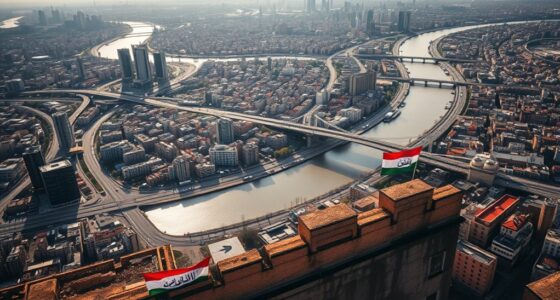
To address climate mitigation in urban planning, you should prioritize integrating renewable energy sources like solar panels and wind turbines that localize clean power. Incorporate green infrastructure such as parks, green roofs, and permeable pavements to manage stormwater and reduce heat. Design walkable neighborhoods with bike lanes to cut transportation emissions. Engage communities in planning efforts to boost resilience and sustainability. Exploring these strategies further reveals how they can transform cities into healthier, more sustainable places to live.
Key Takeaways
- Integrate renewable energy sources like solar and wind into urban infrastructure to reduce greenhouse gas emissions.
- Implement green infrastructure such as parks, green roofs, and permeable pavements to manage stormwater and lower urban heat.
- Design walkable, bike-friendly streets and promote active transportation to decrease reliance on fossil-fuel-powered vehicles.
- Engage communities in planning processes to ensure sustainable practices and enhance urban resilience.
- Combine these strategies to improve air quality, public health, and overall urban sustainability.

Have you ever wondered how urban areas can reduce their impact on the climate? The key lies in adopting effective climate mitigation strategies that transform cities into more sustainable places to live. One of the most impactful approaches is increasing the use of renewable energy sources. By shifting away from fossil fuels, you can substantially cut down greenhouse gas emissions that contribute to global warming. Solar panels on rooftops, wind turbines integrated into city landscapes, and other renewable energy solutions enable your city to generate clean power locally. This reduces reliance on grid energy that often comes from non-renewable sources, making your urban environment more resilient and environmentally friendly.
Alongside renewable energy, green infrastructure plays an essential role in climate mitigation. Green infrastructure includes parks, green roofs, urban forests, and permeable pavements that help manage stormwater, improve air quality, and reduce the urban heat island effect. When you incorporate green spaces into city planning, you create cooling zones that help lower temperatures during hot months, decreasing the need for air conditioning and reducing energy consumption. Green roofs, for example, not only provide insulation but also absorb rainwater, easing pressure on drainage systems and preventing flooding. These features contribute to a healthier urban environment while acting as natural carbon sinks, absorbing CO2 and other pollutants from the atmosphere.
You can also support green infrastructure by designing streets and neighborhoods that promote walkability and cycling. When you prioritize pedestrian-friendly layouts and bike lanes, you reduce dependence on cars, which are major sources of greenhouse gases. This shift encourages community engagement and healthier lifestyles while decreasing transportation emissions. Additionally, integrating renewable energy into public transportation systems, such as electric buses or solar-powered transit stations, further amplifies your city’s efforts to cut carbon emissions.
Design walkable neighborhoods with bike lanes and renewable-powered transit to cut emissions and boost community health.
Implementing these strategies requires thoughtful planning and community involvement, but the benefits are substantial. Not only do you contribute to mitigating climate change, but you also improve urban resilience, air quality, and overall quality of life. As you adopt renewable energy and green infrastructure, your city becomes a model for sustainable development. These approaches demonstrate that urban areas have the power to lead the way in climate action, turning their vulnerabilities into opportunities for innovation and environmental stewardship. By embracing these strategies, you help create a healthier, more sustainable future for everyone living in your city.
As an affiliate, we earn on qualifying purchases.
Frequently Asked Questions
How Do Urban Planning Policies Differ Globally for Climate Mitigation?
You’ll notice that urban planning policies for climate mitigation vary worldwide. In some countries, zoning regulations prioritize compact development and restrict sprawl, reducing emissions. Others emphasize increasing green space to absorb carbon and cool cities. You might find policies encouraging renewable energy use or promoting public transport. These differences reflect local climate challenges, economic priorities, and cultural values, shaping how cities worldwide adopt climate-friendly strategies effectively.
What Role Do Private Developers Play in Climate-Focused Urban Projects?
You should know that private developers can fund up to 60% of urban climate projects, substantially impacting sustainability. They play an essential role by leveraging private investment and responding to developer incentives, which encourage eco-friendly designs and infrastructure. Their involvement accelerates climate-focused urban projects, making sustainable development more feasible. By aligning their goals with environmental priorities, private developers help create resilient, greener cities that benefit communities and reduce carbon emissions.
How Can Community Engagement Influence Climate Mitigation Strategies?
You can considerably influence climate mitigation strategies through community engagement by encouraging public participation and awareness campaigns. When you involve residents in decision-making, they feel more invested and are more likely to support sustainable initiatives. Raising awareness about climate issues helps build a collective understanding, motivating action. Your active involvement ensures that strategies are tailored to local needs, increasing their effectiveness and fostering a shared commitment to reducing urban carbon footprints.
Are There Successful Case Studies of Cities Reducing Carbon Footprints Effectively?
You might be surprised to learn that cities like Copenhagen and Singapore have successfully cut their carbon footprints through innovative green building designs and extensive renewable energy use. These cities prioritize sustainable architecture, invest in solar and wind power, and promote policies that encourage eco-friendly practices. Their success stories reveal how strategic urban planning can lead to meaningful climate mitigation, inspiring others to follow suit and transform urban environments into sustainable hubs.
What Funding Sources Are Available for Climate-Related Urban Infrastructure Projects?
You can access funding for climate-related urban infrastructure projects through green bonds and public grants. Green bonds allow you to raise capital specifically for environmentally sustainable projects, attracting investors interested in climate benefits. Public grants, offered by government agencies and international organizations, provide direct financial support for initiatives like renewable energy, green transportation, and urban greening. Combining these sources can help you effectively fund and implement your climate mitigation efforts.
As an affiliate, we earn on qualifying purchases.
Conclusion
As you implement these climate mitigation strategies, remember you’re shaping a city that breathes easier and shines brighter. Your efforts act as the heartbeat of sustainable urban living, turning the tide against climate change. Every green space, energy-efficient building, and thoughtful design is like planting a seed for a resilient future. Together, you hold the power to transform urban landscapes into vibrant, sustainable communities—proof that your actions can light the way to a healthier planet.
As an affiliate, we earn on qualifying purchases.
As an affiliate, we earn on qualifying purchases.