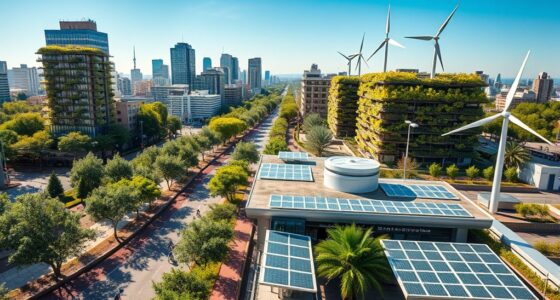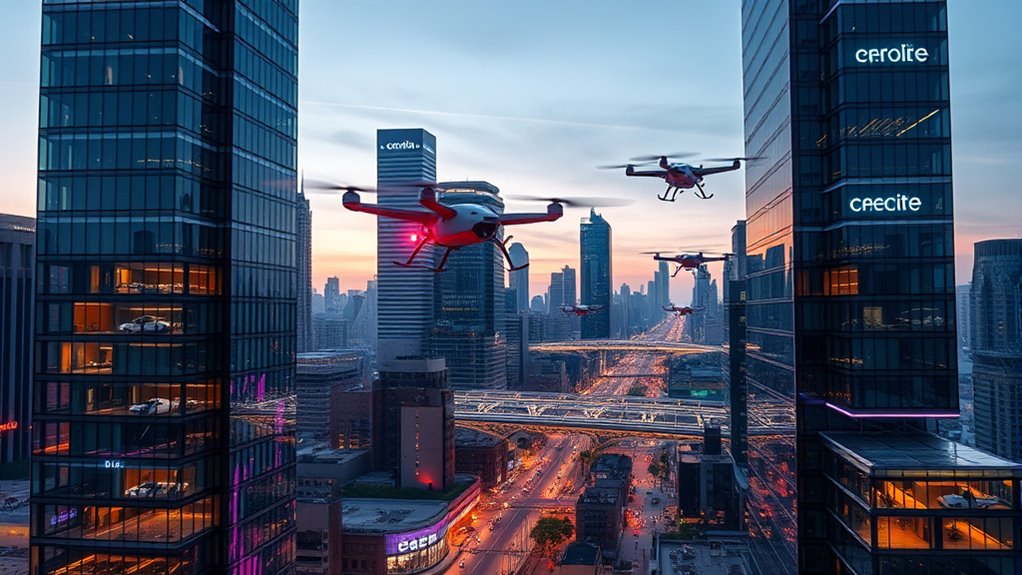

The future of aviation is set to transform urban transportation through Autonomous Urban Air Mobility (UAM). You’ll see electric, quiet aircraft seamlessly integrated into city skies, reducing congestion and travel times. Autonomous drones will work together to move passengers and cargo efficiently, with smarter air traffic management. These advancements will make cities safer, greener, and more connected. If you explore further, you’ll discover how these innovations will reshape daily urban life entirely.
Key Takeaways
- Urban Air Mobility (UAM) is transforming cities with autonomous, electric aircraft to reduce congestion and improve transit efficiency.
- Advanced sensors, AI, and cybersecurity enable safe, reliable autonomous flight amidst dense urban environments.
- Autonomous drone networks and dedicated aerial corridors enhance urban logistics and passenger transport.
- UAM offers benefits like faster emergency response, cargo delivery, and lower emissions compared to traditional vehicles.
- Regulatory, airspace management, and technological advancements are shaping a safer, smarter, connected urban transportation future.
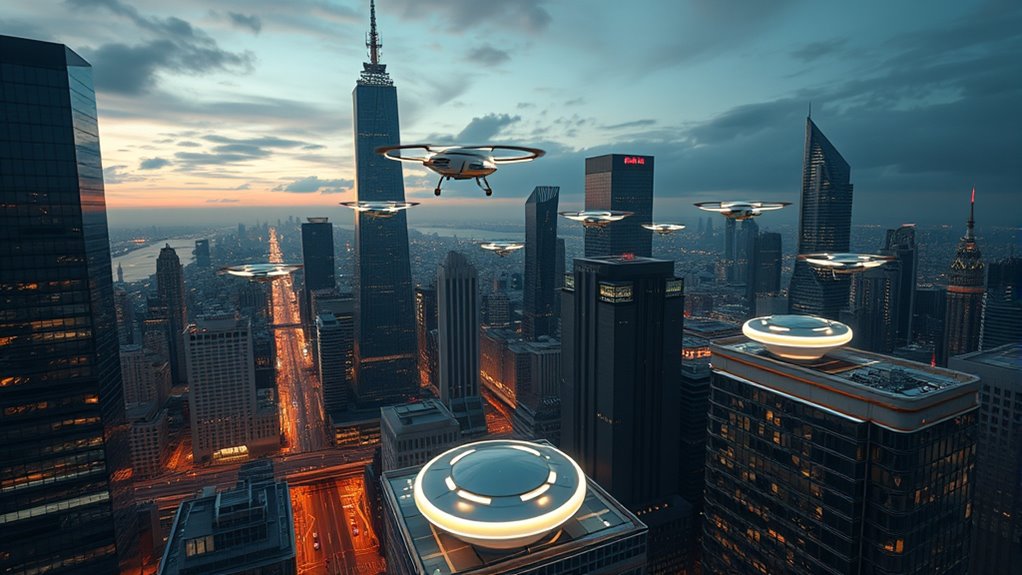
The future of aviation is rapidly transforming as urban air mobility (UAM) emerges as a viable solution to congested city streets and lengthy commutes. You’ll see a shift from traditional ground transportation to innovative aerial options, where autonomous aircraft play a central role. These aircraft are designed to fly without human pilots, relying instead on advanced sensors, AI, and navigation systems to guarantee safety and efficiency. These systems are critical components of cybersecurity, ensuring that autonomous, interconnected aircraft are protected against cyber threats that could compromise safety. This shift means you could soon be zipping above traffic jams in electric, quiet, and eco-friendly aircraft that seamlessly integrate into the urban landscape. The development of autonomous aircraft isn’t just about individual convenience; it’s also about creating an interconnected system that boosts overall mobility. Urban drone networks will become the backbone of this new infrastructure, with fleets of small, autonomous drones working together to ferry passengers and cargo across cities. Imagine a network where drones communicate constantly, avoiding each other and optimizing routes in real-time, reducing delays and congestion on the ground. These urban drone networks will leverage advancements in AI, machine learning, and sensor technology to operate safely amidst dense city environments. You’ll benefit from faster, more reliable transit options that bypass traditional traffic barriers altogether. This new ecosystem will likely involve dedicated aerial corridors, air traffic management systems specifically tailored for UAM, and smart urban planning to accommodate the increased aerial traffic. Safety is a top priority, so these autonomous aircraft and drone networks will incorporate rigorous redundancy measures, collision avoidance systems, and real-time monitoring to prevent accidents. As a result, you’ll experience smoother, more predictable journeys, with fewer delays caused by weather or human error. Furthermore, these innovations will open new possibilities for emergency services, medical deliveries, and last-mile logistics. Autonomous aircraft can quickly reach areas that are difficult to access by road, saving lives and improving service delivery. The integration of urban drone networks will also foster a more sustainable future, reducing carbon emissions and noise pollution compared to traditional vehicles. As these technologies mature, you’ll see cities transforming into smarter, more connected environments where aerial mobility complements ground transport. While challenges remain, including regulatory hurdles and airspace management, the trajectory is clear: autonomous aircraft and urban drone networks will redefine how you navigate urban spaces. With continued innovation, you’ll soon find yourself traveling through the city in ways that are faster, safer, and more environmentally friendly than ever before. This new era of urban air mobility promises to reshape not just transportation, but the very fabric of city life itself.
URBAN AIR MOBILITY SYSTEMS ENGINEERING: Electric vertical flight traffic coordination and metropolitan airspace integration
As an affiliate, we earn on qualifying purchases.
As an affiliate, we earn on qualifying purchases.
Frequently Asked Questions
How Will Urban Air Mobility Impact Existing Transportation Infrastructure?
Urban air mobility will markedly impact your existing transportation infrastructure by prompting ground transportation integration and infrastructure modernization. You’ll see new vertiports and charging stations that connect seamlessly with roads, public transit, and other mobility options. This integration streamlines your travel, reduces congestion, and requires upgrades to current systems. As a result, your city’s infrastructure will evolve to accommodate these innovative modes, making transportation more efficient and interconnected.
What Are the Safety Standards for Urban Air Mobility Vehicles?
You should know that safety standards for urban air mobility vehicles include strict safety regulations and extensive vehicle certification processes. These standards ensure that vehicles are thoroughly tested for safety, reliability, and performance before they operate in urban environments. Authorities require rigorous inspections, pilot training, and continuous monitoring to minimize risks. Following these regulations helps protect passengers, pedestrians, and property, making urban air mobility a safe and viable transportation option.
How Will Air Traffic Control Adapt to Increased Urban Flights?
You’ll see air traffic control adapt by integrating autonomous navigation systems and advanced sensors to manage the growing number of urban flights. These systems will enable precise, real-time air traffic integration, reducing human error and increasing safety. Controllers will oversee a more automated environment, coordinating vehicle movements seamlessly. This evolution guarantees smooth, efficient urban air mobility, keeping everyone safe as air traffic volume rises.
What Is the Expected Cost of Urban Air Mobility Services?
You can expect urban air mobility services to cost around $1 to $3 per mile, making them potentially comparable to taxis or ride-shares. Cost estimates vary due to factors like vehicle type, infrastructure, and regulation. Affordability factors include technological advancements and increased competition, which could help lower prices over time. As adoption grows, you’ll likely see these services becoming more accessible and budget-friendly for daily travel needs.
How Will Privacy Concerns Be Addressed With Urban Air Vehicles?
You’ll see privacy concerns addressed through strict privacy regulations that govern urban air vehicles, guaranteeing your personal data stays protected. Developers implement advanced data security measures, like encryption and secure data handling, to prevent unauthorized access. Regulations will also require transparency about data collection and usage, so you’re informed about what’s being gathered and how it’s protected. These steps aim to build your trust and ensure your privacy is prioritized in urban air mobility.

XTnueotr Universally Drone Airdrop System Release Device Payload Delivery Transport Drop, for DJI Mini5 Pro/Mini4/Mini3/Mini2/Air3/Air2/Air2S/Mavic4/Mavic3/ Mavic Series Drone Accessories (Airdropper Device)
【Compatibility】Universally Drone Airdrop System, for Mavic Mini5 Pro/Mini4/Mini3/Mini2/Air2/Air2S/Mavic4/Mavic 3/Mavic 2 Series Drone/Spark.(Note: but not suitable for phantom 3/4…
As an affiliate, we earn on qualifying purchases.
As an affiliate, we earn on qualifying purchases.
Conclusion
As you explore the future of aviation and urban air mobility, remember that innovation is accelerating faster than a spaceship to Mars. You’ll see more electric and autonomous aircraft transforming how you travel within cities and beyond. Embrace this exciting era, where flying cars and drones become as common as your trusty old rotary phone. The skies are opening up, and with a little bit of futuristic charm, your journeys will be faster, greener, and more connected than ever before.

Autonomous Flying Robots: Unmanned Aerial Vehicles and Micro Aerial Vehicles
Used Book in Good Condition
As an affiliate, we earn on qualifying purchases.
As an affiliate, we earn on qualifying purchases.
URBAN AIR MOBILITY SYSTEMS ENGINEERING: Electric vertical flight traffic coordination and metropolitan airspace integration
As an affiliate, we earn on qualifying purchases.
As an affiliate, we earn on qualifying purchases.