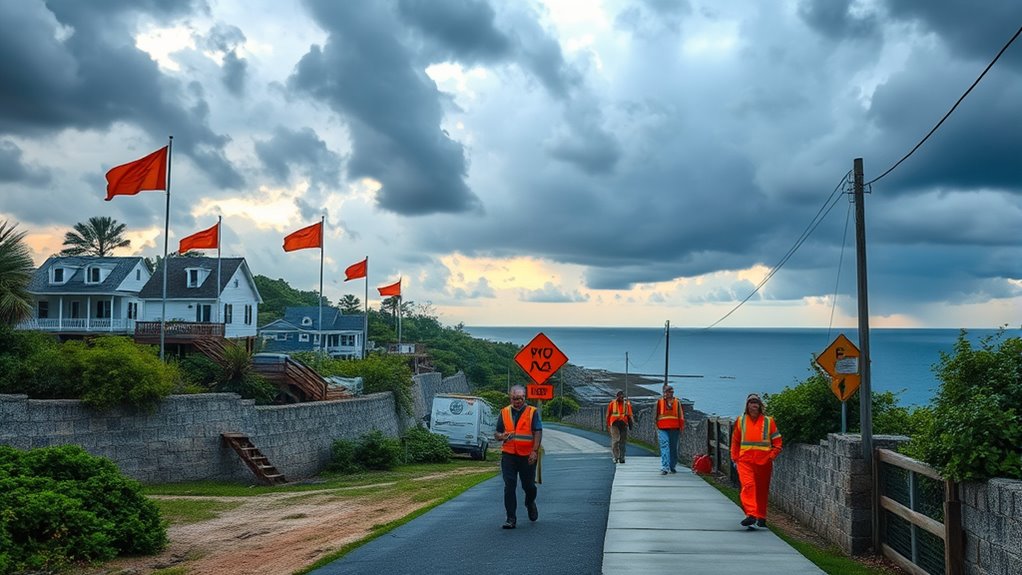

Planning for natural hazards means actively strengthening your community’s ability to prepare, respond, and recover quickly from disasters. Focus on engaging residents, local groups, and businesses to build a culture of readiness. Upgrade infrastructure by retrofitting buildings, reinforcing critical facilities, and ensuring essential services stay operational. Combining social and physical measures results in a safer, more resilient community. If you want to discover how to develop a thorough disaster resilience plan, keep exploring these strategies.
Key Takeaways
- Assess community vulnerabilities to identify risks from natural hazards and prioritize mitigation efforts.
- Engage residents and stakeholders in developing comprehensive disaster preparedness and response plans.
- Strengthen physical infrastructure through retrofitting and upgrades to withstand natural hazards.
- Promote social preparedness initiatives like workshops, communication networks, and neighborhood programs.
- Foster collaboration among government agencies, organizations, and residents to ensure coordinated resilience strategies.
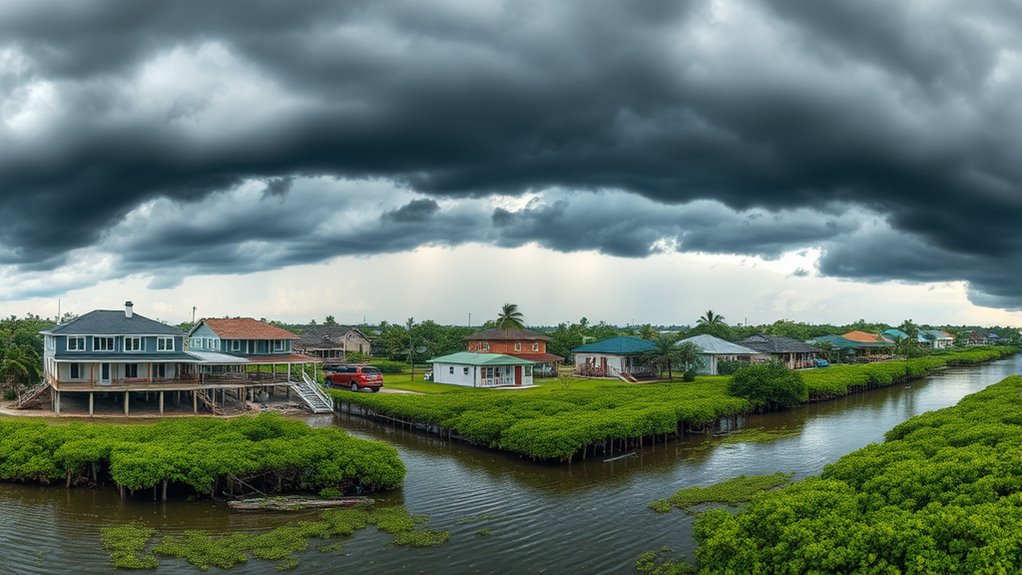
Disaster resilience refers to a community’s ability to prepare for, respond to, and recover from natural and man-made disasters. When you focus on building this resilience, you’re essentially creating a safer environment where everyone can bounce back more quickly after a crisis. Central to this effort are two key elements: community engagement and infrastructure strengthening. These components work together to ensure that your community is not only prepared but also capable of adapting to evolving threats.
Community engagement involves actively involving residents, local organizations, and businesses in disaster preparedness efforts. When you encourage open dialogue and foster a sense of shared responsibility, you empower people to take proactive steps. This might mean organizing workshops on emergency procedures, establishing neighborhood watch programs, or developing local communication networks. When community members understand their roles and resources, they’re more likely to respond effectively during an emergency. Plus, engaged communities tend to share essential information quickly, which can make a significant difference during a disaster.
Simultaneously, infrastructure strengthening is indispensable to withstand natural hazards. You need to assess your community’s physical structures—such as bridges, roads, water systems, and buildings—and identify vulnerabilities. Investing in resilient infrastructure means upgrading or retrofitting critical facilities to better endure earthquakes, floods, or storms. For example, elevating flood barriers or reinforcing building foundations can prevent catastrophic failures. Strengthening infrastructure also involves ensuring that essential services like power, water, and communication networks remain operational during emergencies. When you prioritize infrastructure upgrades, you reduce the risk of widespread disruption, making it easier for emergency responders and residents to recover.
Bringing these two strategies together creates a holistic approach to disaster resilience. By fostering community engagement, you ensure that residents are knowledgeable and motivated to act. Meanwhile, infrastructure strengthening provides the physical backbone necessary to support those efforts. Together, they form a foundation that allows your community not just to survive a disaster but to rebound more quickly and with less damage. As you plan for natural hazards, remember that resilience isn’t just about responding when disaster strikes—it’s about building a culture of preparedness that integrates community involvement with resilient infrastructure. When these elements work hand in hand, you create a safer, more resilient community capable of facing whatever challenges come your way.
Frequently Asked Questions
How Do Communities Prioritize Hazards for Resilience Planning?
You prioritize hazards by conducting thorough hazard assessments to identify risks specific to your community. Engage residents, local leaders, and experts in discussions to gather diverse perspectives and understand vulnerabilities. Use this input to rank hazards based on their likelihood and potential impact. This collaborative approach guarantees your resilience planning targets the most pressing threats, making your community better prepared for natural disasters.
What Role Do Local Governments Play in Disaster Resilience?
Think of local governments as the backbone of disaster resilience—they coordinate efforts to strengthen urban infrastructure and boost public awareness. You rely on them to develop and implement emergency plans, allocate resources, and guarantee communities are prepared. By fostering resilient infrastructure, they make sure your community can withstand natural hazards. Their leadership transforms chaos into coordinated action, helping everyone stay safe and informed in times of crisis.
How Can Technology Enhance Disaster Preparedness and Response?
Technology enhances your disaster preparedness and response by providing early warning systems that alert you to imminent hazards, giving you vital time to act. Data analytics helps you analyze patterns and predict potential impacts, allowing for better planning and resource allocation. By integrating these tools, you can respond more quickly and effectively, minimizing damage and protecting lives. Embracing technology guarantees you’re better equipped to handle natural hazards proactively.
What Funding Sources Support Resilience Projects?
When it comes to funding resilience projects, you should look into a mix of sources that can really make a difference. Insurance funding helps cover damages and encourages risk reduction. Private grants from foundations or corporations also support innovative resilience efforts. Don’t forget government programs and local funds—they can be your bread and butter. Combining these sources is like hitting two birds with one stone, giving your project a solid financial foundation.
How Is Climate Change Affecting Natural Hazard Risks?
Climate change increases the frequency and severity of natural hazards, making your hazard mitigation efforts more urgent. It drives extreme weather events like hurricanes, floods, and wildfires, demanding robust climate adaptation strategies. You need to prioritize updating risk assessments and infrastructure to better withstand these shifting risks. By integrating climate adaptation into your resilience planning, you can reduce vulnerabilities and build a stronger, more prepared community against future hazards.
Conclusion
You can build better buffers against big blows by embracing preparedness and proactive planning. By prioritizing precautions, practicing protocols, and promoting public participation, you’ll pave the path for stronger, safer communities. Remember, resilience isn’t just about reacting; it’s about readying, reinforcing, and remaining resilient in the face of natural hazards. With consistent commitment and clear coordination, you’ll create a resilient refuge, ready to resist the relentless risks of disaster and recover with confidence and courage.