To combat digital fatigue, design public spaces that bring nature and sensory experiences into urban settings. Incorporate lush greenery, water features, and shaded benches to encourage you to pause and connect with the environment. Use natural light and tactile plantings to stimulate your senses and promote mental clarity. These thoughtful elements help you disconnect from screens and restore your well-being. If you want to discover how to craft these restorative environments, there’s more to explore ahead.
Key Takeaways
- Incorporate lush greenery, water features, and sensory gardens to promote relaxation and sensory engagement away from screens.
- Design shaded areas with comfortable seating to encourage pauses, deep breathing, and mental recharge.
- Use natural light and calming sounds to create soothing environments that drown urban noise and reduce stress.
- Foster active participation through tactile plantings and exploration to stimulate curiosity and mental clarity.
- Promote digital detox strategies within public spaces to support mindful disconnection and overall well-being.

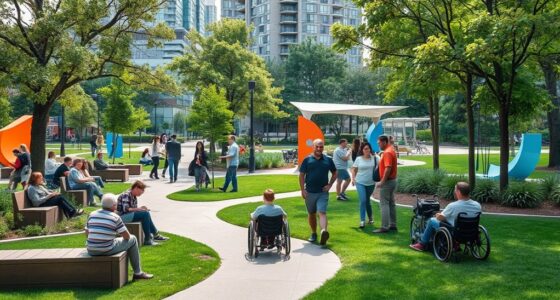
Public spaces play an essential role in providing opportunities for rest and relaxation amid busy urban life. As you seek refuge from the constant barrage of digital notifications and screens, these areas become vital for restoring your mental clarity and physical well-being. When designed thoughtfully, public spaces can serve as sanctuaries where nature integration and sensory stimulation work together to combat digital fatigue. Imagine stepping into a park that seamlessly blends lush greenery with thoughtfully placed natural elements—trees, water features, and flowerbeds—creating an environment that invites you to slow down and reconnect with the natural world. This integration isn’t just aesthetic; it actively engages your senses. The scent of blooming flowers, the gentle rustle of leaves, and the visual diversity of natural textures stimulate your senses in ways that screens never can. These sensory experiences can help you detach from digital overload, grounding you in the present moment and reducing mental exhaustion.
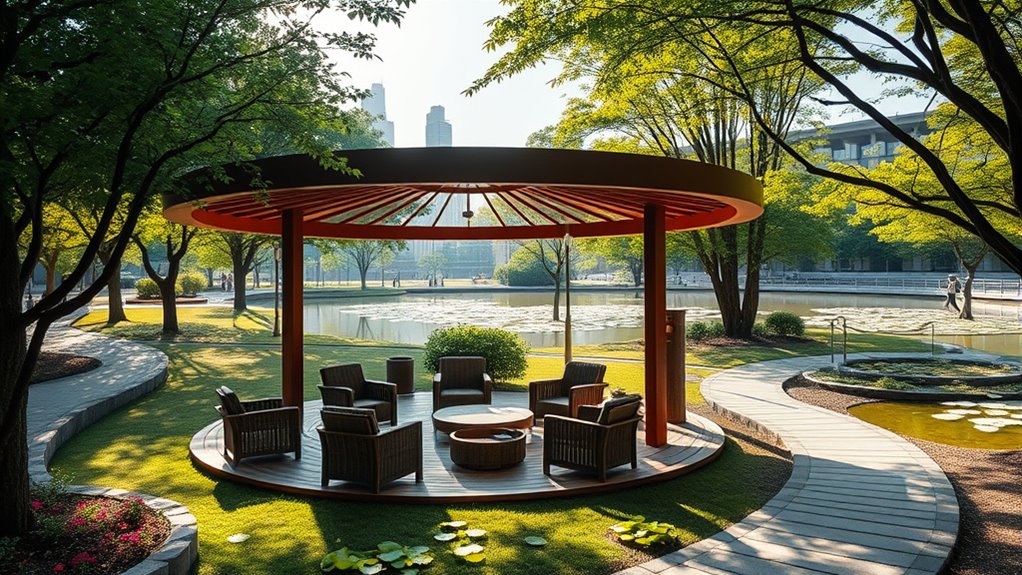
Designing public spaces with nature integration encourages you to immerse yourself fully in the environment, offering a break from the overstimulating digital realm. When you walk through a space where natural light filters through trees, your body responds by releasing mood-enhancing hormones, helping you feel calmer and more centered. Incorporating natural elements like water features not only enhances aesthetic appeal but also provides soothing sounds that can drown out urban noise and provide a calming backdrop. These sensory stimulations serve as natural antidotes to digital fatigue, grounding your mind and promoting mental clarity. You may find yourself drawn to shaded benches beneath leafy canopies or to sensory gardens designed to engage touch, smell, and sight. Such spaces invite you to pause, breathe deeply, and recharge mentally, breaking the cycle of constant digital engagement. Additionally, digital detox strategies integrated into public space design can further encourage mindful disconnection from technology and foster mental rejuvenation.
Furthermore, thoughtfully integrated natural components stimulate your curiosity and encourage active engagement with your surroundings, which is crucial for mental restoration. Instead of passive scrolling or staring at screens, you can explore tactile plantings, listen to the sounds of flowing water, or simply observe the diversity of life around you. This active sensory participation helps reset your mental state, reducing stress and fatigue associated with digital overuse. When public spaces prioritize nature integration and sensory stimulation, they become more than just urban fixtures; they transform into restorative environments where you can disconnect, relax, and regain your focus. As you seek refuge from digital fatigue, these thoughtfully designed spaces remind you of the healing power of nature and the importance of engaging your senses, ultimately fostering a sense of well-being and balance amid the chaos of city life.
Frequently Asked Questions
How Can Technology Be Integrated Into Restful Public Space Design?
You can integrate technology into restful public spaces by using virtual interfaces that create calming digital environments, helping visitors disconnect. Augmented reality can enhance the experience by overlaying soothing visuals or information without cluttering the physical space. These tools encourage relaxation, foster mindfulness, and provide a seamless blend of digital and natural elements, making the space more inviting for rest and rejuvenation.
What Are Cost-Effective Methods to Create Restorative Urban Environments?
Imagine lush green lawns and shaded benches inviting you to pause—these are cost-effective ways to craft restorative urban spaces. You can achieve this through affordable landscaping that transforms bare areas into calming retreats. Engage your community in planting and maintenance, fostering ownership and reducing costs. These simple steps create welcoming environments where people can recharge, reconnect, and escape digital overload without breaking your budget.
How Do Cultural Differences Influence Public Space Design for Rest?
You should consider how cultural symbolism and social norms shape people’s expectations of rest in public spaces. For example, in some cultures, communal areas with symbolic elements foster social bonding, while others prioritize quiet, individual rest zones. By understanding these differences, you can design spaces that resonate with local values, encouraging relaxation and reducing digital fatigue effectively. Tailoring your design to cultural nuances makes the space more inviting and restorative for everyone.
What Metrics Measure the Success of Restorative Public Spaces?
Imagine you’re evaluating a park’s success—think of it as your digital scoreboard. You measure user engagement by tracking how often visitors use the space and for how long. Visitor satisfaction surveys reveal their comfort and relaxation levels. Additionally, observing social interactions and noting repeated visits help gauge the space’s restorative impact. These metrics combine to show if your public space effectively combats digital fatigue and fosters well-being.
How Can Public Spaces Accommodate Diverse Needs for Digital Detox?
You can accommodate diverse needs for digital detox by integrating nature and creating sensory landscapes that promote relaxation. Design quiet zones with natural elements like trees, water features, and greenery, encouraging visitors to disconnect. Use sensory stimuli—soothing sounds, calming textures, and earthy scents—to enhance calming experiences. By blending nature integration with multisensory environments, you offer inclusive spaces where everyone can comfortably disconnect and recharge, fostering mental well-being for all.
Conclusion
By thoughtfully designing public spaces that encourage genuine rest, you create sanctuaries where digital fatigue melts away. Remember, even in this age of instant connection, the timeless need for pause remains. So, as you craft these environments, infuse them with serenity and purpose—think of it as your own version of a modern agora, a place where souls recharge beyond the hustle. Ultimately, you’re not just shaping spaces; you’re fostering well-being in an increasingly wired world.