
As you explore the geopolitics of energy transition, you’ll see how countries compete beyond fossil fuels, focusing on renewable resources and advanced technology. Energy independence shifts power, with nations rich in sun, wind, or minerals gaining new influence. Trade patterns change as control over key materials becomes essential, and alliances form around renewable access. If you keep examining this topic, you’ll uncover how these shifts could reshape global stability and strategic relationships in the future.
Key Takeaways
- Countries are shifting focus from fossil fuels to renewable resources, altering traditional energy power dynamics.
- Control of critical minerals and renewable technology becomes geopolitically strategic, impacting global influence.
- Investment in renewable infrastructure fosters energy independence, reducing reliance on traditional energy corridors.
- New alliances and conflicts emerge over access to renewable resources and advanced technologies.
- Market demand declines for fossil fuels, increasing geopolitical risks for resource-rich regions facing economic instability.
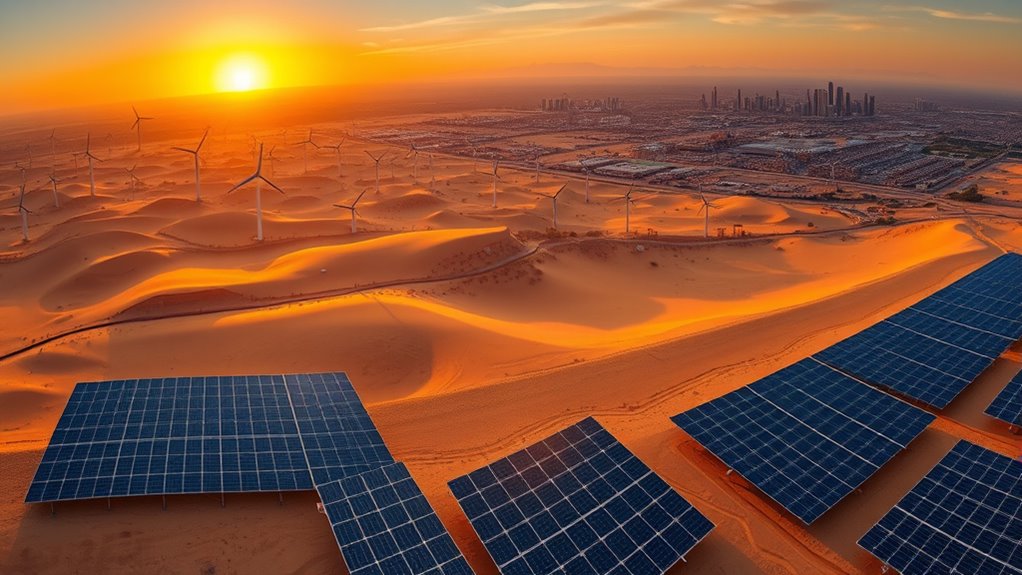
As the world shifts toward cleaner energy sources, the geopolitics of the energy evolution become increasingly complex. You’ll find that nations are no longer solely competing over oil and gas reserves but are now vying for control over renewable resources and the technology that harnesses them. This shift challenges long-standing power structures rooted in fossil dependency. Countries that once relied heavily on oil exports now face economic uncertainties, prompting them to rethink their strategies for maintaining influence. Meanwhile, those rich in renewable resources, like sunlight, wind, or geothermal energy, are beginning to assert greater renewable sovereignty. This concept refers to a nation’s ability to produce its own clean energy, reducing reliance on foreign supplies and fossil fuels. It’s a pivotal point that can redefine global power dynamics, as energy independence becomes a strategic advantage rather than a vulnerability.
You’ll notice that as fossil dependency diminishes, countries are investing heavily in renewable infrastructure and technology. This *shift* isn’t just about climate goals; it’s about securing energy security and economic stability. Countries that manage to develop abundant renewable resources can bolster their independence, shielding themselves from geopolitical disruptions tied to fossil fuel markets. Conversely, nations still heavily dependent on fossil fuels might face increased geopolitical instability as global demand shifts away from traditional energy sources. This can lead to new alliances and conflicts, especially in regions where fossil fuel reserves are concentrated. The geopolitical landscape will evolve, with energy-rich countries either cementing their influence through renewable exports or losing ground if they fail to adapt.
You’ll also see that energy *transition* efforts are reshaping global trade patterns. Resources like rare earth elements for renewable tech and critical minerals become as valuable as oil once was. Countries that control these materials will wield considerable influence, prompting new geopolitical strategies. As fossil dependency decreases, traditional energy corridors and pipelines lose significance, replaced by power grids and resource supply chains that cross borders in different ways. The competition for renewable sovereignty intensifies, forcing nations to forge new alliances and rivalries. Ultimately, the shift toward cleaner energy sources promises a more decentralized and resilient global energy system, but it also brings fresh geopolitical risks and opportunities. Your role in understanding these changes is *crucial*, because the way nations navigate this transition will shape international relations for decades to come.
Frequently Asked Questions
How Will Energy Transition Impact Global Economic Stability?
The energy shift will likely boost global economic stability by encouraging renewable investment, which creates new jobs and markets. However, reducing fossil fuel dependence may cause economic disruptions in regions heavily reliant on these resources, leading to instability if managed poorly. You’ll need to support policies that balance renewable growth with managing fossil fuel impacts to guarantee a stable, sustainable economy during this shift.
What Role Do Emerging Markets Play in the Energy Shift?
Did you know emerging markets account for over 60% of global renewable investments? You play a key role in the energy shift by driving market diversification and embracing renewable energy sources. These nations are expanding their renewable capacities, reducing dependence on fossil fuels, and reshaping global energy geopolitics. Your involvement boosts innovation, creates jobs, and accelerates the progression toward sustainable energy, making emerging markets essential players in shaping the future of energy.
How Might New Technologies Alter Geopolitical Power Balances?
You might find that new technologies, like advanced renewables and energy storage, shift geopolitical power through renewable rivalry and resource redistribution. Countries investing heavily in these innovations could gain influence, while traditional energy producers may lose ground. This technological leap can diversify energy sources, reduce dependence on fossil fuels, and reshape alliances, making some nations more influential while others become less central in global energy politics.
What Are the Environmental Risks Associated With Energy Transition?
You face environmental risks like renewable hazards and resource depletion during energy shift. As you shift to renewables, you might encounter hazards from manufacturing solar panels, batteries, and wind turbines, which can produce toxic waste and pollution. Additionally, increased demand for materials like lithium and cobalt can deplete resources and cause environmental damage. Managing these risks is vital to guarantee a sustainable transition that minimizes harm to ecosystems and communities.
How Will Energy Policies Affect International Relations?
Like a tug-of-war pulling nations in different directions, energy policies shape international relations. Your actions on renewable diplomacy can foster cooperation or spark competition over resources. Emphasizing resource sovereignty, countries might prioritize their own energy security, potentially leading to conflicts or alliances. These policies influence global power dynamics, making it essential for you to navigate carefully, balancing national interests with collaborative efforts for sustainable energy futures.
Conclusion
As you navigate the shifting tides of energy transition, remember that the geopolitical landscape is a chessboard where every move echoes globally. The pursuit of cleaner energy sources is like a delicate dance, reshaping alliances and rivalries alike. Embrace the complexity, for in this evolving symphony, your awareness becomes the compass guiding you through uncertain waters, ensuring you’re not lost in the storm but steering toward a future where energy and geopolitics harmonize like a finely tuned orchestra.