
In global policy, advancing women’s rights and gender equality means challenging deep-rooted stereotypes and systemic barriers that limit women’s leadership opportunities. Policies focus on promoting awareness, education, and legal reforms to create inclusive environments. Supporting initiatives that showcase women role models and provide leadership training helps break down stereotypes. If you keep exploring, you’ll discover how international efforts and individual actions are shaping a more equal and fair society for everyone.
Key Takeaways
- Global policies increasingly recognize the importance of addressing gender stereotypes to promote women’s leadership and rights.
- International initiatives focus on awareness, education, and legal reforms to combat systemic barriers against women.
- Promoting gender-sensitive policies fosters inclusive decision-making and reduces underrepresentation in leadership roles.
- Advocacy efforts emphasize dismantling stereotypes, empowering women, and ensuring their voices influence global governance.
- Access to vetted resources and ongoing activism are essential for advancing gender equality within international policy frameworks.
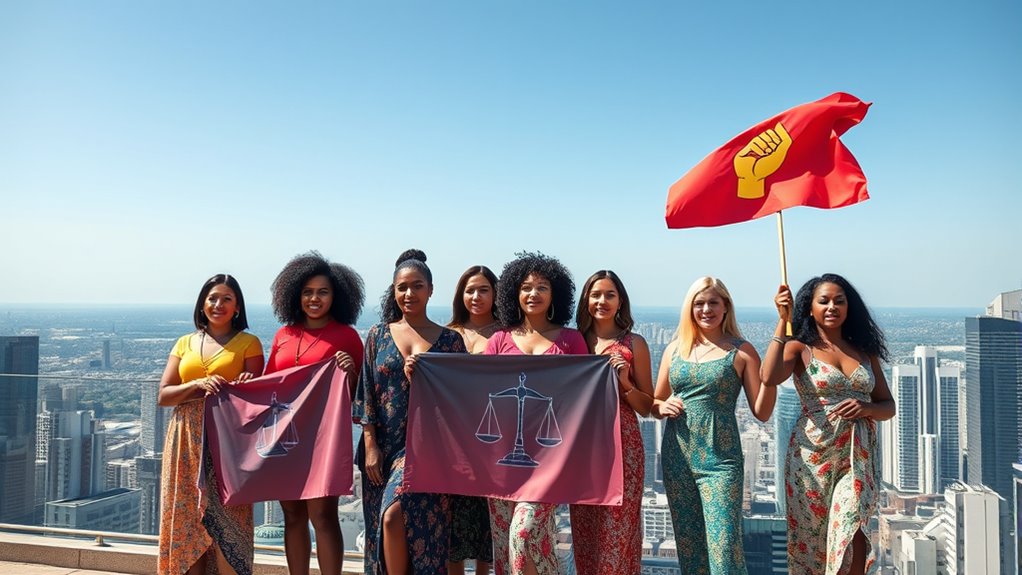
Women’s rights and gender equality are essential components of effective global policy, yet progress remains uneven across regions. One of the biggest barriers you face is deeply ingrained gender stereotypes that shape perceptions of women’s roles in society. These stereotypes often portray women as less capable or less suited for leadership, which can limit their opportunities and influence. When policymakers ignore or reinforce these biases, it hampers efforts to promote women’s leadership and fosters an environment where gender inequality persists. To create meaningful change, you need to challenge these stereotypes directly, promoting narratives that recognize women’s skills, expertise, and potential to lead across all sectors.
Advancing women’s leadership is vital for achieving gender equality, but it’s often hindered by societal expectations and institutional barriers. You might notice that women are underrepresented in decision-making positions, whether in government, business, or community organizations. This underrepresentation isn’t accidental; it’s a result of systemic issues rooted in gender stereotypes that suggest women are less suited for leadership roles. To shift this dynamic, policies must actively support women’s participation and break down barriers such as discriminatory hiring practices, lack of mentorship opportunities, and cultural biases that discourage women from pursuing leadership positions. When women are empowered to lead, organizations benefit from diverse perspectives, increased innovation, and better representation of the communities they serve.
International organizations and governments have recognized that addressing gender stereotypes is fundamental to progressing women’s rights. These efforts include awareness campaigns, education programs, and legal reforms aimed at dismantling societal biases. You can play a role by advocating for gender-sensitive policies that promote women’s leadership and challenge stereotypes in your community. For instance, supporting initiatives that highlight women role models or provide leadership training helps change perceptions about women’s capabilities. When you prioritize gender equality in leadership, you contribute to a more balanced and inclusive society where women’s voices are heard and valued at every level.
Ultimately, the path to gender equality requires that you, as an individual and part of a broader movement, confront stereotypes directly and push for systemic change. Promoting women’s leadership isn’t just about fairness; it’s about harnessing the full potential of society. When gender stereotypes are dismantled, women can step into leadership roles with confidence, and policies can be shaped to reflect the diverse realities of the populations they serve. Progress may be slow, but your actions to challenge stereotypes and support women’s leadership are essential steps toward a more equitable world. Recognizing the importance of vetted resources and guidance can strengthen your efforts and ensure informed advocacy.
Top picks for "women right gender"
Open Amazon search results for this keyword.
As an affiliate, we earn on qualifying purchases.
Frequently Asked Questions
How Do Cultural Norms Impact Women’s Rights Globally?
Cultural norms markedly impact women’s rights worldwide by creating cultural barriers and reinforcing traditional practices that limit women’s opportunities. You might find that deeply rooted beliefs about gender roles discourage women from pursuing education, work, or leadership. These norms often justify unequal treatment, making it harder to challenge or change systemic issues. To improve women’s rights, you’ll need to address these cultural barriers and promote awareness of gender equality within local traditions.
What Role Do Men Play in Achieving Gender Equality?
Men play a vital role in achieving gender equality through active engagement and gender advocacy. By supporting women’s rights, challenging harmful stereotypes, and promoting equal opportunities, you help create a more inclusive society. Your involvement encourages other men to participate, fostering cultural shifts. When men stand up for gender equality, they become allies who drive positive change, helping break down barriers and advance women’s rights worldwide.
How Can Grassroots Movements Influence International Policies?
You can leverage grassroots advocacy to influence international policies by mobilizing communities and amplifying local voices. While some may think change only comes from governments, grassroots movements show policymakers that public support is powerful. Your active participation helps shape policy influence, ensuring global decisions reflect real needs. By organizing campaigns, raising awareness, and engaging with decision-makers, you turn local efforts into impactful global change, making a real difference.
What Are the Economic Benefits of Gender Equality?
Gender equality boosts workforce productivity by ensuring everyone can contribute fully. When women have equal access to education and job opportunities, you see increased innovation and diverse perspectives, which drive economic growth. Supporting gender equality leads to a more balanced labor market, higher income levels, and improved economic stability. Ultimately, fostering gender equality benefits you and society by creating a stronger, more resilient economy that thrives on equal participation.
How Do Policies Address Intersectionality Within Women’s Rights?
You see policies address intersectionality within women’s rights by recognizing diverse identities and experiences through policy intersectionality. These policies aim to guarantee rights recognition for women of different races, classes, sexual orientations, and abilities. By incorporating intersectionality, policies become more inclusive, addressing unique challenges faced by marginalized groups, and promoting equitable access to resources and opportunities. This approach helps create a thorough framework that respects and responds to complex social realities.
Conclusion
You hold the power to shape a world where women’s rights are unstoppable. By advocating for gender equality in global policy, you can ignite a movement bigger than any storm. Every voice counts, and your actions can break down barriers that seem unbreakable. Don’t underestimate the impact you can make—your efforts have the potential to change history itself. Together, we can create a future where gender equality isn’t just a goal, but an unstoppable force.