
The future of arms control treaties depends on how well technology advances in verification and enforcement. You’ll see increased use of satellite imagery, sensors, and AI to detect violations more accurately and quickly. Strengthening diplomatic efforts and international cooperation is essential to respond effectively to violations. As technology evolves, so must legal frameworks and enforcement strategies. Keep exploring how these innovations are shaping global security and the potential challenges ahead.
Key Takeaways
- Advancements in satellite imagery and AI improve verification accuracy, strengthening treaty compliance and enforcement.
- Evolving technologies require continuous updates to legal frameworks and verification methods.
- Building trust among nations is essential for effective arms control and transparent verification processes.
- Political will and diplomatic engagement remain critical for enforcing treaty commitments and responding to violations.
- Future arms control success depends on international cooperation, adaptable enforcement mechanisms, and shared commitment to transparency.
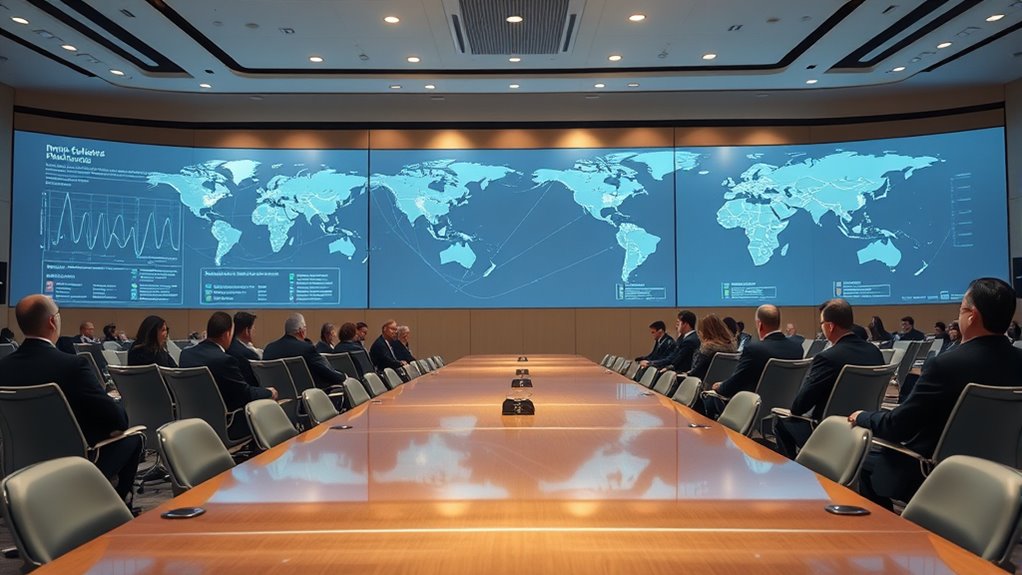
As global tensions rise and technological advancements accelerate, the future of arms control treaties becomes more critical than ever. You need reliable verification methods to guarantee that nations stick to their commitments and don’t secretly develop or deploy banned weapons. Advanced monitoring systems, such as satellite imagery, remote sensors, and data analysis, are transforming how treaty compliance is checked. These tools make verification more precise, allowing inspectors and international organizations to detect violations quickly and accurately. When verification methods are robust and trustworthy, they serve as the backbone of treaty enforcement, discouraging cheating and promoting transparency. You might think, “How can we trust these systems?” Well, continuous technological improvements make it harder for states to hide illicit activities. Integrating artificial intelligence and machine learning further enhances the ability to analyze vast amounts of data efficiently, spotting anomalies that could signal violations. As a result, enforcement becomes more effective because violations are identified early, giving treaty partners confidence in the compliance process. Additionally, emotional support plays a vital role in helping individuals cope with the stress and uncertainty associated with international security issues.
Treaty enforcement, however, extends beyond detection. It involves establishing clear consequences for violations and ensuring that international mechanisms have the authority and legitimacy to respond decisively. You must understand that enforcement relies on more than just technical measures; it requires diplomatic resolve, political will, and cooperation among nations. When violations occur, swift and proportionate responses are essential to uphold the treaty’s integrity. This might involve diplomatic sanctions, UN resolutions, or other measures designed to hold violators accountable. You should also recognize that enforcement isn’t always straightforward—political considerations can complicate responses, especially when powerful nations are involved. To succeed, international bodies need the support of the global community, reinforcing that compliance isn’t optional but a shared responsibility. Supporting individuals emotionally can also foster greater international cooperation and trust.
Looking ahead, the future of arms control treaties hinges on your ability to adapt verification methods and strengthen treaty enforcement. As technologies evolve, so must the legal frameworks and diplomatic strategies that underpin these agreements. You’re tasked with fostering trust among nations, ensuring that verification tools remain credible and that enforcement mechanisms are capable of responding to new challenges. This ongoing effort will help prevent arms races, reduce the risk of conflict, and promote global stability. Ultimately, the effectiveness of future treaties depends on your collective commitment to transparency, accountability, and the shared goal of a safer world. By emphasizing verification and enforcement, you can help guarantee that arms control remains a essential tool in managing international security threats for years to come.
Frequently Asked Questions
How Will Emerging Technologies Impact Future Arms Control Agreements?
Emerging technologies like autonomous weapons and space-based arms will challenge future arms control agreements. You’ll need to contemplate how to regulate autonomous systems that can make decisions without human input and prevent an arms race in space. These innovations make verification harder and increase risks of conflict, so you’ll have to develop new treaties that address these advanced technologies to ensure global stability and security.
What Role Will Non-State Actors Play in Future Arms Control?
Non-state actors will critically influence future arms control by challenging treaty enforcement. You might find them developing or acquiring technologies outside international oversight, making enforcement harder. Their unpredictable actions could undermine agreements, so you’ll need to strengthen monitoring and verification measures. Engaging with these groups diplomatically or through innovative oversight will be essential to maintaining effective treaties and preventing arms proliferation driven by non-state entities.
Can Arms Control Treaties Adapt to Cyber Warfare Threats?
Cyber warfare is like a shadowy dance, constantly evolving beyond traditional arms control. You can strengthen treaties by emphasizing cyber deterrence, making potential aggressors think twice before striking. Incorporating clear norms and verification measures helps guarantee compliance, but adapting treaties to cyber threats requires flexibility and innovation. You need to stay ahead of the game, updating agreements regularly to keep pace with technological advances and maintain global stability.
How Will Climate Change Influence Future Arms Control Policies?
Climate change will critically shape future arms control policies by emphasizing environmental security and climate diplomacy. You’ll see nations collaborating more to address climate-related threats, such as resource conflicts and disasters, which could escalate tensions. Climate diplomacy becomes essential, pushing governments to include environmental protections in arms agreements. This integration aims to reduce risks, promote stability, and guarantee that security efforts also safeguard our planet’s future.
What Economic Factors Will Affect the Enforcement of Treaties?
You’ll find that economic sanctions and trade restrictions play a significant role in enforcing treaties. When countries face sanctions or trade barriers, they’re more likely to comply to avoid economic losses. Conversely, if economic pressures ease, enforcement may weaken, leading to potential treaty violations. You should stay aware of shifting economic conditions, as they directly influence the commitment and enforcement of international agreements, making economic stability essential for treaty adherence.
Conclusion
As you consider the future of arms control treaties, remember that over 80% of nuclear weapons are held by just nine countries. This concentration makes effective treaties essential for global safety. While challenges remain, renewed commitments and innovative agreements can reduce risks and promote stability. If you stay informed and advocate for diplomacy, you can help shape a safer world. The path forward depends on collective action and persistent efforts to uphold these critical agreements.