
The history of women’s rights movements worldwide shows how women have fought for equality across centuries. Starting with campaign for voting rights, these efforts expanded into demanding education, property, and workplace rights. International groups helped spread strategies and support, inspiring future generations. Victories in countries like New Zealand and the U.S. sparked global change, shaping ongoing struggles for gender justice. If you explore further, you’ll uncover how these movements continue to influence society today.
Key Takeaways
- Women worldwide fought for voting rights, with milestones like New Zealand (1893) and the U.S. (1920).
- Suffrage campaigns expanded to include education, property, and workplace equality over time.
- International organizations like the International Woman Suffrage Alliance facilitated global collaboration and strategy sharing.
- Achievements in voting rights and legal protections advanced broader gender equality and inspired future activism.
- Modern movements build on historical victories, continuing efforts for reproductive rights, equal pay, and representation.
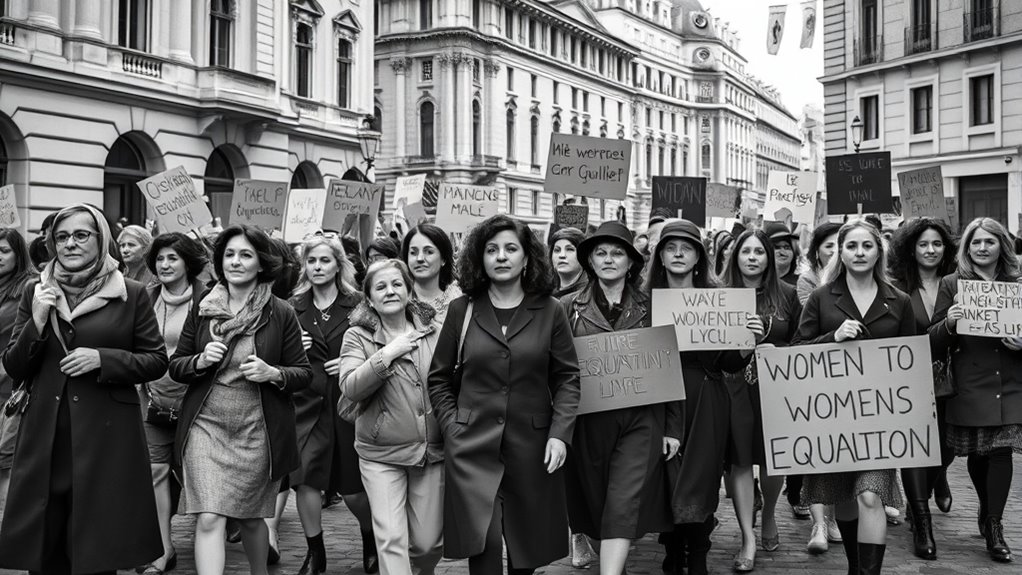
Women’s rights movements have a rich and intricate history that spans every continent and culture. You might be surprised to learn how women across the globe have fought tirelessly to claim their rights, challenging societal norms and pushing for change. Central to these efforts are suffrage movements, which galvanized women to demand the right to vote and participate fully in democratic processes. These campaigns weren’t just about ballots; they symbolized a broader push for gender equality and recognition. In many countries, women faced fierce opposition, and their activism often came at great personal risk. Yet, persistence paid off, leading to landmark victories like women gaining the right to vote in New Zealand in 1893 or the United States in 1920. These milestones inspired others worldwide, fueling further gender equality campaigns that aimed to dismantle systemic barriers.
As you explore the history of these movements, you’ll notice how they evolved from limited demands for political rights to extensive gender equality campaigns. Early suffrage efforts often focused on securing the vote, but over time, women’s activists expanded their goals to include educational opportunities, property rights, and workplace equality. You might see parallels in different regions, where women organized marches, protests, and grassroots campaigns to challenge discriminatory laws and social practices. These efforts often intersected with other social movements, creating a broader push for justice and human rights. For example, in the early 20th century, women in Europe and North America fought for suffrage while also advocating against child labor and for better working conditions. Additionally, the formation of international organizations helped coordinate and amplify these efforts on a global scale.
Internationally, women’s rights advocates formed alliances that helped spread ideas and strategies. The formation of organizations like the International Woman Suffrage Alliance exemplifies this global unity. You can trace how these campaigns gained momentum through tireless lobbying, civil disobedience, and public demonstrations. Each victory, whether it was securing voting rights or legal protections against gender-based violence, became a stepping stone for future generations. Today, the legacy of these suffrage movements and gender equality campaigns continues to influence ongoing activism around the world. You see it in contemporary movements fighting for reproductive rights, equal pay, and representation. The history of women’s rights movements is a proof of resilience and the unyielding desire for equality—an ongoing journey that you are still a part of today.

What Is the Women's Rights Movement? (What Was?)
As an affiliate, we earn on qualifying purchases.
As an affiliate, we earn on qualifying purchases.
Frequently Asked Questions
What Were the Earliest Known Women’s Rights Movements Worldwide?
The earliest known women’s rights movements include early activism in the 19th century, such as the suffrage movements in the United States and the UK. You see women campaigning for voting rights, challenging societal norms. These suffrage movements laid the groundwork for future gender equality efforts. By participating in these early activism campaigns, you help shape ongoing struggles for women’s rights worldwide, emphasizing the importance of persistence and collective action.
How Did Colonialism Influence Women’s Rights Movements in Different Regions?
You see that colonial legacy deeply influenced women’s rights movements by imposing new legal systems and cultural impacts that often suppressed local traditions. Colonial powers disrupted indigenous gender roles, sometimes empowering women, but often restricting their rights. These changes shaped regional feminist movements, either resisting colonial influences or adapting them to pursue gender equality. Understanding this history helps you appreciate how colonialism’s cultural impacts continue to influence women’s rights today.
Which Global Events Significantly Advanced Women’s Rights?
Big breakthroughs markedly boosted women’s rights worldwide. You’ll see events like women’s suffrage movements, which pushed for political participation, and landmark legal reforms that promoted gender equality. The 19th Amendment in the U.S. and the UN’s 1979 Convention on the Elimination of All Forms of Discrimination against Women stand out. These moments marked monumental milestones, making it possible for women everywhere to push for progress, power, and parity.
How Have Digital Platforms Impacted Women’s Activism Globally?
Digital platforms have transformed women’s activism by enabling social media advocacy and creating online feminist communities. You can now easily share stories, organize protests, and raise awareness globally without geographic barriers. These platforms amplify women’s voices, foster solidarity, and quickly mobilize action around issues like gender equality and violence. As a result, you’re part of a powerful, interconnected movement that accelerates progress and drives change on a worldwide scale.
What Are Current Challenges Faced by Women’s Rights Movements Today?
You might think progress is steady, but women’s rights movements still face formidable challenges. Gender stereotypes persist, shaping perceptions and limiting opportunities. Economic disparities strike at the heart of equality, making it harder for women to access resources and power. These obstacles threaten to undo hard-won gains, forcing activists to continually adapt and fight harder. The struggle isn’t over, and the stakes have never been higher for true gender equality.

Activism Civil Rights Women's Rights Gender Equality Poster Wall Art Canvas Print Picture Home Bedroom Decor Present Frameless and Framed (08×12inch Framed)
INSTALLATION INSTRUCTIONS : Our poster has two choices, No Framed and Framed,if you choose have Framed ,Our poster…
As an affiliate, we earn on qualifying purchases.
As an affiliate, we earn on qualifying purchases.
Conclusion
As you reflect on this history, remember that the fight for women’s rights is far from over. Every milestone reveals new challenges lurking just beyond the horizon, waiting to test your resolve. Will today’s movements sustain the momentum or fade into history? The future of women’s rights depends on your awareness and action—because the next chapter is unwritten, and only you hold the power to shape it. The story isn’t finished yet.

Vintage Votes For Women Womens Suffrage T-Shirt
Vintage, Votes, For, Women, Womens, Suffrage, vintage, retro, distressed , cute, funny, nice, love, cool, gift, gift for,…
As an affiliate, we earn on qualifying purchases.
As an affiliate, we earn on qualifying purchases.

Girl Fundamental rights Funny International Women's Day T-Shirt
Funny Just A Girl Who Wants Fundamental Rights International Women's Day is March 8 2022 and the theme…
As an affiliate, we earn on qualifying purchases.
As an affiliate, we earn on qualifying purchases.