Benito Mussolini’s rise to power teaches you that strategic manipulation, ideological flexibility, and ruthless tactics are key to transforming leadership. He shifted from socialism to nationalism, using propaganda, violence, and intimidation to weaken rivals and gain support. Building a personality cult and controlling information helped him solidify his authority by 1925. His story shows how combining these methods enables a leader to quickly establish dictatorship—discover more about these powerful lessons.

Get the little things that make your day delivered free with Prime
- Fast, free delivery on millions of items
- Prime Video, Amazon Music and more included
- Member-only deals all year
Key Takeaways
- Mussolini shifted from socialism to nationalism, using propaganda, violence, and paramilitary forces to weaken rivals and gain support.
- He exploited Italy’s economic struggles and public discontent to rally nationalist sentiment around his leadership.
- Dismantling democratic institutions and suppressing dissent allowed Mussolini to consolidate power legally and illegally.
- Building a cult of personality and controlling media helped justify his move to dictatorship in 1925.
- Strategic political manipulation and ruthless tactics enabled Mussolini to transform from a leader into a totalitarian ruler.
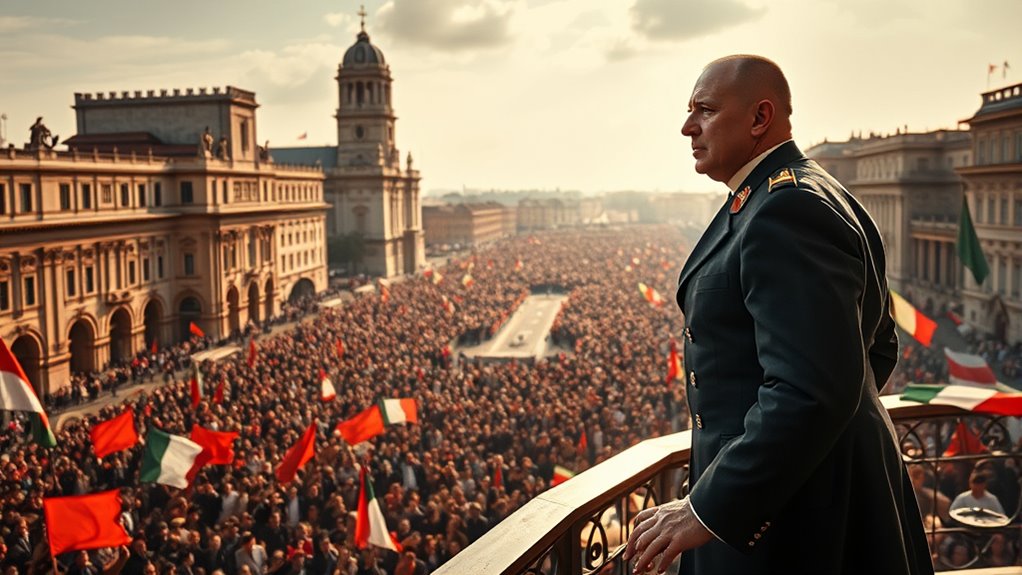
How did Benito Mussolini manage to transform from a socialist agitator into Italy’s fascist dictator? The answer lies in his strategic manipulation of fascist ideology and his relentless pursuit of political consolidation. Mussolini’s early years as a socialist gave him a firm foundation in revolutionary ideas, but he quickly realized that to gain true power, he needed to adapt his message and tactics. He abandoned the traditional socialist emphasis on class struggle and instead promoted a nationalist, authoritarian vision that united Italians under a common cause. This shift was essential, as it allowed him to appeal to a broader audience, including those disillusioned with democracy and economic instability. Mussolini crafted a new political narrative that emphasized strength, discipline, and unity, which became the core of fascist ideology. By doing so, he distinguished himself from traditional leftist movements and positioned himself as a leader capable of restoring Italy’s greatness.
Mussolini’s rise was not accidental; it was a calculated effort at political consolidation. He understood that to secure power, he needed to dismantle the existing political structures and eliminate opposition. He skillfully used propaganda, violence, and intimidation to weaken rivals and create a climate of fear that made his leadership seem inevitable. His paramilitary groups, the Blackshirts, played a pivotal role in intimidating political opponents, disrupting elections, and asserting control over public spaces. These actions helped him present himself as the only figure capable of restoring order amid chaos. Mussolini also exploited Italy’s economic struggles and public discontent, promising stability and national revival. By aligning himself with powerful industrialists and military figures, he gained essential backing for his authoritarian ambitions. His ability to manipulate both the political environment and public sentiment was key to his success in consolidating power. Additionally, he employed offensive tactics like targeted violence and propaganda campaigns to accelerate his rise to power.
Once he had established enough support, Mussolini moved swiftly to formalize his authority. In 1925, he declared himself dictator, effectively ending Italy’s democratic institutions. This was no sudden leap but the culmination of years of groundwork—building a cult of personality, controlling the media, and suppressing dissent. His mastery of fascist ideology allowed him to justify his actions as necessary for Italy’s future. The political consolidation he achieved through strategic alliances, propaganda, and force set the stage for his totalitarian rule. Mussolini’s transformation from a socialist agitator to a fascist dictator teaches that ideological shifts, combined with ruthless political consolidation, can rapidly reshape a nation’s leadership—and history.
Frequently Asked Questions
How Did Mussolini’s Early Life Influence His Political Ideology?
Your early influences shaped Mussolini’s ideological roots by exposing him to radical ideas and nationalist sentiments. Growing up in a turbulent Italy, he was influenced by socialist ideals initially, but later shifted towards extreme nationalism and fascism. His experiences with political activism and disillusionment with socialism fueled his desire for strong leadership. These early influences directly impacted his worldview, leading him to develop the fervent, authoritarian ideology that defined his rule.
What Were the Key Events Leading to Mussolini’s Appointment as Prime Minister?
Like a storm gathering strength, Italy’s political instability created the perfect backdrop for Mussolini’s rise. Key events included his founding of the fascist movement, which gained momentum through violence and propaganda, and his successful March on Rome in 1922. These actions pressured King Victor Emmanuel III to appoint Mussolini as prime minister, believing he could restore order. This pivotal moment marked the start of Mussolini’s dictatorial rule.
How Did Mussolini Consolidate Power After 1925?
After 1925, you see Mussolini consolidating power through propaganda campaigns that promoted his authority and suppressed opposition. He also enacts legal reforms, such as the Acerbo Law, which strengthen his control over the government. These strategies allow him to eliminate political rivals, centralize decision-making, and establish a dictatorship, ensuring his dominance over Italy’s political landscape and securing his rule for years to come.
What Opposition Challenges Did Mussolini Face During His Rise?
Think of Mussolini as a storm brewing on the horizon. During his rise, he faced opposition challenges like Anti-Communist Movements and widespread Political Suppression. These acts created turbulent waters, but Mussolini navigated them by cracking down on dissent, silencing critics, and strengthening his grip on power. His actions aimed to quell opposition, making it difficult for others to challenge his authority and ultimately consolidating his dictatorial rule.
How Did Mussolini’s Rise Impact Italy’s Position in Europe?
Your understanding is that Mussolini’s rise led to Fascist expansion, which shifted Italy’s role in Europe. His aggressive policies increased Italy’s influence, but also caused diplomatic isolation, as many countries frowned upon his actions. This isolation limited Italy’s alliances and opportunities, making it harder to join broader European efforts. Overall, Mussolini’s expansionist ambitions transformed Italy’s position, balancing increased power with diplomatic challenges across the continent.
Conclusion
As you reflect on Mussolini’s rise, remember how his shadow stretched across Italy like a dark cloud, obscuring the sun of democracy. His march to power symbolizes the danger of unchecked ambition and the ease with which order can turn into oppression. Stay vigilant, for the seeds of tyranny can grow silently, hidden beneath a false promise of strength. Learn from history’s storm, so you can stand firm against the darkness before it consumes the light.
NFL season / tailgating Picks
team gear
As an affiliate, we earn on qualifying purchases.