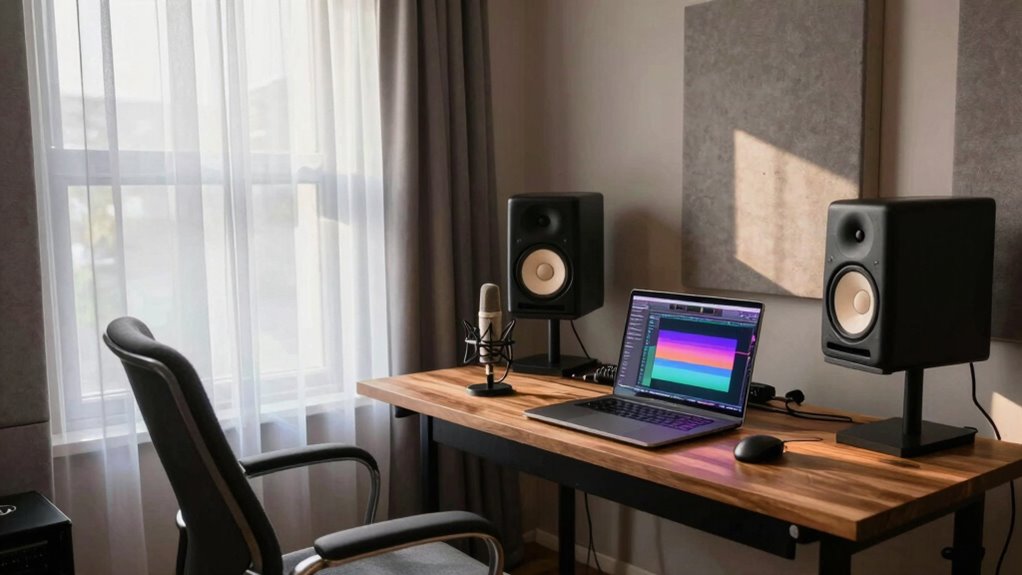

Before building a small home studio, focus on choosing reliable, high-quality equipment like microphones suited to your needs, an audio interface with low latency, and monitors that offer honest sound. Pay close attention to acoustic treatment and soundproofing to improve sound quality and reduce external noise. Make sure your space is adaptable and durable for your setup. If you keep exploring, you’ll discover essential tips to optimize your studio for the best recording experience.

Get the little things that make your day delivered free — and shop member deals
- Fast, free delivery on millions of items
- Access to Prime Big Deal Days deals on October 6–7
- Prime Video, Amazon Music and more included
Key Takeaways
- Prioritize reliable, high-quality essential equipment like microphones, audio interfaces, monitors, and headphones suited to your recording needs.
- Choose acoustically appropriate space and implement soundproofing and acoustic treatment for optimal sound quality.
- Match microphone types (condenser or dynamic) to specific recording applications for best results.
- Ensure your audio interface offers low-latency performance and enough inputs for all gear.
- Focus on creating a versatile, durable setup with honest monitors and headphones for accurate mixing and editing.
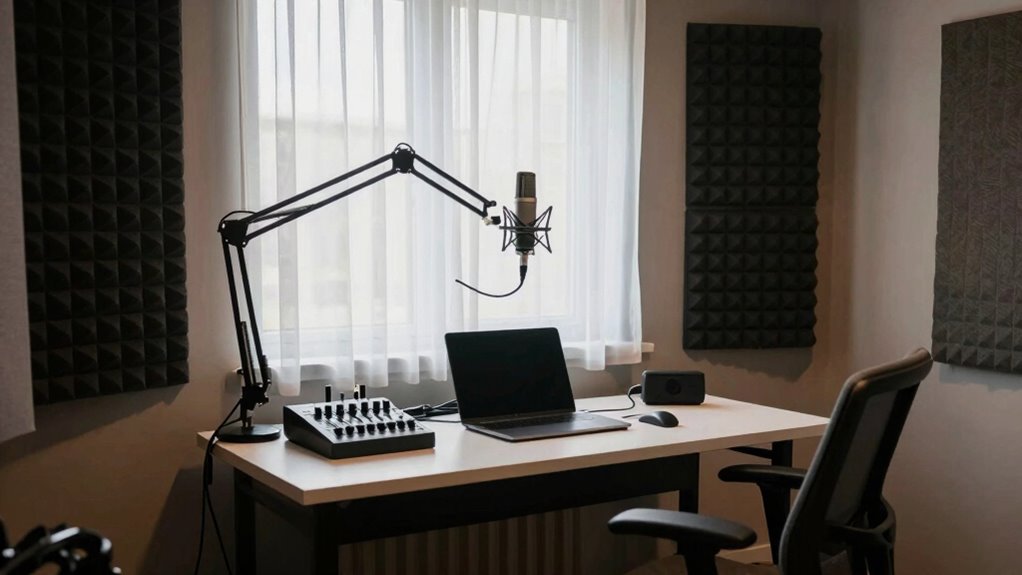
Next, focus on equipment selection. You don’t need the most expensive gear, but you do need reliable, high-quality essentials. Start with a good microphone suited to your style—whether it’s a condenser for vocals or a dynamic mic for instruments. Pair it with an audio interface that offers clean, low-latency conversion and enough inputs for your setup. When choosing monitors, opt for a pair that provides honest sound reproduction, so you can make accurate mixing decisions. Don’t forget headphones, which are invaluable for detailed editing and tracking. As you select equipment, prioritize versatility and durability; it’s better to invest in fewer, high-quality pieces that last and perform well than to buy cheap gear that needs frequent replacing. Additionally, understanding the importance of acoustic treatment can make a significant difference in how well your recordings translate to other listening environments. Proper room acoustics are essential to achieving the best possible sound quality in your small studio. Investing time in understanding and implementing soundproofing techniques can also help minimize external noise disruptions, further enhancing your recording experience.
Incorporating soundproofing measures can also improve your overall recording environment by reducing external noise interference.
studio monitor speakers for small home studio
As an affiliate, we earn on qualifying purchases.
As an affiliate, we earn on qualifying purchases.
Frequently Asked Questions
How Much Does It Typically Cost to Set up a Small Home Studio?
Setting up a small home studio typically costs around $500 to $2,000, depending on your equipment choices. To save, use budget tips like shopping secondhand and DIY solutions for soundproofing or mounting gear. Prioritize essential gear first, then expand gradually. You can keep costs low while still getting quality sound, making your project both affordable and achievable.
What Are the Best Soundproofing Options for Small Spaces?
Did you know that using effective soundproofing materials can reduce noise by up to 70%? For your small space, consider dense materials like acoustic foam panels, mass-loaded vinyl, or thick curtains to block sound entry and exit. Combine these with noise reduction techniques like sealing gaps and installing floating floors. These strategies help create a quiet environment, ensuring your recordings stay clear and professional without breaking the bank.
How Do I Choose the Right Equipment for My Needs?
To choose the right equipment, first consider your specific needs, like recording vocals or mixing tracks. Check equipment compatibility with your existing setup to avoid issues. Set a realistic budget, prioritizing essential gear like a microphone, headphones, and an audio interface. Research reviews and seek advice to guarantee each piece matches your skill level. This approach helps you build an efficient, functional studio without overspending or ending up with incompatible gear.
What Are Common Mistakes to Avoid During Setup?
Don’t put all your eggs in one basket when setting up your studio. Avoid common mistakes like neglecting proper acoustic treatment or skimping on lighting techniques, which can ruin your vibe. Be mindful of decorating ideas that promote focus and comfort. Always test your setup, ensuring your lighting isn’t too harsh or uneven. Staying attentive to these details helps you create an inspiring space where your creativity can truly flourish.
How Can I Optimize Acoustics in a Small Room?
To optimize acoustics in a small room, start by choosing room dimensions that minimize standing waves and echo. Add acoustic treatment like foam panels, bass traps, and diffusers to absorb and scatter sound reflections. Position your speakers and listening area carefully, avoiding corners and reflective surfaces. Regularly test sound quality and modify treatments as needed. These steps guarantee clear audio and a professional studio environment.
As an affiliate, we earn on qualifying purchases.
Conclusion
Now, picture your small home studio as a cozy sanctuary, a place where your creativity flows freely and your dreams come alive. As you step into this personalized space, feel the anticipation and pride swell within you, knowing you’ve built a haven for your passions. With careful planning and a touch of dedication, your studio becomes more than just a room — it transforms into a vibrant canvas where your ideas take flight and your spirit soars.
As an affiliate, we earn on qualifying purchases.
acoustic foam panels for soundproofing
As an affiliate, we earn on qualifying purchases.
As an affiliate, we earn on qualifying purchases.
Halloween Picks
halloween
As an affiliate, we earn on qualifying purchases.