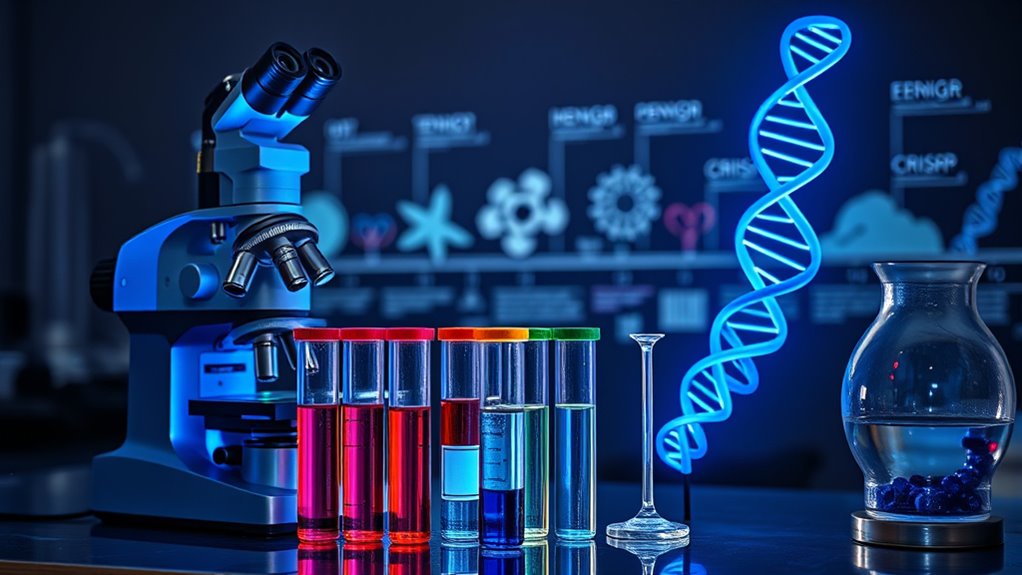

You’ll see a remarkable journey in medical innovations, starting with penicillin’s groundbreaking ability to fight bacterial infections and drastically reduce death rates. Then, advances like gene editing with CRISPR have opened new doors to cure genetic diseases and personalize treatments. These milestones highlight how science continually pushes boundaries to improve health. Stay with us, and you’ll discover how these innovations shape a healthier future for everyone.
Key Takeaways
- Penicillin marked the first effective antibiotic, transforming infectious disease treatment and reducing mortality rates worldwide.
- The development of broad-spectrum antibiotics expanded bacterial infection management and prompted resistance research.
- CRISPR-Cas9 revolutionized gene editing by enabling precise, affordable genetic modifications with potential cures for genetic disorders.
- Advances from penicillin to CRISPR exemplify ongoing innovation, significantly improving healthcare and extending human lifespan.
- Scientific collaboration and technological progress continue to drive breakthroughs from antibiotics to gene editing therapies.

Throughout history, medical innovations have transformed how we diagnose, treat, and prevent diseases, saving countless lives along the way. One of the earliest and most impactful breakthroughs was the discovery of antibiotics, which revolutionized medicine by effectively combating bacterial infections. Antibiotic breakthroughs like penicillin marked a turning point, drastically reducing mortality from infections that once claimed millions of lives. Penicillin’s success paved the way for the development of a wide range of antibiotics, expanding our ability to fight bacterial diseases. These advancements not only saved individual lives but also changed the way hospitals and communities manage infectious diseases, making once-fatal illnesses manageable or eradicated altogether. As antibiotic use expanded, researchers continued to refine their understanding of bacterial resistance, prompting the development of new drugs and stewardship strategies to keep these medicines effective. Moreover, ongoing research in antimicrobial resistance highlights the importance of sustainable use and innovation to maintain the efficacy of these vital medicines.
Alongside antibiotics, gene editing advancements have emerged as another groundbreaking milestone in medicine. These technological strides allow you to modify the genetic makeup of organisms with unprecedented precision, opening the door to potential cures for genetic disorders previously thought untreatable. CRISPR-Cas9, in particular, has made gene editing accessible, affordable, and remarkably accurate. You now have the ability to correct faulty genes responsible for diseases like sickle cell anemia, muscular dystrophy, and certain cancers. These gene editing advancements hold the promise of not just treating symptoms but fundamentally altering the course of genetic conditions. They also enable scientists to better understand disease mechanisms at a molecular level, leading to more targeted therapies. While ethical and safety concerns still exist, the potential to prevent inherited diseases before they manifest offers hope to millions worldwide.
The combination of antibiotic breakthroughs and gene editing advancements signifies how rapid technological progress continues to shape medicine. Antibiotics transformed infectious disease management, drastically reducing mortality rates, while gene editing is paving the way for personalized medicine and cures for genetic diseases. You’re witnessing a time when treatments once considered science fiction are becoming reality, offering new possibilities for health and longevity. These innovations highlight the importance of scientific research and collaboration, as each discovery builds on previous breakthroughs to improve human health. As you look to the future, it’s clear that ongoing advancements will further redefine medicine, making diseases more manageable or even preventable altogether. The journey from penicillin to CRISPR exemplifies how relentless innovation can turn once-impossible dreams into tangible solutions, ultimately saving more lives and shaping a healthier world.
Top picks for "mileston medical innovation"
Open Amazon search results for this keyword.
As an affiliate, we earn on qualifying purchases.
Frequently Asked Questions
How Did Early Medicine Practitioners Discover Penicillin?
You discover penicillin through early antibiotic discovery efforts and microbial research. In 1928, Alexander Fleming notices mold contaminating his bacterial cultures kills bacteria, leading him to identify penicillin’s potential. His keen observation and microbial research reveal the mold’s antibiotic properties, revolutionizing medicine. This breakthrough showed how microbes could produce substances to fight infections, paving the way for modern antibiotics and transforming healthcare worldwide.
What Are the Ethical Concerns Surrounding CRISPR Gene Editing?
Imagine you’re a scientist in the 21st century, grappling with the ethical concerns of CRISPR. You worry about germline editing, which could alter future generations permanently. Ethical frameworks are essential to guide responsible use, preventing misuse or unintended consequences. You must balance innovation with morality, ensuring gene editing benefits society while respecting individual rights. Without proper oversight, CRISPR could lead to controversial outcomes, challenging our moral boundaries and societal norms.
How Have Medical Innovations Impacted Global Health Disparities?
You see that medical innovations have improved health outcomes, but they often widen health disparities. You might face access barriers to advanced treatments, especially in underserved communities, hindering health equity. While breakthroughs like CRISPR hold promise, ensuring everyone benefits requires addressing these barriers. Ultimately, you recognize that equitable distribution of innovations is vital for reducing global health disparities and making medical progress truly inclusive.
What Are Future Prospects for Personalized Medicine?
Imagine a future where you benefit from genomic tailoring and targeted therapies, revolutionizing healthcare. You could receive treatments precisely designed for your genetic makeup, making cures more effective and minimizing side effects. Advances in personalized medicine promise to transform medicine, allowing you to manage or even prevent diseases before symptoms appear. This personalized approach will make healthcare more proactive, efficient, and tailored specifically to your unique genetic profile.
How Do Medical Innovations Influence Healthcare Costs?
Medical innovations can markedly influence healthcare costs by driving cost reduction through more effective treatments and early diagnostics. You might notice that advanced therapies, like gene editing, can lower long-term expenses by preventing costly complications. Additionally, innovations often lead to expanded insurance coverage for new treatments, making healthcare more accessible. While upfront costs may rise, overall savings and improved health outcomes usually benefit both patients and the healthcare system in the long run.
Conclusion
You’ve seen how medical innovations from penicillin to CRISPR have transformed healthcare. Did you know that over 200 million lives have been saved worldwide thanks to antibiotics alone? These breakthroughs remind you that science continually pushes boundaries, offering hope and healing. As you follow future advancements, remember that each milestone brings us closer to a healthier, longer life for everyone. Stay curious—who knows what medical marvels lie ahead?