
Over the past century, geopolitical alliances have evolved from traditional rivalries to complex strategic partnerships like NATO, which was created in 1949 to combat Soviet expansion. As global threats shifted, NATO expanded its membership and capabilities, fostering military cooperation and mutual reliance among members. This growth allowed NATO to adapt to cyber threats, hybrid warfare, and new technologies while strengthening international security. Continue exploring to discover how this alliance has shaped modern geopolitics and its ongoing evolution.
Key Takeaways
- NATO was founded in 1949 as a collective defense alliance against Soviet expansion, marking a pivotal shift in post-World War II geopolitics.
- Its expansion over the decades reflects strategic adaptation to changing global threats and regional security needs.
- NATO’s evolution includes increased military cooperation, joint training, and integration of diverse military systems among member states.
- The alliance benefits from mutual reliance, sharing advanced technology and resources to strengthen collective security.
- Ongoing adaptation addresses new threats like cyber-attacks and hybrid warfare, ensuring NATO’s relevance across centuries of geopolitical change.
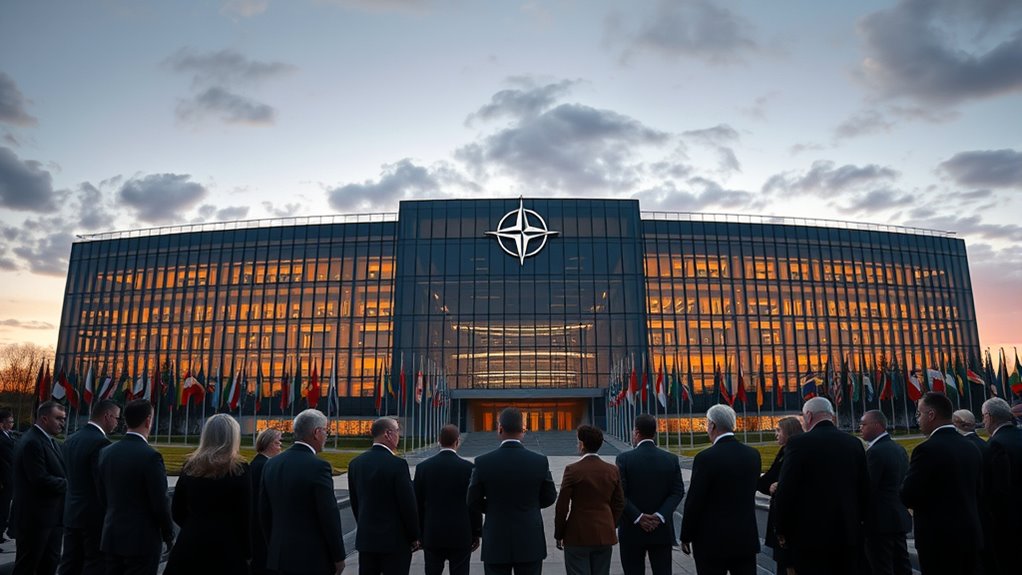
NATO has transformed markedly since its founding in 1949, adapting to changing global security threats and geopolitical shifts. When you examine its history, you’ll see how it has become a cornerstone of military cooperation among member nations. Initially created as a collective defense against Soviet expansion, NATO’s purpose quickly evolved as new challenges emerged. Over the decades, you’ve witnessed how alliance expansion played a crucial role in strengthening its strategic position, bringing in countries from different regions to bolster collective security. The process of inviting new members reflects a deliberate effort to adapt to the shifting landscape of global politics, guaranteeing that the alliance remains relevant and robust.
NATO’s expansion has strengthened its strategic position and adaptability in a changing global security landscape.
As NATO expanded its membership, you see how it brought together diverse nations, each with unique military capacities and strategic priorities. This expansion has allowed the alliance to enhance military cooperation across various domains, including joint training exercises, intelligence sharing, and coordinated military operations. You recognize that this increased collaboration is essential for responding swiftly to crises, whether they involve conventional conflicts, cyber threats, or terrorism. The alliance’s ability to integrate different military systems and doctrines demonstrates its commitment to unity and operational effectiveness.
Furthermore, alliance expansion has often been driven by a shared understanding that collective security benefits all members. When new countries join NATO, they gain access to advanced military technology, strategic planning resources, and diplomatic support. For existing members, expansion means a broader security perimeter, which helps deter potential aggressors. You can see how this dynamic creates a sense of mutual reliance, where each nation’s security is intertwined with that of its allies.
Throughout its history, NATO has also adapted its military cooperation strategies to match evolving threats. From conventional warfare to hybrid threats, cyber-attacks, and emerging technologies, the alliance continually updates its protocols and policies. This ongoing adaptation ensures that, as new security challenges arise, member nations remain prepared to work together effectively. Expansion supports this effort, bringing in fresh perspectives, capabilities, and resources, which bolster NATO’s ability to address complex global issues.
In essence, you observe that NATO’s evolution is rooted in its ability to expand its alliance and deepen military cooperation. The alliance’s growth reflects a proactive approach to maintaining peace and stability in a turbulent world. By continually welcoming new members and enhancing collaboration, NATO stays as a resilient and adaptable force, capable of facing the unpredictable security landscape of the 21st century. The importance of alliance expansion further underscores how NATO remains a vital pillar of international security.

NATO Arms Co-operation: A Study in Economics and Politics (Routledge Library Editions: Cold War Security Studies Book 29)
As an affiliate, we earn on qualifying purchases.
As an affiliate, we earn on qualifying purchases.
Frequently Asked Questions
How Does NATO Adapt to Emerging Cyber Threats?
You can see NATO adapting to emerging cyber threats by strengthening its cyber defense strategies and enhancing digital resilience. The alliance works to share intelligence quickly, conduct joint cyber exercises, and develop advanced technology to counteract cyberattacks. You’re encouraged to stay informed about these efforts, as NATO’s focus on improving cyber defense guarantees member nations are better protected against evolving digital vulnerabilities, maintaining stability and security in the face of new cyber challenges.
What Are Nato’s Plans for Future Expansion?
NATO plans to expand its future membership, aiming to include more European and partner countries to strengthen collective security. Currently, over 30 nations are part of the alliance, and expansion strategies focus on integrating countries committed to democracy and stability. You’ll see efforts to adapt to geopolitical changes, ensuring NATO remains resilient and relevant. This strategic growth helps counter emerging threats and promotes global peace, making the alliance more robust than ever.
How Does NATO Coordinate With Non-Member Countries?
You’ll find NATO coordinates with non-member countries through international cooperation and diplomatic strategies. The alliance often conducts joint exercises, shares intelligence, and engages in dialogue to build trust and address common security concerns. These efforts help foster stability and partnership, even without formal membership. By maintaining open channels and collaborative projects, NATO guarantees effective communication, promotes peace, and strengthens global security networks beyond its member states.
What Role Does NATO Play in Climate Change Security Issues?
NATO plays a crucial role in climate change security issues by engaging in climate diplomacy and promoting environmental security. You’re involved in efforts to address how climate impacts military readiness and regional stability. NATO collaborates with non-member countries and organizations to reduce vulnerabilities, share knowledge, and develop strategies. This proactive approach helps prevent conflicts triggered by climate-related challenges, ensuring global stability and resilience in the face of environmental threats.
How Has Nato’s Budget and Funding Evolved Over the Centuries?
You might think NATO’s budget has remained static, but it’s actually evolved considerably. Over time, budget shifts and funding mechanisms have adapted to changing threats and member contributions. Initially relying on voluntary contributions, NATO now uses a mix of national budgets and pooled funds to ensure collective security. This evolution reflects its increasing importance, requiring more coordinated and flexible funding strategies to address modern security challenges effectively.

Adversarial Tradecraft in Cybersecurity: Offense versus defense in real-time computer conflict
As an affiliate, we earn on qualifying purchases.
As an affiliate, we earn on qualifying purchases.
Conclusion
You’ve seen how NATO has transformed over the centuries, adapting to new threats and alliances. Imagine you’re part of a coalition facing a rising global challenge—just like NATO’s response to post-Cold War shifts. Its history shows that flexibility and unity keep alliances strong. Moving forward, understanding this evolution helps you grasp how international partnerships shape our world, ensuring peace and stability in unpredictable times. Your awareness of NATO’s journey is key to understanding future global security.
hybrid warfare training kits
As an affiliate, we earn on qualifying purchases.
As an affiliate, we earn on qualifying purchases.

Advanced Theory of Semiconductor Devices
Used Book in Good Condition
As an affiliate, we earn on qualifying purchases.
As an affiliate, we earn on qualifying purchases.