
The environmental movement has grown from grassroots campaigns and industrial activism to global efforts driven by voices like Greta Thunberg. It started with local actions and important works like Rachel Carson’s *Silent Spring*, which raised awareness about pesticides. Over time, activism expanded to include protests, policy changes, and youth-led climate strikes. If you’re curious how these efforts shaped today’s environmental landscape, you’ll discover more about the powerful history behind it all.
Key Takeaways
- The environmental movement evolved from grassroots efforts to global activism, driven by scientific evidence and public awareness.
- Rachel Carson’s *Silent Spring* catalyzed environmental concern, influencing policy and inspiring grassroots campaigns.
- Industrial activism targeted pollution and unsafe practices, leading to industry reforms and stronger environmental regulations.
- Landmark moments like protests and organizations such as Greenpeace amplified activism and pushed for environmental justice.
- Contemporary youth-led movements like Greta Thunberg’s climate strikes continue the legacy, emphasizing collective action for sustainability.
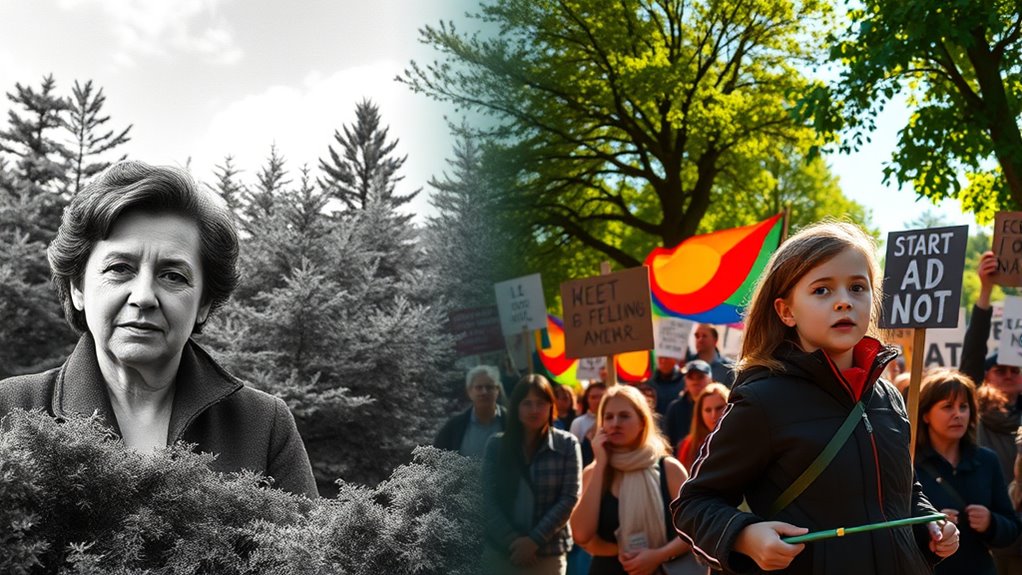
The environmental movement has a rich history of activists and organizations working to protect the planet’s natural resources. Over the decades, this movement has evolved from isolated acts of conservation to a global effort driven by various strategies, including industrial activism and grassroots campaigns. You might not realize it, but your awareness of environmental issues today is rooted in a long-standing struggle that has shaped policies and public attitudes. In the early days, grassroots campaigns played a essential role, mobilizing communities to demand change and hold industries accountable. These local efforts created a foundation for broader activism, showing that collective action can challenge powerful corporations and government policies. The development of environmental science and research provided crucial scientific evidence that supported these campaigns and helped sway public opinion and policy decisions. Industrial activism emerged as a key tactic in this fight. Instead of solely relying on protests, activists began targeting industries directly—pressuring companies to adopt greener practices or face public backlash. This approach often involved campaigns that exposed pollution, unsafe practices, or unethical environmental neglect. As awareness grew, so did the influence of these campaigns, pushing industries to adopt more sustainable methods. You might have seen this in action through protests against oil companies or campaigns exposing hazardous waste dumping. These efforts forced industries to reconsider their practices, often leading to policy changes or shifts in public opinion. Throughout the 20th century, the movement gained momentum with landmark moments like the publication of Rachel Carson’s *Silent Spring*. Her book highlighted the dangers of pesticides and sparked widespread concern about environmental health. It marked a turning point, inspiring more grassroots campaigns and encouraging organizations to push for stronger regulations. The rise of environmental organizations like the Sierra Club or Greenpeace further amplified activism, combining grassroots efforts with strategic industrial activism. These groups employed tactics such as direct action, lobbying, and public education, making the movement more effective and visible. Today, the roots of this history are reflected in the global climate strikes led by figures like Greta Thunberg. Her activism continues the legacy of grassroots campaigns, emphasizing the power of youth and community-driven efforts. The movement’s history demonstrates that change is possible when ordinary people unite—whether through local protests, industrial pressure campaigns, or international advocacy. Every step from the early grassroots campaigns to modern climate strikes showcases a relentless pursuit of environmental justice. You’re part of this ongoing story, standing on the shoulders of those who fought before you, using the lessons of history to push for a more sustainable future.
environmental activism books
As an affiliate, we earn on qualifying purchases.
As an affiliate, we earn on qualifying purchases.
Frequently Asked Questions
How Did Indigenous Communities Influence Early Environmental Activism?
You see, indigenous communities deeply influenced early environmental activism by asserting Indigenous sovereignty and sharing traditional ecological knowledge. They highlighted the importance of respecting nature’s balance and advocated for land rights, inspiring broader conservation efforts. Their insights emphasized sustainable practices rooted in centuries of experience, challenging Western exploitation. By speaking out, they helped shape environmental policies and raised awareness about the interconnectedness of ecosystems and cultural identity.
What Role Did Social Media Play in Recent Environmental Movements?
Social media acts like a megaphone, amplifying your voice in environmental activism. It markedly impacts recent movements by enabling rapid information sharing and mobilizing global support. Through digital activism, you can easily spread awareness, organize protests, and hold corporations accountable. Platforms like Twitter and Instagram turn individual voices into a powerful collective force, making environmental issues impossible to ignore and inspiring action across borders.
Which Countries Led the First Global Environmental Treaties?
You should know that the first global environmental treaties were led by countries like the United States, the United Kingdom, and the Soviet Union, emphasizing international cooperation. These nations established frameworks to address issues like ozone depletion and marine pollution. They prioritized treaty enforcement to guarantee compliance, setting important global standards. Their leadership helped shape future international agreements, fostering collective efforts to protect our planet for future generations.
How Has Environmental Activism Impacted Economic Policies Worldwide?
Think of environmental activism as a force that reshapes economic landscapes. You’ve likely seen countries implement carbon pricing, making polluters pay for their damage, and boost renewable subsidies to grow clean energy. These policies act like a compass guiding economies toward sustainability. Your activism fuels this shift, encouraging governments worldwide to prioritize green growth, reduce emissions, and balance economic progress with the health of our planet.
What Are Future Challenges for the Global Environmental Movement?
You’ll face future challenges like advancing climate adaptation strategies to protect vulnerable communities and promoting renewable innovation to reduce reliance on fossil fuels. You need to navigate political resistance, guarantee equitable access to resources, and foster global cooperation. Staying ahead requires embracing new technologies and policies, raising awareness, and maintaining momentum. By addressing these issues, you can help safeguard the environment for future generations and push for meaningful change worldwide.
sustainable living products
As an affiliate, we earn on qualifying purchases.
As an affiliate, we earn on qualifying purchases.
Conclusion
As you look back from Silent Spring to Greta Thunberg, you see a powerful evolution in the environmental movement. Each voice, from Rachel Carson to today’s youth, pushes for change and awareness. Do you realize how your actions can continue this momentum? The movement’s future depends on your voice and choices. Together, you can shape a healthier planet, proving that even small steps matter in the fight for our environment.
green protest signs
As an affiliate, we earn on qualifying purchases.
As an affiliate, we earn on qualifying purchases.
climate change educational kits
As an affiliate, we earn on qualifying purchases.
As an affiliate, we earn on qualifying purchases.