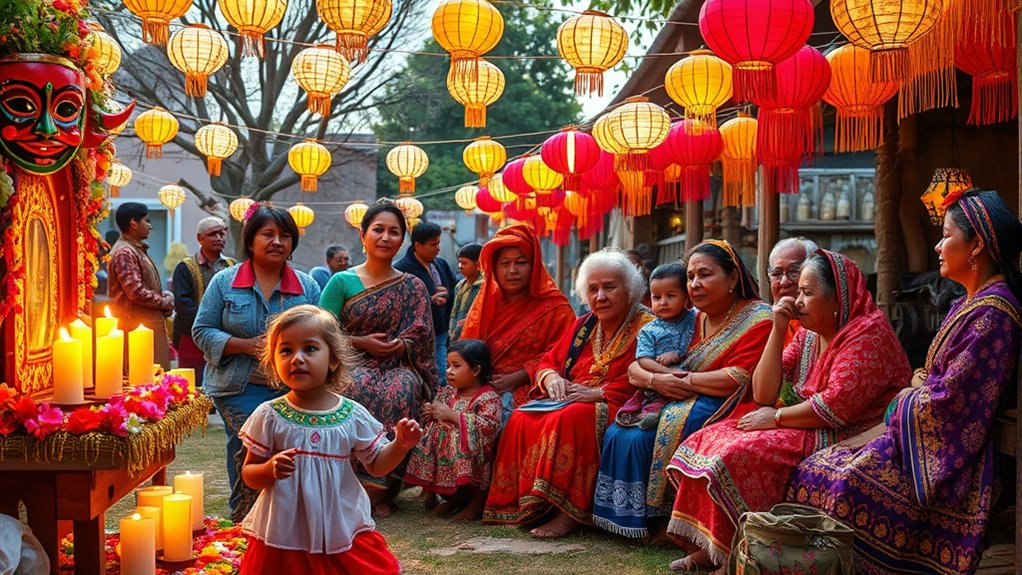

To celebrate cultural holidays respectfully, it’s important to educate yourself about their significance and traditions beforehand. Show genuine curiosity and listen actively when others share their cultural experiences. Engage authentically without appropriating symbols, attire, or rituals, understanding their deep meaning. Create inclusive environments where everyone feels respected and comfortable. Being mindful and respectful honors the heritage behind each celebration. Keep exploring to learn more ways to celebrate with authenticity and cultural sensitivity.
Key Takeaways
- Educate yourself about the cultural significance, symbols, and customs of the holiday before participating.
- Engage genuinely and respectfully, listening to and valuing community members’ insights and experiences.
- Avoid using cultural symbols or attire without understanding their meaning and importance.
- Foster inclusive environments that honor diverse traditions and encourage shared learning.
- Use available resources, like cultural support hours, to deepen your understanding and ensure respectful participation.
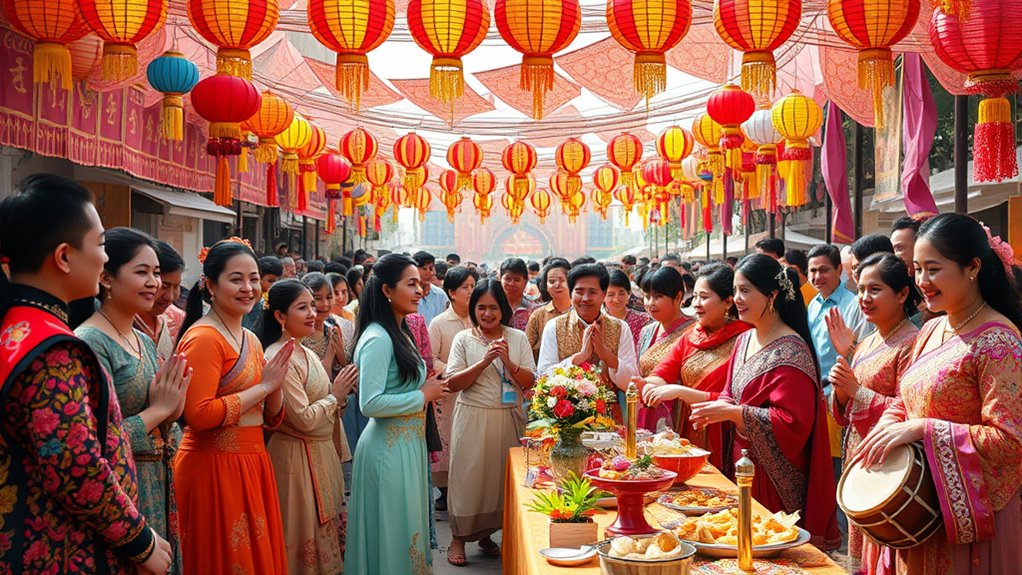
Cultural holidays offer a vibrant way to connect with different traditions and histories, enriching our understanding of the diverse world we live in. When you participate in these celebrations, it’s essential to approach them with cultural sensitivity. Respecting the customs, symbols, and practices of others shows that you value their heritage and are enthusiastic to learn. This means taking the time to educate yourself about the significance of specific rituals, foods, or attire before engaging in the festivities. By doing so, you demonstrate an awareness that these traditions are meaningful and often sacred, not just colorful displays or social events. Adopting inclusive practices is equally important. This involves creating an environment where everyone feels comfortable and respected, regardless of their background or identity. If you’re hosting a celebration, consider inviting diverse voices to share their experiences or perspectives. Be mindful of cultural appropriation—avoiding the use of cultural elements outside their original context or without understanding their importance. For instance, wearing traditional clothing or symbols without grasping their significance can unintentionally disrespect the culture you’re trying to honor. Instead, seek to learn and participate in a way that honors the heritage behind these traditions.
Additionally, understanding cultural support hours can be helpful when planning to learn more about specific traditions or accessing resources related to cultural holidays. In practice, this could mean asking questions or listening actively when someone shares insights about their cultural holiday. It’s about recognizing that cultural holidays aren’t just opportunities for festivities but moments to acknowledge history, struggles, and achievements. Engaging authentically involves being open-minded and humble—accepting that you don’t have all the answers and being willing to learn from those who have a deeper connection to the traditions. When you approach celebrations with this mindset, you foster an inclusive atmosphere that encourages shared understanding rather than superficial participation. Remember, the goal is to celebrate with respect, not to appropriate or trivialize someone else’s cultural expressions. By demonstrating genuine curiosity and practicing cultural sensitivity, you help create a space where diverse traditions are honored and appreciated. This approach builds bridges between communities, enriching your experience and that of others. Ultimately, celebrating cultural holidays becomes more than just observing a date on the calendar; it becomes an act of respect, understanding, and shared humanity. When you commit to inclusive practices, you contribute to a more respectful and interconnected world, where everyone’s cultural identity is valued and celebrated authentically.

Holidays Around the World: Celebrate Kwanzaa: With Candles, Community, and the Fruits of the Harvest
As an affiliate, we earn on qualifying purchases.
As an affiliate, we earn on qualifying purchases.
Frequently Asked Questions
How Can I Learn About Unfamiliar Cultural Holidays?
To learn about unfamiliar cultural holidays, you should engage in cultural exchange by talking with people who celebrate them. Read books, articles, or watch videos that highlight holiday traditions. Attend community events or festivals when possible, and ask respectful questions. This active approach helps you understand the significance behind each tradition, fostering appreciation and ensuring you celebrate these holidays with respect and cultural awareness.
What Are Common Respectful Gestures During Cultural Celebrations?
During cultural celebrations, you should follow gesture etiquette by observing others and mimicking respectful actions, such as bowing or placing your hands together. Avoid interrupting or taking photos without permission. Show genuine interest and listen attentively, which demonstrates respectful participation. Always ask if you’re unsure about specific gestures or customs to make sure you’re honoring traditions appropriately. Your respectful attitude fosters understanding and appreciation for the culture you’re engaging with.
How Do I Avoid Cultural Appropriation While Participating?
To avoid cultural appropriation, you should practice cultural sensitivity and focus on respectful participation. Educate yourself about the traditions and their significance before engaging. Ask for permission or guidance from community members if possible, and avoid stereotypes or superficial use of cultural symbols. By approaching celebrations with genuine respect and understanding, you guarantee your participation honors the culture and promotes mutual appreciation.
Are There Specific Dress Codes for Different Cultural Holidays?
Think of dressing for cultural holidays as stepping into a time machine—respectful attire matters. You should follow traditional attire where it’s expected, and always observe cultural etiquette. Some holidays have specific dress codes, like wearing white for certain ceremonies or avoiding revealing clothing. When unsure, research or ask community members. Wearing authentic or respectful clothing shows appreciation and helps you honor the tradition without appropriating.
How Can I Support Cultural Communities During Their Celebrations?
You can support cultural communities during their celebrations by engaging in cultural exchange and showing respectful observation. Attend their events with an open mind, ask respectful questions, and listen actively to their stories and traditions. Offer your presence as a sign of support, follow their lead on appropriate behavior and dress, and avoid making it about your experience. Your genuine interest fosters understanding and strengthens connections with the community.

Signs and Symbols: An Illustrated Guide to Their Origins and Meanings (DK Compact Culture Guides)
As an affiliate, we earn on qualifying purchases.
As an affiliate, we earn on qualifying purchases.
Conclusion
Think of cultural holidays as vibrant gardens—you can admire their beauty and learn from their diversity, but only if you respect the roots and traditions that nurture them. When you celebrate thoughtfully, you’re helping these gardens flourish, inviting others to appreciate their richness. Remember, honoring others’ customs is like tending a delicate plant; with care and understanding, everyone can enjoy the full bloom of unity and respect. Let’s nurture this garden together.
Kosiz 45 Pcs Diversity Party Cutouts Inclusive Paper Cuts Decor Positive Student Diversity Bulletin Board Decoration for Home Classroom School Back to School Party Supplies Decoration (Inclusive)
Abundant Quantity: you'll receive 45 pcs diversity themed cutouts in 9 styles, along with 5 sheets of adhesive…
As an affiliate, we earn on qualifying purchases.
As an affiliate, we earn on qualifying purchases.
Cultural Sensitivity Training: Developing the Basis for Effective Intercultural Communication
As an affiliate, we earn on qualifying purchases.
As an affiliate, we earn on qualifying purchases.