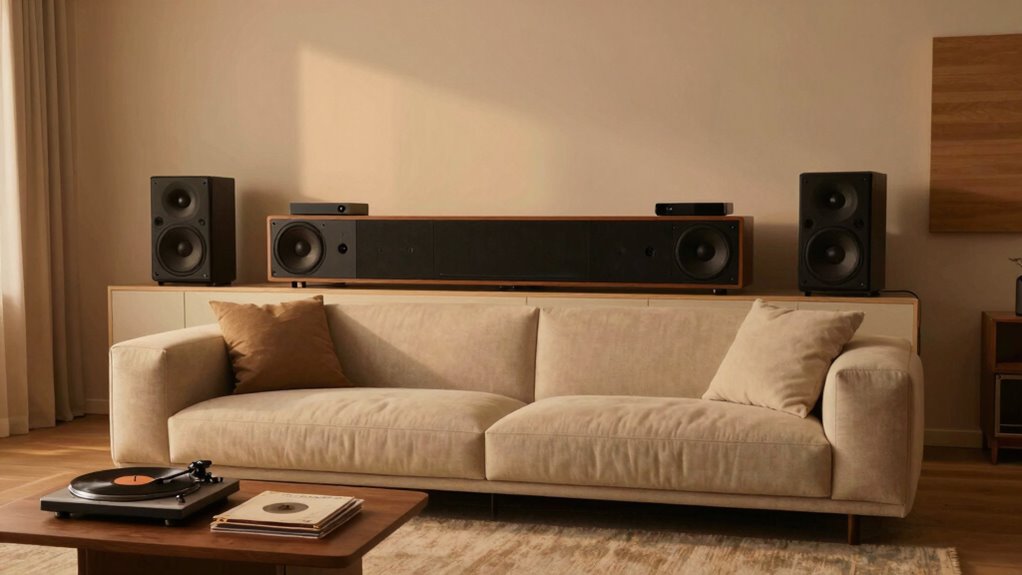

To plan a living room around sound, position your speakers at ear level and form an equilateral triangle with your seating. Keep them away from walls to prevent reflections and bass issues. Use soft furniture, curtains, and acoustic panels to absorb sound reflections, while bass traps control low frequencies. Arrange furniture to avoid blocking sound pathways and experiment with placements for balanced acoustics. If you want to turn your space into an immersive sound environment, keep exploring these tips.

Get the little things that make your day delivered free with Prime
- Fast, free delivery on millions of items
- Prime Video, Amazon Music and more included
- Member-only deals all year
Key Takeaways
- Prioritize speaker placement at ear level and form an equilateral triangle with the main seating area for balanced sound.
- Incorporate acoustic treatments like curtains, rugs, and panels to absorb reflections and improve sound clarity.
- Arrange furniture to ensure open sound pathways, avoiding blocking speakers and creating dead zones.
- Use soundproofing and bass traps to minimize external noise and control low-frequency resonances.
- Conduct listening tests and fine-tune speaker angles and treatments for a natural, immersive audio environment.
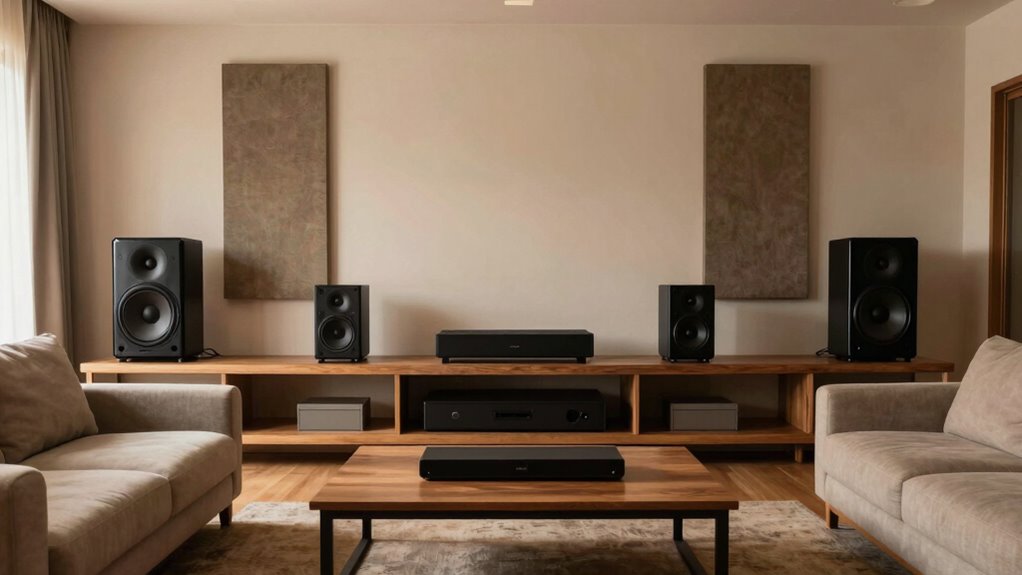
Creating a living room that offers excellent sound quality starts with thoughtful planning. When designing your space, you want to focus on how sound interacts with the environment, not just the visuals. To achieve this, consider the placement of your speakers and the acoustic treatments you’ll implement. These elements are essential for creating an immersive audio experience that complements your viewing or listening activities.
Start by thinking about speaker placement. The position of your speakers directly influences sound clarity and stereo imaging. Ideally, speakers should be placed at ear level when seated, forming an equilateral triangle with your primary listening spot. Keep them away from walls or corners, as these can cause unwanted reflections and bass buildup. If you’re using a surround sound system, position the rear speakers slightly behind and to the sides of your seating area. Experiment with placement to find the sweet spot where sound feels balanced and natural, avoiding dead zones or overly boomy spots.
Next, pay attention to acoustic treatments. Your living room’s shape, size, and furnishings can cause sound reflections, echoes, or dampening that distort audio quality. Incorporating acoustic treatments helps manage these issues. Soft materials like curtains, rugs, and upholstered furniture absorb excess sound reflections, reducing echo. Strategic placement of acoustic panels or diffusers on walls can help scatter sound waves evenly throughout the room. If your space is particularly reflective, adding bass traps in corners can control low-frequency resonances, resulting in clearer sound across all ranges. Understanding the room’s acoustic properties through sound analysis can further optimize your setup. Additionally, using room acoustics principles can help you design a space that naturally enhances sound quality without extensive modifications. Conducting a listening test after setup allows you to fine-tune your arrangement for the best possible sound experience. Considering soundproofing can also help prevent external noise from interfering with your listening experience, creating a more controlled environment. Exploring acoustic treatment options can provide tailored solutions to improve your room’s sound performance even further.
In addition to these technical considerations, think about how your room’s layout influences sound. Avoid placing large furniture or objects directly in front of speakers, which can block sound pathways and muddle audio clarity. Instead, aim for an open, balanced arrangement that allows sound to flow freely. Using furniture and decor thoughtfully can help improve acoustics without making the room feel cluttered or uncomfortable.
Finally, test your setup by playing familiar music or dialogue-heavy content, and listen carefully from your primary seating position. Adjust speaker angles, positions, and acoustic treatments as needed until you achieve a sound that feels natural and immersive. Remember, creating a living room centered around great sound isn’t just about equipment; it’s about how you arrange and treat your space to maximize acoustic performance. With attention to speaker placement and acoustic treatments, you’ll craft a room that’s not just visually appealing but also delivers exceptional audio experiences.
bookshelf speakers for living room
As an affiliate, we earn on qualifying purchases.
As an affiliate, we earn on qualifying purchases.
Frequently Asked Questions
What Are the Best Acoustic Treatments for a Living Room?
The best acoustic treatments for your living room include installing acoustic panels on walls to absorb sound reflections and reduce echo. Additionally, use soundproof curtains over windows to block outside noise and prevent sound leakage. Combining these solutions helps create a balanced acoustic environment, enhancing audio clarity and comfort. You’ll notice improved sound quality and a quieter space, perfect for enjoying your entertainment system without distractions.
How Do I Optimize Speaker Placement in My Space?
You might think speaker placement is trivial, but it’s the secret to perfect sound. Start by calibrating your speakers for the room’s unique layout—don’t just aim them at the TV. Position them at ear level, equidistant from your listening spot, and avoid corners that can muddle sound. Experiment with angles and distances, then use speaker calibration tools to fine-tune. Proper placement transforms your space into a sound sanctuary.
What Equipment Is Essential for High-Quality Sound?
For high-quality sound, you’ll need a good set of speakers, a receiver, and soundproof curtains to minimize outside noise. Guarantee your speakers are properly calibrated, which makes a big difference in sound clarity and balance. Soundproof curtains help reduce echo and external disturbances, creating a better listening environment. Regular speaker calibration ensures your system delivers best audio performance, making your movie or music experience truly immersive.
How Can I Reduce Echo and Background Noise?
To reduce echo and background noise, hang soundproof curtains to absorb sound reflections and block external noise. Install acoustic panels on walls to trap sound waves and improve room acoustics. You can also add plush rugs and upholstered furniture, which help dampen sound. Keep windows and doors sealed properly, and consider using a white noise machine to mask residual noise, creating a more immersive and sound-focused living room.
Is It Better to Use Wireless or Wired Sound Systems?
Isn’t it better to choose a sound system that fits your needs? Wireless systems offer great convenience with wireless connectivity, making setup easy and clutter-free. However, wired sound systems provide wired stability, ensuring consistent sound quality without interference. If you prioritize flexibility and minimal cables, go wireless. If you prefer reliability and uninterrupted audio, wired options are better. Consider your room layout and usage habits when deciding.
acoustic panels for soundproofing
As an affiliate, we earn on qualifying purchases.
As an affiliate, we earn on qualifying purchases.
Conclusion
When you design your living room around sound, you might find that everything else falls into place unexpectedly. The perfect speaker placement could reveal a cozy corner you never noticed, or the acoustics you craft might make your favorite playlist feel like a private concert. Sometimes, it’s the subtle coincidences—like a well-placed rug or a bookshelf—that truly bring the space to life. Ultimately, embracing sound as your guide creates a room that feels both intentional and effortlessly inviting.
As an affiliate, we earn on qualifying purchases.
soundproof curtains for living room
As an affiliate, we earn on qualifying purchases.
As an affiliate, we earn on qualifying purchases.
Fall Picks
fall essentials
As an affiliate, we earn on qualifying purchases.