Good design can profoundly boost your mental wellbeing by creating balanced, calming spaces that reduce stress and prevent overwhelm. Thoughtful arrangements, natural light, and soothing colors promote focus, relaxation, and emotional resilience. When your environment supports your natural rhythms and provides designated zones, it helps improve your mood and increase mindfulness. As you explore more, you’ll discover how intentional design can be a powerful tool for your long-term mental health and overall happiness.

Get the little things that make your day delivered free with Prime
- Fast, free delivery on millions of items
- Prime Video, Amazon Music and more included
- Member-only deals all year
Key Takeaways
- Promotes mental clarity and reduces stress through balanced, organized spatial arrangements.
- Enhances mood and energy by incorporating optimal lighting and natural elements.
- Fosters mindfulness and emotional awareness via harmonious and visually pleasing environments.
- Acts as a stress-reduction tool by shaping environments that support emotional resilience.
- Supports long-term mental health by integrating design principles that promote focus, comfort, and balance.
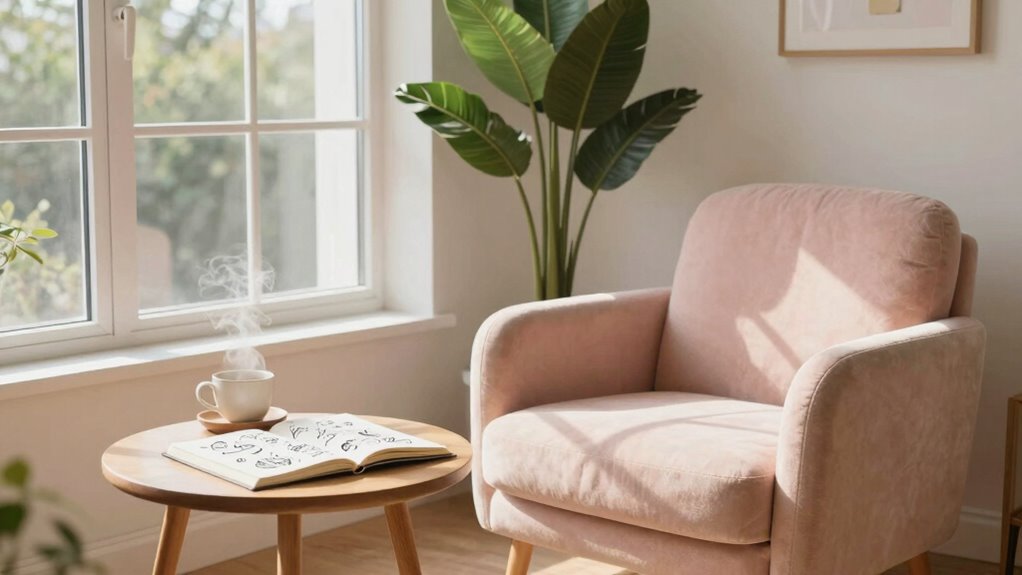
Spatial harmony also contributes substantially to your mental health. When a room feels balanced and well-organized, it reduces feelings of chaos and overwhelm. Cluttered or poorly arranged spaces can increase stress and distract your mind, making it harder to focus or unwind. Conversely, a thoughtfully arranged environment with clear pathways, balanced proportions, and designated zones for work, rest, and activity helps your brain feel at ease. Spatial harmony isn’t just about aesthetics; it’s about creating a flow that aligns with your natural rhythms. When your environment feels cohesive and predictable, your mind perceives safety and stability, which are essential for mental wellbeing. Additionally, incorporating appropriate lighting can significantly influence your mood and energy levels, making your space more conducive to relaxation or productivity depending on your needs. Well-designed lighting can also help regulate your circadian rhythms, improving sleep quality and overall mental health. Being mindful of how your environment interacts with your daily routines can further enhance your mental health resilience.
Good design also encourages mindfulness and intentionality. When you surround yourself with spaces that are visually pleasing and harmonious, you become more aware of your surroundings and your reactions to them. This awareness can enhance your emotional intelligence and help you better manage stress. For example, incorporating natural elements like plants, natural light, and organic textures can deepen this sense of connection to your environment, further elevating your mental state. Thoughtful design doesn’t just make your space look good; it actively supports your mental health by creating environments that nurture your emotional and cognitive functioning. Recognizing how your environment influences your daily mental landscape empowers you to make intentional choices that promote wellbeing. Engaging with a thoughtfully designed environment can also serve as a form of stress reduction, helping you cultivate resilience against daily pressures. Exploring the role of environmental psychology can provide deeper insights into how spaces influence your mental health.
Ultimately, the way you design your environment influences your daily mental landscape. By integrating principles like color therapy and spatial harmony, you can craft spaces that uplift and sustain you through life’s challenges. Good design becomes a tool for mental wellbeing, helping you feel more balanced, focused, and resilient every day. It’s a subtle yet powerful way to invest in your overall health, turning your surroundings into a source of comfort and strength.
As an affiliate, we earn on qualifying purchases.
Frequently Asked Questions
How Can Design Influence Mental Health in Everyday Environments?
Design influences your mental health by shaping environmental aesthetics that promote calm and comfort. When spaces are visually pleasing and organized, they reduce stress and anxiety. Sensory stimulation through natural light, textures, and colors can boost your mood and focus. Thoughtful design helps you feel more relaxed and centered in everyday environments, making it easier to manage mental health challenges and fostering a sense of well-being in your daily life.
What Design Elements Are Most Effective for Reducing Stress?
You can reduce stress effectively by incorporating biophilic design, which brings natural elements indoors, creating calming environments. Pair this with ergonomic furniture that supports comfort and reduces physical tension. Using natural light, soothing colors, and incorporating plants can further enhance relaxation. These design elements promote a sense of tranquility, helping you feel more at ease and less overwhelmed in your everyday spaces.
Can Design Improve Mental Wellbeing in Workplaces?
Ever wonder how your workspace impacts your mood? Yes, good design can boost mental wellbeing in workplaces. You can feel more relaxed and focused with ergonomic furniture that supports your body and natural lighting that lifts your spirits. Thoughtful design reduces stress and enhances comfort, making every workday more pleasant. When your environment is designed with your mental health in mind, productivity and happiness naturally follow.
How Does Color Choice Impact Mood and Mental Health?
Color choice directly impacts your mood and mental health through its symbolism and emotional resonance. For example, blue often fosters calmness, while red can energize or increase stress. You influence your environment’s emotional tone based on these colors, which can promote relaxation or motivation. By choosing colors thoughtfully, you support mental wellbeing, reduce anxiety, and create spaces that enhance your overall mood, making your surroundings more comforting and inspiring.
Are There Specific Design Principles for Supporting Mental Health Recovery?
You should focus on creating therapeutic spaces that gently nurture comfort and safety. Prioritize sensory integration by balancing light, sound, and textures to reduce overwhelm and promote calm. Incorporate nature-inspired elements and soft colors to foster tranquility. Thoughtful layout and soothing materials help support mental health recovery, making your space feel like a peaceful retreat. These principles subtly guide individuals toward healing, encouraging a sense of stability and hope.
ergonomic workspace desk organizer
As an affiliate, we earn on qualifying purchases.
As an affiliate, we earn on qualifying purchases.
Conclusion
Imagine walking into a room that instantly calms your mind—a space thoughtfully designed with calming colors, natural light, and cozy textures. Good design acts like a gentle hand guiding your mental wellbeing, turning stressful spaces into havens. Studies show that well-designed environments can reduce anxiety and boost happiness. Just as a garden nurtures plants to thrive, thoughtful design nurtures your mind, helping you feel more balanced and resilient every day.
As an affiliate, we earn on qualifying purchases.
calming color palette wall paint
As an affiliate, we earn on qualifying purchases.
As an affiliate, we earn on qualifying purchases.
NFL season / tailgating Picks
team gear
As an affiliate, we earn on qualifying purchases.