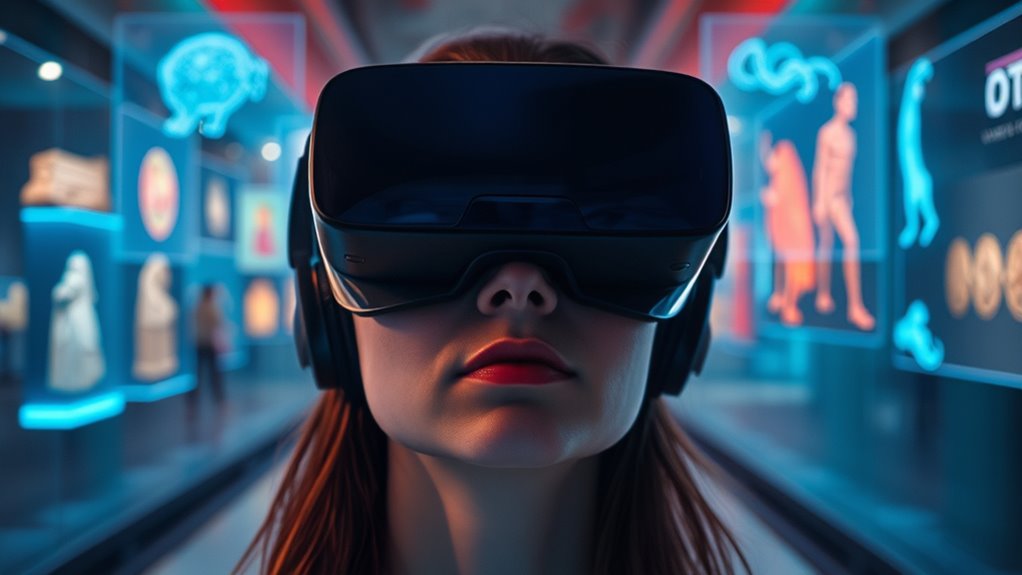

Virtual reality museums let you access culture digitally by immersing you in interactive environments that bring artworks, historical sites, and artifacts to life. You can explore virtual reconstructions, manipulate digital models, and enjoy enhanced visuals through AR and VR devices. These experiences make learning more engaging and accessible from anywhere, reducing physical barriers and preserving fragile objects. If you keep exploring, you’ll discover how these innovative tools are shaping the future of cultural access.

Get the little things that make your day delivered free with Prime
- Fast, free delivery on millions of items
- Prime Video, Amazon Music and more included
- Member-only deals all year
Key Takeaways
- Virtual reality museums create immersive environments that allow users to explore exhibits as if physically present.
- Augmented reality enhances displays with digital overlays, providing interactive and detailed views of artifacts.
- Virtual tours enable remote access to cultural sites, making art and history accessible worldwide.
- Digital experiences preserve fragile artifacts and promote inclusive engagement regardless of location or physical ability.
- Advances in technology will make virtual museums more realistic, interactive, and personalized, enriching cultural exploration.
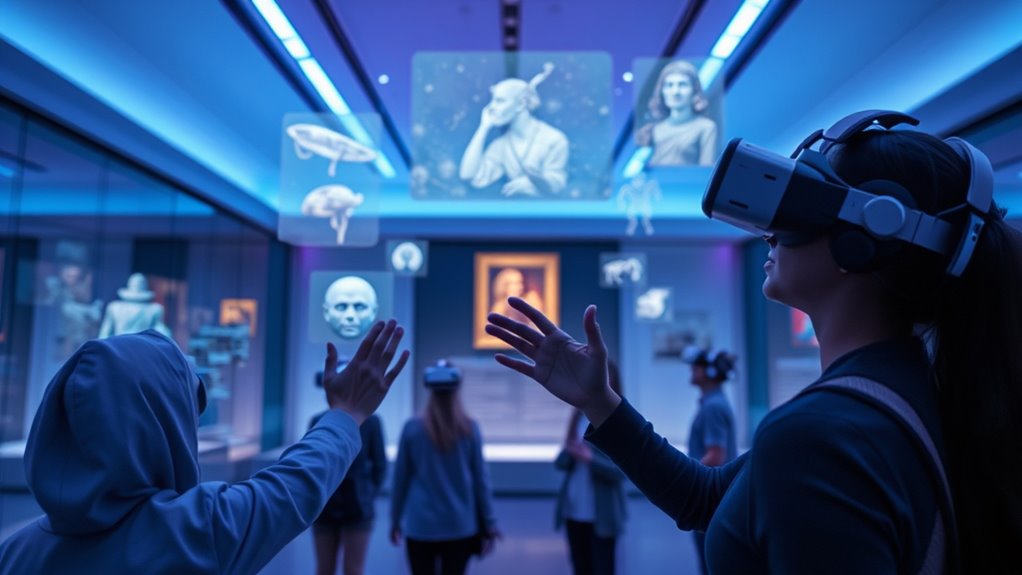
Virtual reality museums are transforming the way you experience art and history by offering immersive, interactive environments that bring exhibits to life. Instead of passively observing artifacts behind glass, you can now step into a digital space where history unfolds around you, and artworks seem to breathe with new energy. This shift isn’t just about viewing; it’s about engaging directly with culture in ways that were impossible before. One of the key innovations making this possible is augmented exhibitions, which blend the real and virtual worlds to enhance your understanding and enjoyment of museum collections. Through augmented reality devices, you might see a 3D reconstruction of an ancient city superimposed onto a tabletop or walk around a virtual sculpture that reveals its inner layers with a simple gesture. These augmented exhibitions elevate the experience, making it more dynamic and personalized. You’re no longer limited to static displays; instead, you can manipulate, explore, and interact with digital replicas, gaining insights that static exhibits can’t provide. This creates a truly immersive experience, where your senses are engaged and your curiosity is stimulated. As you move through these virtual spaces, you feel as though you’re actually walking through a historic site or standing inside a Renaissance painting. The boundaries between observer and participant blur, allowing you to connect deeply with the content. Virtual reality headsets and hand-tracking devices give you control over your journey, letting you zoom in on intricate details or step back to see the bigger picture. This level of interaction makes the learning process more memorable and enjoyable. Museums are increasingly collaborating with technology companies to develop these immersive experiences, creating virtual tours that can be accessed from anywhere in the world. Whether you’re exploring the pyramids of Egypt, wandering through a Dutch art gallery, or examining a prehistoric cave painting, these virtual environments make it accessible and engaging. The ability to experience culture digitally also means that institutions can preserve fragile artifacts by reducing physical handling while still offering full, detailed access. This democratizes culture, breaking down geographical and physical barriers that once limited access. Additionally, the integration of high-quality visuals and projector technology can significantly enhance the realism and clarity of these virtual exhibits. Ultimately, immersive experiences in virtual reality museums empower you to become an active participant in history and art, transforming passive observation into meaningful exploration. You get to learn, discover, and connect with culture on a deeper level—all from the comfort of your home or while traveling. As technology continues to evolve, these digital museums will become even more realistic, interactive, and personalized, further enriching your cultural journey.
virtual reality headset for museum tours
As an affiliate, we earn on qualifying purchases.
As an affiliate, we earn on qualifying purchases.
Frequently Asked Questions
How Do I Start Exploring Virtual Reality Museums?
To start exploring virtual reality museums, first get a VR headset that suits your budget and needs, like Oculus Quest or HTC Vive. Then, look for virtual tours offered by museums online—many have free or paid experiences. Download the necessary apps or platforms, such as Oculus VR or SteamVR, and follow the instructions to set up your headset. Once ready, immerse yourself in immersive virtual tours and enjoy cultural exploration from home.
Are VR Museums Accessible on All Devices?
While VR museums seem futuristic, device compatibility varies, and accessibility barriers still exist. You might find some VR museums work smoothly on high-end headsets, but others are limited to specific devices or platforms. Not all devices support VR features, making access uneven. To enjoy these cultural experiences, confirm your device meets the required specifications, and look for platforms that prioritize accessibility for everyone.
What Are the Costs Associated With Visiting VR Museums?
Visiting VR museums involves some costs. You’ll need hardware costs for a compatible VR headset, which can range from affordable options to high-end devices. Additionally, there may be subscription fees for access to specific VR museum platforms or content. These expenses can add up, but some museums offer free experiences or trial periods. Planning your budget and exploring free options helps you enjoy virtual culture without overspending.
Can VR Museums Replace Physical Museum Experiences?
They say you can’t judge a book by its cover, but VR museums offer a new way to explore culture. While they provide digital preservation and sensory immersion, they can’t fully replace physical museum experiences. You miss the tactile feel and the atmosphere that only real-world settings can deliver. VR acts as a complement, not a substitute, ensuring you experience culture in diverse, enriching ways.
How Is User Data Protected in Virtual Reality Platforms?
You should know that virtual reality platforms prioritize your privacy concerns by using data encryption to protect your personal information. When you use these platforms, your data is encrypted during transmission and storage, making it difficult for unauthorized parties to access. Developers also implement strict privacy policies and regular security updates to guarantee your user data remains safe and confidential, giving you peace of mind while exploring virtual museums.
augmented reality glasses for art exploration
As an affiliate, we earn on qualifying purchases.
As an affiliate, we earn on qualifying purchases.
Conclusion
Imagine stepping into a virtual reality museum and instantly traveling through time and space—no plane, no tickets, just pure digital magic. With VR, you could explore the most hidden corners of ancient civilizations or walk alongside legendary artists in their studios—all from your living room. This isn’t just a new way to see art; it’s the ultimate gateway to a universe where culture knows no bounds. Get ready to unseal worlds you never thought possible!
As an affiliate, we earn on qualifying purchases.
As an affiliate, we earn on qualifying purchases.
Halloween Picks
halloween
As an affiliate, we earn on qualifying purchases.