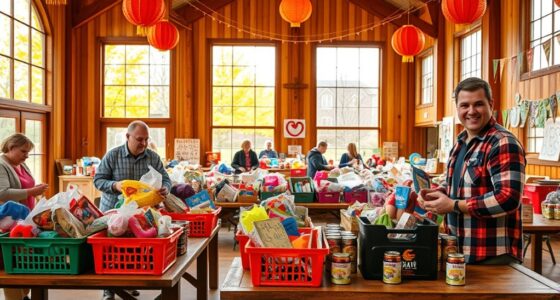
When designing community rituals and traditions, focus on understanding your community’s core values, stories, and symbols. Create meaningful actions or ceremonies that reflect shared aspirations and heritage. Involve community members to guarantee authenticity and inclusivity, making sure everyone can participate. Use sensory elements like sights, sounds, and smells to deepen emotional resonance. By thoughtfully combining symbolism with participation, you can craft lasting connections. Keep exploring to discover even more ways to make your community traditions vibrant and meaningful.
Key Takeaways
- Understand community values, stories, and beliefs to create meaningful, culturally resonant rituals.
- Incorporate symbols and actions that reflect shared identity and collective aspirations.
- Engage community members in designing rituals to ensure authenticity and inclusivity.
- Use sensory elements and technology to enhance emotional impact and adapt to modern contexts.
- Ensure rituals are flexible and evolve over time to maintain relevance and foster ongoing participation.
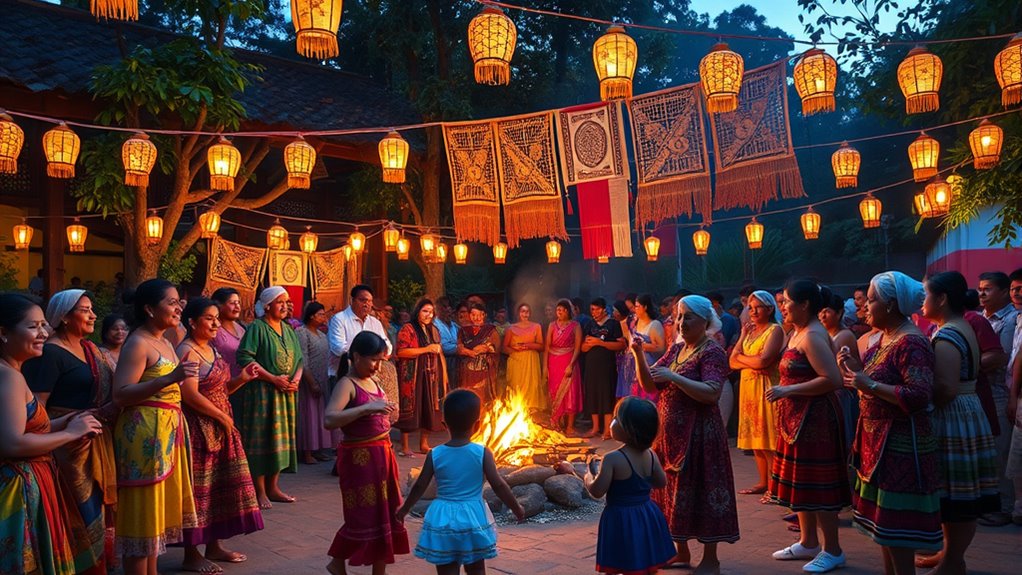
Creating meaningful community rituals and traditions can strengthen bonds and foster a sense of belonging. When you design these customs thoughtfully, you tap into cultural symbolism and ritual symbolism that resonate deeply with community members. Cultural symbolism involves using symbols, colors, objects, or practices that hold specific meanings within a community’s heritage or shared values. These symbols serve as visual or experiential markers that reinforce collective identity and history. Ritual symbolism, on the other hand, refers to the meaningful actions, gestures, or ceremonies that carry layered significance beyond their surface. By integrating these elements, you create rituals that are not only memorable but also emotionally impactful, helping individuals feel connected to something larger than themselves.
To craft effective community rituals, start by understanding the core values and cultural background of your community. What stories, traditions, or beliefs are central to your group? Incorporate symbols that reflect these elements—perhaps a specific color, emblem, or object that embodies your community’s identity. For instance, using a particular flag or insignia during celebrations can serve as a powerful symbol of unity. When designing rituals, think about how actions can symbolize collective aspirations or shared history. Lighting candles to honor ancestors, planting a communal tree to mark growth, or sharing traditional foods during gatherings are all examples of ritual symbolism that reinforce bonds. Additionally, considering the role of technology can help modernize rituals and reach a broader community audience.
It’s essential that your rituals are inclusive and adaptable, allowing everyone to participate meaningfully. Engage community members in the process, inviting their input on symbols or practices they feel represent their shared identity. This participatory approach ensures that the rituals are authentic and resonate on a personal level. As you develop these traditions, pay close attention to the sensory elements—sounds, sights, smells—that can intensify the experience. These sensory cues become part of the ritual symbolism, anchoring memories and reinforcing the significance of the event.
Finally, consider the longevity and evolution of your community rituals. While maintaining core symbols and actions, allow room for growth and reinterpretation over time. This flexibility keeps the traditions relevant and vibrant, encouraging ongoing participation. When you thoughtfully design rituals grounded in cultural and ritual symbolism, you foster deeper connections among community members, creating a shared sense of purpose and belonging that endures across generations.
Frequently Asked Questions
How Can Digital Platforms Enhance Community Rituals?
Digital platforms enhance community rituals by enabling virtual gatherings that connect members regardless of location. You can share online storytelling sessions, making traditions more interactive and inclusive. These platforms allow real-time communication, fostering a sense of belonging and continuity. By integrating multimedia and scheduling regular virtual events, you keep traditions alive and engaging, strengthening community bonds even when members are physically apart.
What Are Common Pitfalls When Creating New Traditions?
When creating new traditions, you might face cultural missteps if you overlook local customs or values, risking offense or alienation. Exclusivity issues can also arise if you don’t guarantee everyone feels welcome, which can fracture your community. To avoid these pitfalls, involve diverse voices during planning, be mindful of cultural sensitivities, and promote inclusivity from the start. This way, your new tradition fosters connection rather than division.
How Do Rituals Evolve Over Generations?
Rituals evolve over generations through intergenerational transmission, whether you like it or not. As time passes, these customs adapt, sometimes subtly, sometimes dramatically, like a game of ritual telephone. Kids might add a quirky twist, or elders might cling to tradition’s original form—despite modern sensibilities. This constant ritual adaptation keeps traditions alive, blending old and new, even if it means sacrificing a bit of the original charm for relevance.
What Role Do Symbols Play in Community Rituals?
Symbols play a vital role in community rituals by conveying symbol significance that deepens collective meaning. You’ll notice ritual symbolism helps unify participants, making shared values and history tangible. When you incorporate meaningful symbols, it strengthens emotional bonds and reinforces cultural identity. By understanding how symbols function within rituals, you can create or preserve traditions that resonate across generations, ensuring their relevance and impact continue to grow within your community.
How to Involve Reluctant Community Members?
To involve reluctant community members, you should use inclusive engagement strategies like listening to their concerns and inviting their input. Address inclusivity challenges by creating welcoming environments and showing genuine appreciation for diverse perspectives. Encourage participation through small, manageable steps, and highlight how their involvement benefits everyone. By demonstrating respect and understanding, you make it easier for hesitant individuals to feel comfortable joining community rituals and traditions.
Conclusion
Think of your community as a garden, where rituals and traditions are the watering can and sunshine. When you design meaningful ceremonies, you’re nurturing roots that grow strong and deep. Every shared moment becomes a blossom, adding color and life to the whole landscape. By intentionally creating these rituals, you’re cultivating a vibrant, resilient garden—one that blooms with unity and tradition, inviting everyone to thrive together in the beauty of shared roots.