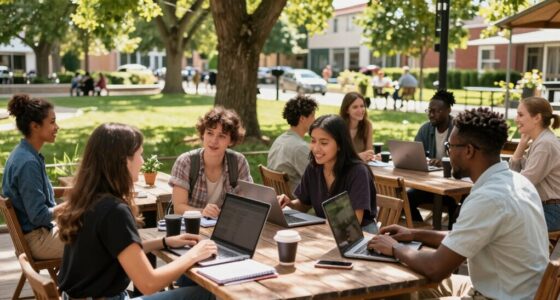
To build inclusive and diverse communities, you should intentionally celebrate different backgrounds through events, signage, and multilingual resources. Prioritize cultural validation to encourage participation from all groups and foster trust. Design accessible spaces that address physical, mental, and social needs, ensuring everyone can engage comfortably. Keep listening to community voices and adapting your efforts over time. If you want practical steps to create truly welcoming environments, exploring further can give you more insights.

Get the little things that make your day delivered free with Prime
- Fast, free delivery on millions of items
- Prime Video, Amazon Music and more included
- Member-only deals all year
Key Takeaways
- Incorporate diverse cultural representations in events, signage, and artwork to foster recognition and respect.
- Engage community members from varied backgrounds in planning to ensure inclusive decision-making.
- Design accessible spaces with features like ramps, clear signage, and adaptable facilities for all abilities.
- Promote ongoing community engagement through forums and surveys to understand evolving needs and preferences.
- Foster an inclusive environment by supporting mental, emotional, and social accessibility beyond physical access.

Building an inclusive and diverse community isn’t just about bringing different people together; it’s about actively creating an environment where everyone feels valued and empowered. One of the most effective ways to do this is by emphasizing cultural representation. When you guarantee that local events, signage, artwork, and traditions reflect the backgrounds of your community members, you send a powerful message: all cultures are recognized and respected. This validation fosters a sense of belonging, encouraging participation from people who might otherwise feel overlooked. You can achieve this by inviting diverse voices into planning committees, showcasing cultural festivals, and incorporating multilingual resources. These steps help break down barriers and demonstrate that your community values every individual’s identity. Additionally, considering the safety features of community facilities ensures that everyone can participate confidently and securely. These steps help break down barriers and demonstrate that your community values every individual’s identity.
Equally important is designing accessible spaces that accommodate everyone’s needs. Accessibility isn’t just about ramps or wheelchair-friendly entrances; it’s about removing any obstacle that might prevent someone from fully engaging with the community. When you create accessible spaces, you’re making a statement that inclusion extends beyond physical access — it’s about mental, emotional, and social accessibility too. Think about incorporating clear signage, quiet zones, and adaptable facilities that serve people with different abilities. Consider the layout of parks, community centers, and event venues to ensure they’re navigable for all. When spaces are accessible, it encourages participation from those who might otherwise feel excluded due to physical or sensory challenges, fostering a truly welcoming environment.
To effectively promote cultural representation and accessible spaces, you need to actively listen to your community. Engage with diverse groups directly to understand their needs, preferences, and concerns. Hold forums or surveys that give everyone a voice, and use that input to guide your planning. When you involve community members in decision-making, you create a sense of ownership and trust. It also helps you identify overlooked aspects of inclusion, ensuring your efforts are genuine rather than performative. Remember, building an inclusive community requires ongoing effort and commitment. It’s not enough to implement a few initiatives; you must continuously evaluate and adapt your strategies to meet evolving needs.
Frequently Asked Questions
How Can Technology Improve Inclusivity in Community Initiatives?
Technology improves inclusivity in community initiatives by enabling digital outreach that reaches diverse audiences. You can use accessibility tools like screen readers, captioning, and language translation to guarantee everyone can participate. These tools break down barriers and make information accessible to all. By leveraging technology thoughtfully, you foster an environment where every community member feels valued and included, strengthening the overall impact of your initiatives.
What Are Common Challenges Faced When Promoting Diversity?
You might feel like overcoming diversity issues is a mountain impossible to climb, but the biggest challenges are often cultural barriers and language differences. These can cause misunderstandings and create walls instead of bridges. You’ll face biases and resistance, making it seem like breaking through is an uphill battle. Still, with patience and open-minded communication, you can turn these hurdles into opportunities to learn and grow together, fostering real inclusion.
How Is Success Measured in Inclusive Community Projects?
You measure success in inclusive community projects by evaluating impact and measuring engagement. Look at how diverse groups participate and whether their voices are heard. Track the growth of participation from different backgrounds and assess if community members feel valued and included. Regular feedback and surveys help you understand the project’s effectiveness. Ultimately, success means fostering equitable participation and creating an environment where everyone feels a sense of belonging.
What Role Do Local Policies Play in Fostering Diversity?
Local policies play a vital role in fostering diversity by shaping the environment where cultural integration thrives. Policy influence guides community priorities, ensuring equitable access to resources and opportunities for all groups. You can actively support this by advocating for inclusive policies that celebrate different cultures, promote fairness, and remove barriers. When local governments prioritize diversity, it creates a welcoming space where everyone feels valued and included, strengthening community bonds.
How Can Communities Address Unconscious Biases Effectively?
Like Pandora opening her box, you can challenge implicit biases by promoting cultural awareness through education and open dialogue. Encourage community members to reflect on personal assumptions, fostering empathy and understanding. Implement training sessions that address unconscious prejudices, making biases visible. By actively engaging in these efforts, you create an environment where implicit biases diminish, allowing diverse voices to be heard and valued, strengthening the fabric of your community.
Conclusion
By embracing inclusivity and diversity, you create a vibrant tapestry where every thread matters. Imagine your community as a garden, each unique flower adding color and fragrance, together forming a harmonious landscape. When you nurture understanding and openness, you foster a space where all voices bloom beautifully. Remember, a truly thriving community is like a sunrise—brightening everyone’s path with warmth and promise, all because you choose to welcome every shade of human experience.
Halloween Picks
halloween
As an affiliate, we earn on qualifying purchases.