
Engaging in sensory play helps boost your child’s cognitive growth by stimulating their senses through activities like textured materials, sounds, and musical experiences. These actions build neural connections that improve memory, problem-solving, and pattern recognition. They also enhance motor skills and language development by encouraging exploration and interaction. As your child explores using different senses, their brain forms essential pathways for learning and emotional regulation. Keep exploring to uncover more ways sensory play sparks brain development.

Get the little things that make your day delivered free — and shop member deals
- Fast, free delivery on millions of items
- Access to Prime Big Deal Days deals on October 6–7
- Prime Video, Amazon Music and more included
Key Takeaways
- Sensory play stimulates neural pathways that support exploration, memory, and emotional development.
- It enhances pattern recognition, sequencing, and cause-and-effect understanding crucial for cognitive skills.
- Multisensory activities promote neural integration across senses, strengthening overall brain connectivity.
- Engaging senses through play fosters creativity, problem-solving, and adaptive thinking.
- Sensory interactions accelerate neural development, laying a foundation for language, attention, and learning abilities.
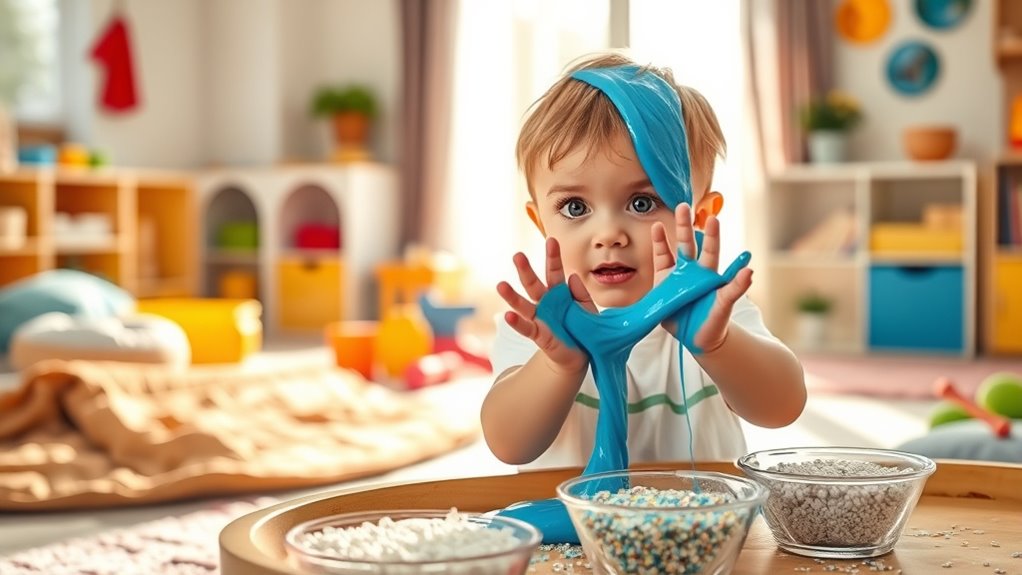
Sensory play is a essential activity that directly supports a child’s cognitive development by engaging their senses and encouraging exploration. When you introduce activities like playing with textured materials, listening to different sounds, or experimenting with musical instruments, you’re helping your child build fundamental neural connections. One effective way to enhance this process is through music therapy, which leverages sound and rhythm to stimulate brain regions responsible for processing auditory information, memory,, and emotional regulation. As your child interacts with musical toys or participates in singing and rhythm exercises, their brain begins to develop stronger pathways that support language, attention,, and problem-solving skills.
Engaging in sensory play with a focus on music also boosts fine motor skills. When your child manipulates small instruments, such as drums, shakers, or xylophones, they refine their hand-eye coordination and finger dexterity. These activities require precise movements, helping to strengthen the muscles needed for writing, drawing, and other tasks that demand fine motor control. As your child practices striking a drum or squeezing a shaker, they learn to control their movements more accurately, which translates into improved coordination and precision in everyday activities.
Manipulating musical instruments enhances hand-eye coordination and fine motor skills for everyday tasks.
Furthermore, the act of creating sounds and rhythms during music therapy encourages cognitive skills like pattern recognition and sequencing. Your child learns to anticipate beats, follow melodies, and replicate rhythms, which promotes memory and attention span. As they experiment with different musical patterns, they develop an understanding of cause-and-effect relationships—pressing a button or striking a drum produces a sound, and repeating successful patterns reinforces their learning. This process also fosters creativity and self-expression, both of which are essential components of cognitive growth.
In addition, sensory play involving music can help children develop language skills. As they listen to melodies or participate in musical activities, they often mimic sounds and words, strengthening their vocabulary and pronunciation. The multisensory nature of these activities—combining auditory, tactile, and sometimes visual stimuli—provides a rich environment that accelerates neural development. It encourages your child to make connections across different sensory modalities, supporting overall cognitive integration.
Frequently Asked Questions
What Age Is Best for Introducing Sensory Play?
You can start introducing sensory play as early as infancy, around 0-6 months, since it’s highly age-appropriate. Early introduction helps your little one explore their environment and develop essential skills. As they grow, you can add more complex textures and activities. Just make certain the activities are safe and suited to their developmental stage, encouraging curiosity and boosting cognitive growth during each age.
Are There Specific Sensory Activities for Children With Disabilities?
Yes, you can use adapted activities for children with disabilities, focusing on sensory integration. These activities are tailored to suit their unique needs, helping them process sensory input effectively. For example, using textured toys or weighted blankets can enhance their sensory experience. You actively support their development by creating a safe, engaging environment where they can explore and build skills through adapted sensory play tailored to their abilities.
How Can Parents Safely Supervise Sensory Play at Home?
You can safely supervise sensory play at home by using effective supervision techniques, such as staying close and watching your child closely. Always have safety equipment like gloves, goggles, or mats on hand to prevent accidents. Keep small or choking hazards out of reach, and confirm the play area is clean and organized. Regularly check the materials for damage, and encourage your child to explore while you stay attentive and ready to help if needed.
Does Sensory Play Benefit Children With Developmental Delays?
You might find it amazing, but sensory play benefits children with developmental delays by supporting sensory integration and helping them reach developmental milestones. When you encourage activities like textured play or sound exploration, you’re aiding their brain development and improving their ability to process sensory information. This hands-on approach can boost confidence, communication, and motor skills, making a real difference in their growth journey.
How Can Teachers Incorporate Sensory Play Into Classroom Routines?
You can incorporate sensory play into your classroom routines by setting up sensory stations that focus on tactile exploration, such as sand, water, or textured materials. Use activities that promote sensory integration, encouraging children to explore different textures and sensations. Incorporate these activities into daily progressions or small group times, making sensory play a natural part of learning. This approach helps develop children’s cognitive skills and supports their overall development.
Conclusion
By engaging in sensory play, you open a world where curiosity blossoms and minds expand. It’s a dance of discovery, a rhythm that sparks cognitive growth with every touch, sight, and sound. As you nurture their exploration, you nurture their potential—building pathways for learning and development. So, embrace these sensory moments; they’re not just play but the foundation of a bright, curious mind, ready to reach for endless possibilities.
NFL season / tailgating Picks
team gear
As an affiliate, we earn on qualifying purchases.