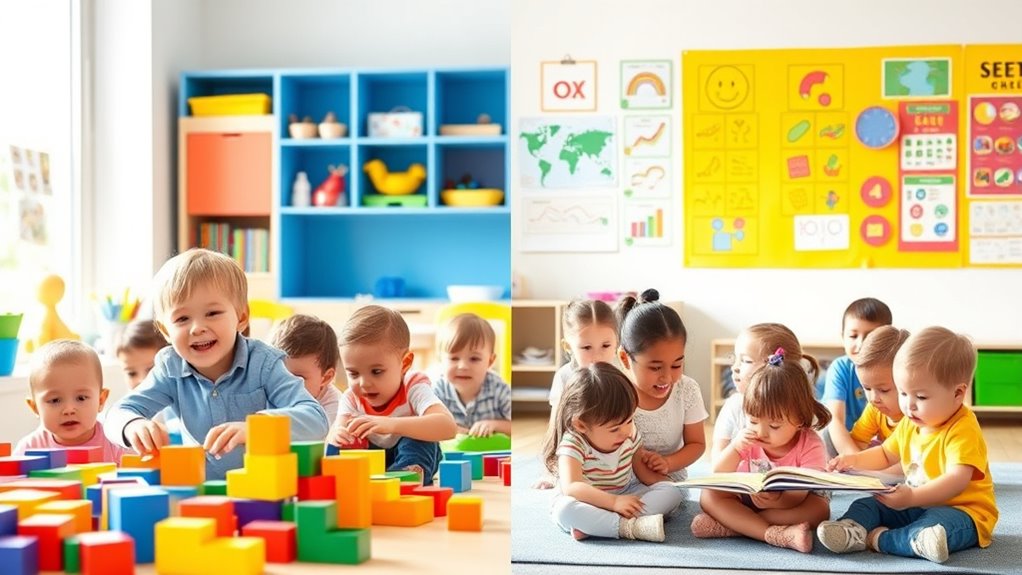

Pre-K and preschool differ mainly in age, curriculum, and goals. Pre-K usually serves children around four years old and offers a structured, academically focused environment that prepares kids for kindergarten. Preschool can include children as young as three and emphasizes play-based, flexible learning to foster social skills and curiosity. Both support child development, but their approaches vary. Keep exploring to understand how each program can best meet your child’s needs.

Get the little things that make your day delivered free with Prime
- Fast, free delivery on millions of items
- Prime Video, Amazon Music and more included
- Member-only deals all year
Key Takeaways
- Pre-K typically serves children around four years old, preparing them for kindergarten, while preschool can include children as young as three.
- Pre-K emphasizes a structured curriculum aligned with kindergarten standards, whereas preschool is more play-based and flexible.
- Pre-K classrooms often mimic school settings with designated areas for learning, while preschool environments are more informal and child-led.
- Developmentally, Pre-K focuses on social-emotional skills and cognitive readiness for school, with preschool fostering social skills and creativity.
- Both programs aim to support overall child development but differ in curriculum focus, classroom environment, and age range.
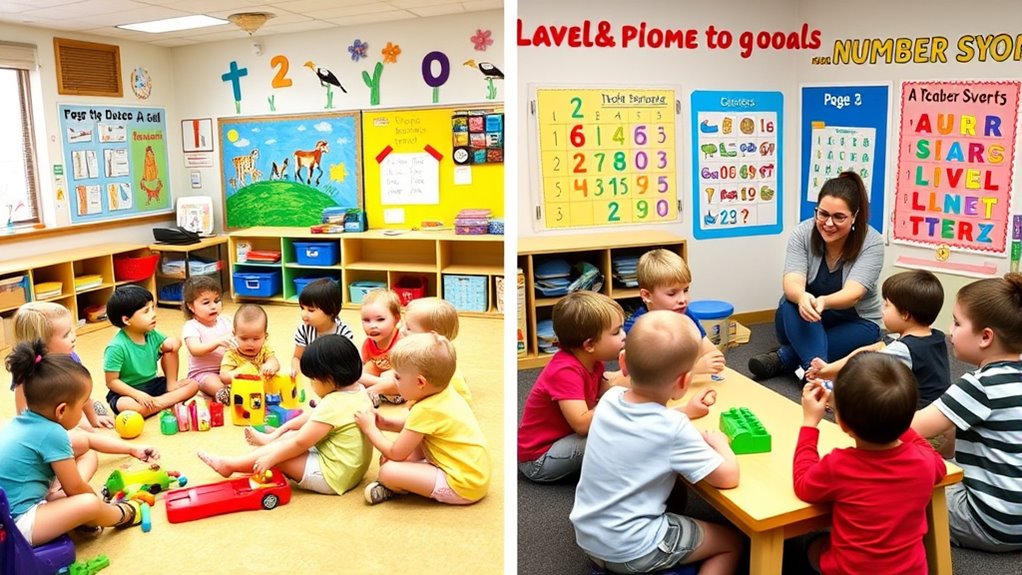
Many parents confuse pre-kindergarten (Pre-K) and preschool, but there are important differences between the two. Understanding these distinctions can help you choose the best environment for your child’s development. Pre-K typically serves children who are about four years old, often just before they enter kindergarten. Preschool, on the other hand, can include children as young as three and sometimes younger. The age range is a key factor because it influences the curriculum focus, classroom environment, and developmental goals. Pre-K programs usually align more closely with kindergarten standards, preparing children for the transition to full-time elementary school. Preschool programs tend to be more play-based and flexible, designed to foster early socialization and foundational skills.
Pre-K is for four-year-olds preparing for kindergarten; preschool is more flexible and suited for three-year-olds and younger.
In terms of curriculum, Pre-K emphasizes a structured approach that promotes school readiness. It integrates core subjects like early literacy, math, and science but emphasizes these through engaging activities that also develop social emotional skills. The focus on social emotional skills is essential because it helps children manage their feelings, develop empathy, and build positive relationships—skills that are critical for a successful school experience. The classroom environment in Pre-K is often designed to mimic a school setting, with designated areas for different activities such as reading, arts, and group work. This structured environment encourages independence and helps children adapt to routines and expectations similar to those they’ll encounter in kindergarten.
Preschool programs are generally more informal, emphasizing play-based learning that nurtures curiosity and creativity. While they do introduce basic academic concepts, the primary goal is to promote socialization and emotional development through activities that are often child-led. The classroom environment in preschool is usually more flexible, with less rigid schedules, allowing children to explore their interests freely. This setting helps children develop social emotional skills naturally, as they learn to share, negotiate, and resolve conflicts with peers. It’s a gentle introduction to the school environment, focusing on building confidence and enthusiasm for learning.
Both Pre-K and preschool aim to support your child’s overall development, but the approach and intensity differ. Pre-K prepares children for kindergarten through a more structured, academically oriented environment that emphasizes social emotional skills alongside cognitive growth. Preschool offers a nurturing, play-centered environment that fosters social skills and emotional resilience, laying a foundation for future learning. Knowing these differences helps you make informed decisions based on your child’s age, readiness, and your educational priorities.
As an affiliate, we earn on qualifying purchases.
Frequently Asked Questions
How Do Parental Involvement Requirements Differ Between Pre-K and Preschool?
You might wonder how parental involvement differs between pre-K and preschool. In pre-K, there’s often a stronger emphasis on parental engagement and family involvement, encouraging hands-on participation in activities and regular communication with teachers. Preschool programs may have less structured requirements, but active family involvement still boosts a child’s success. The key lies in how each setting fosters a partnership with families, creating a foundation for growth and learning that keeps you engaged every step of the way.
Are There Specific Assessments Used for Each Age Group?
You’ll find that both pre-K and preschool often use developmental screenings to monitor progress, focusing on social, emotional, and cognitive skills. Standardized testing may be more common in preschool programs to assess academic readiness, but pre-K often emphasizes informal assessments. These tools help educators tailor activities to each child’s needs, ensuring they’re developmentally on track. You should check your program’s specific requirements, as practices can vary.
How Do Teacher Qualifications Vary Between Pre-K and Preschool Programs?
Imagine your child’s teacher as a superhero, armed with top-tier teacher training and a mastery of curriculum standards. In pre-K, teachers often hold specialized early childhood credentials, ensuring they’re prepared for the developmental leaps. Preschool teachers might have a broader qualification set, but both prioritize ongoing professional development. You’ll find that the qualifications align with the program’s goals, creating a nurturing environment where young learners thrive and grow.
What Funding Options Are Available for Each Type of Program?
You can access various funding options for both programs, including federal and state grant opportunities aimed at early childhood education. Additionally, tuition assistance programs may help offset costs for families. Check local education agencies or community organizations for specific grants or scholarships available in your area. These funding sources support quality pre-kindergarten and preschool programs, making early learning more accessible and affordable for all children.
How Do Class Sizes Typically Compare in Pre-K Versus Preschool Settings?
You’ll find that class size differences often mean smaller groups in pre-K compared to preschool. Pre-K classes usually have fewer children, fostering a more personalized classroom environment where your child gets more individual attention. In preschool, larger class sizes may be common, creating a busier, more social setting. Smaller class sizes in pre-K support developmental goals by encouraging better interaction and tailored learning experiences, making the environment more nurturing and engaging for your child’s growth.
play-based preschool learning toys
As an affiliate, we earn on qualifying purchases.
As an affiliate, we earn on qualifying purchases.
Conclusion
Understanding the differences between pre-K and preschool helps you make the best choice for your child’s growth. While some worry about the progression, remember that both programs focus on nurturing your child’s curiosity and development. By choosing the right environment, you’re giving your little one a strong foundation for future learning and confidence. Don’t let fear hold you back—your support and involvement make all the difference in their early education journey.
kindergarten readiness activity kits
As an affiliate, we earn on qualifying purchases.
As an affiliate, we earn on qualifying purchases.
social-emotional development toys for preschool
As an affiliate, we earn on qualifying purchases.
As an affiliate, we earn on qualifying purchases.
NFL season / tailgating Picks
team gear
As an affiliate, we earn on qualifying purchases.